
Focali members at COP30 in Belém - Updates and Reflections
Stay tuned below for “live - soon after” updates from members of the Focali research network participating in Climate COP30 in Belém Brazil 10-21 November. Short updates and reflections from some of the members will be shared here during and after COP30. For additional updates on activities, they will be involved in follow them and Focali on Linked In. All members below participate via their own organizations (not via support from or for Focali) but all members in the Focali network will be active in Focali relevant themes and collaborations during COP30.
See updates from COP30 below presentation card with members at COP30
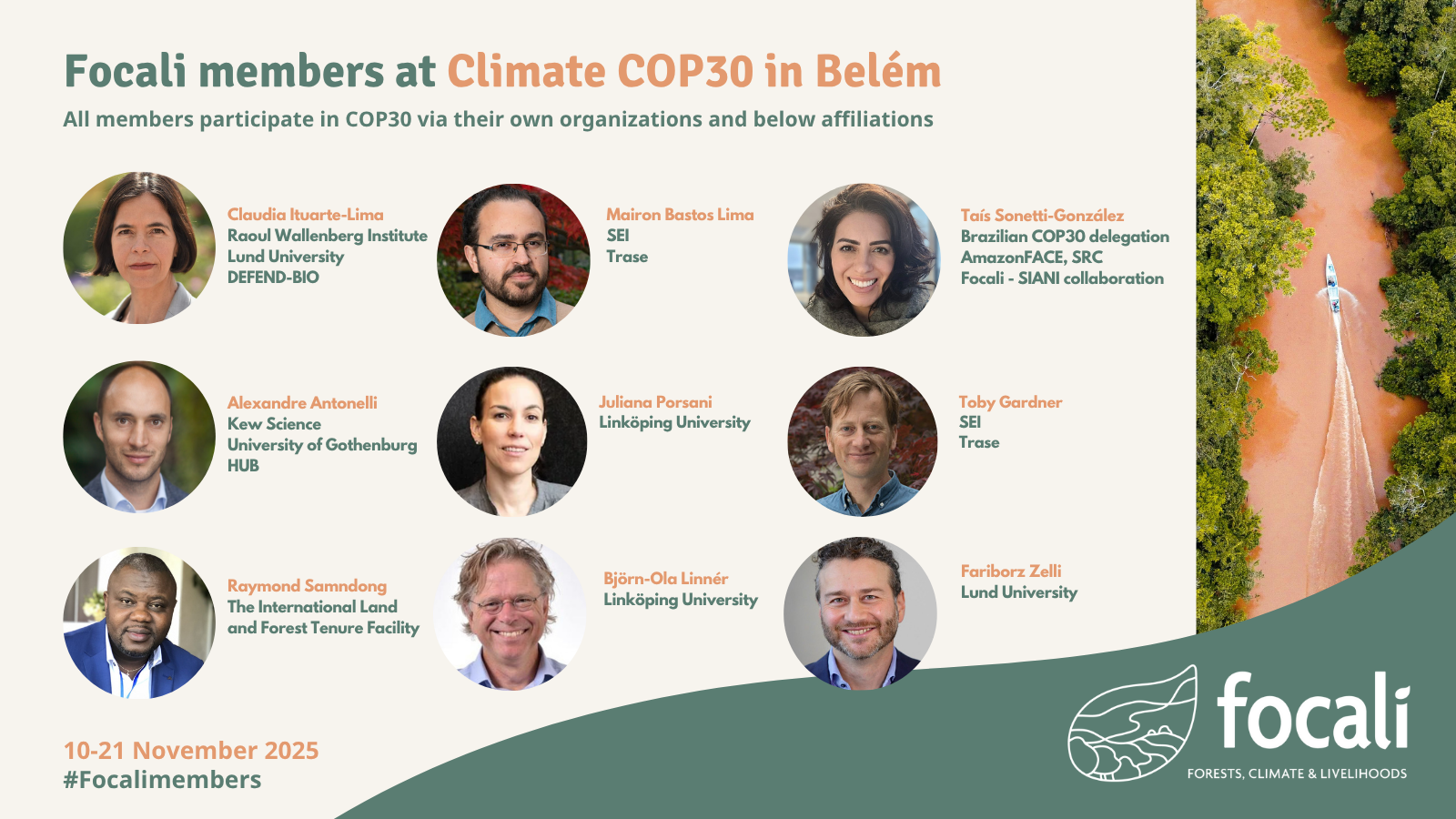
Updates, reflections and photos from Focali members participating in COP30 in Belém
The latest reflection published at the top
Post-COP30 reflections on the outcomes by Focali member Claudia Ituarte-Lima
While many are calling COP30 a complete failure—or even a COP-astrophe—that’s only part of the story.
Yes, the number of fossil fuel lobbyists at COP30 was unacceptable. And yes, the fact that Parties couldn’t agree on a roadmap to a just, equitable and fully-financed transition away from fossil fuels—the main driver of the climate crisis—is deeply concerning.
But framing COP30 as purely catastrophic risks erasing the hard-won victories and the powerful, justice-driven efforts that so many constituencies including those living on frontlines of climate breakdown fought with persistence. Here are two breakthroughs we must not overlook:
1. BAM!—A Ground-Up Just Transition mechanism
“BAM!” wasn’t just the sound of drums echoing through the COP30 corridors. It was the force behind the Belém Action Mechanism for Just Transitions—a concrete, ground-up proposal shaped by the collaborative power of trade unions, communities, social movements, Indigenous Peoples’ organisations, and civil society over many years and especially escalating this year paving the way for its inclusion in the final COP30 outcome.
A rare and powerful moment of convergence.
2. The Belém Gender Action Plan
Despite geopolitical polarization, COP30 delivered progress on gender equality.
The Belém Gender Action Plan explicitly recognizes:
the central role of women in climate action, and
the specific risks faced by women environmental defenders, who often experience gender-based violence intertwined with violence stemming from their work.
This follows—and strengthens—the positive precedent set by the UN Biodiversity Gender Action Plan, including explicit recognition of women environmental human rights defenders.
Just like our Earth, multilateralism is fragile and vulnerable. And many questions remain.
But one lesson from COP30—from the negotiating rooms to the Climate March to the People’s Summit—is clear:
Even in a fragmented and turbulent world, overcoming differences is possible when justice and rights are not an afterthought but the very heart of transformative change.
This reflection was first published by Claudia with a video from COP30 on her Linked In page
Summary of the COP30 outcomes and reflection by Focali member Taís Sonetti González
“COP30 Brazil ended without a new global emissions target that matches the science, nor a robust text on the phase out of fossil fuels, which is worrying given the urgency of the climate crisis. The IPCC indicates that to keep alive the chance of limiting warming to 1.5°C, global emissions need to peak by 2025 and fall by about 43% by 2030.
Even so, the Belém Package, approved by 195 countries, brought advances in financing, adaptation, and climate justice. Among them, the creation of the Tropical Forests Forever (TFFF) Fund, which remunerates countries that keep forests standing, and announcements of the Action Agenda totaling about US$9 billion to strengthen, among other things, production chains and the resilience of farmers in more than 100 countries.
In the field of territorial justice, Brazil led the Intergovernmental Commitment on Land Tenure, to regularize and protect 63 million hectares of Indigenous Peoples’ and Quilombolas’ lands by 2030, and to reinforce US$1.8 billion in support of the territorial rights of Indigenous Peoples, Afro-descendants and Traditional Communities. The FUNAI also announced the demarcation of 10 new Indigenous territories and the homologation of 4 Indigenous Lands, recognizing the central role of these territories in climate mitigation and adaptation.
The Belém Policy Package still includes 59 voluntary indicators for the Global Adaptation Goal, although these indicators still need to be refined and scaled up, according to Marina Silva in her final speech; a new Gender Action Plan; the Belém Health Action Plan (with US$ 300 million for resilient health systems); and, for the first time, the mention of Afro-descendants in the official documents of the COP.
All this occurred in a COP marked by many challenges, but by the protagonism of Indigenous Peoples, Traditional Communities and Social Movements. The “Aldeia COP” (COP Village – the “alternative COP of and for Indigenous Peoples) brought together about 3,500 indigenous people from hundreds of Peoples from 42 countries, recalling that there is no just transition without territories, bodies and living cultures. Despite the frustration with a final text that still falls short of science, the Brazilian presidency has committed, over the next 11 months, to drawing up a map for the phase-out of deforestation and fossil fuels, in dialogue with multiple actors, with a conference in Colombia as early as April 2026. The challenge now is to turn decisions into practice and promises into real change, and as Marina Silva said in her final speech, “we have moved forward, even if modestly... and we are still here.”
Toby Gardner and Mairon Bastos Lima summary for SEI on Tropical forests, land rights and the (socio)bioeconomy agenda
“Forests unsurprisingly received greater-than-average attention during the first climate COP held in the Amazon region. Significant forest-related advances were made, including:
Brazil’s launch of the TFFF, an innovative financing mechanism whose effectiveness is still uncertain. Its importance lies in the protection of standing forests, not just prevention of deforestation, making it a strong complement to existing programming such as REDD+.
European support for a USD 5 billion plan to protect the Congo Basin rainforest, alongside a five-year commitment by governments and philanthropies to secure 160 million hectares of land rights for Indigenous Peoples, Afro-descendant and traditional communities by 2030, backed by a Norway-led USD 1.8 billion funding commitment.
Growing international recognition of the “sociobioeconomy”, centred on people, traditional communities and biocultural conservation.”
Read the full SEI article with take-aways from COP30 here
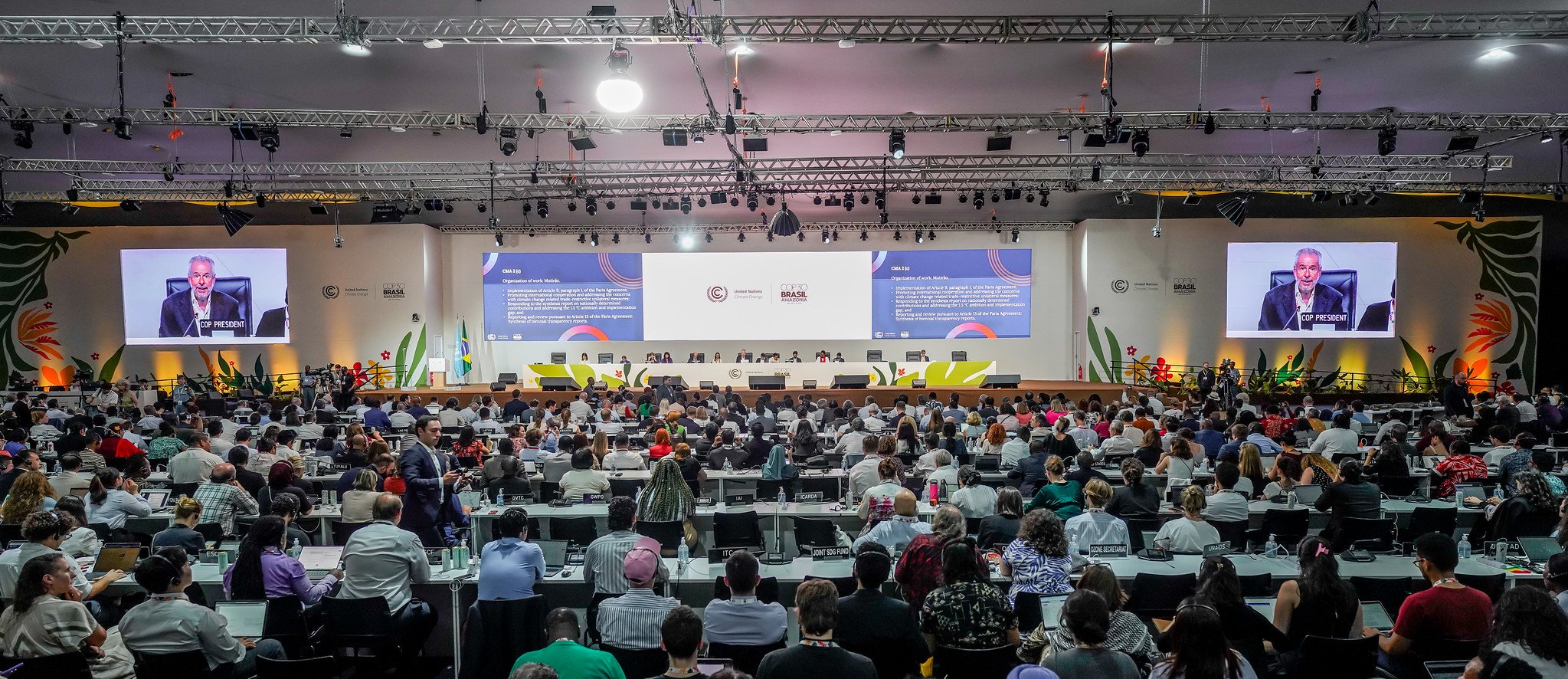
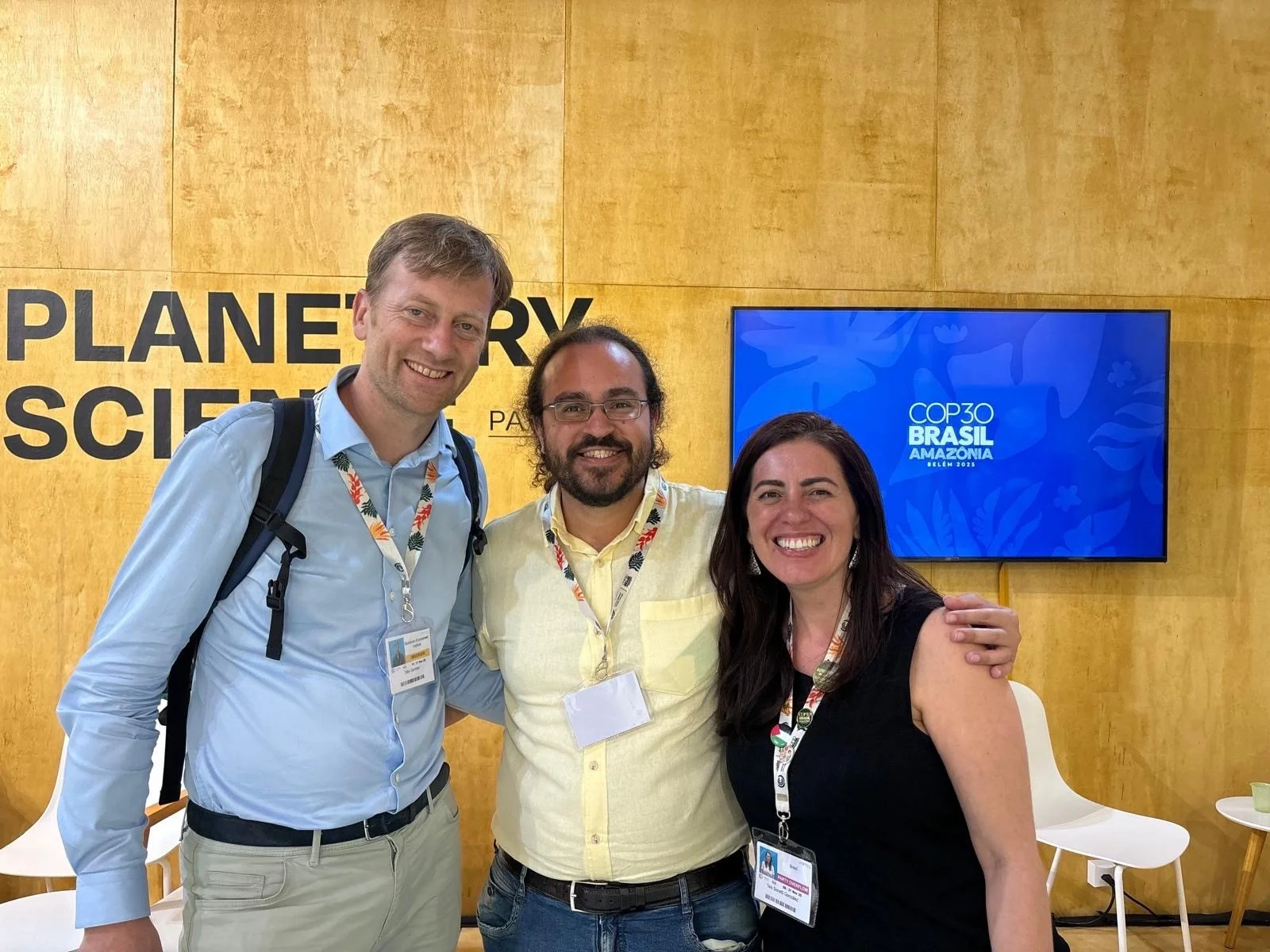
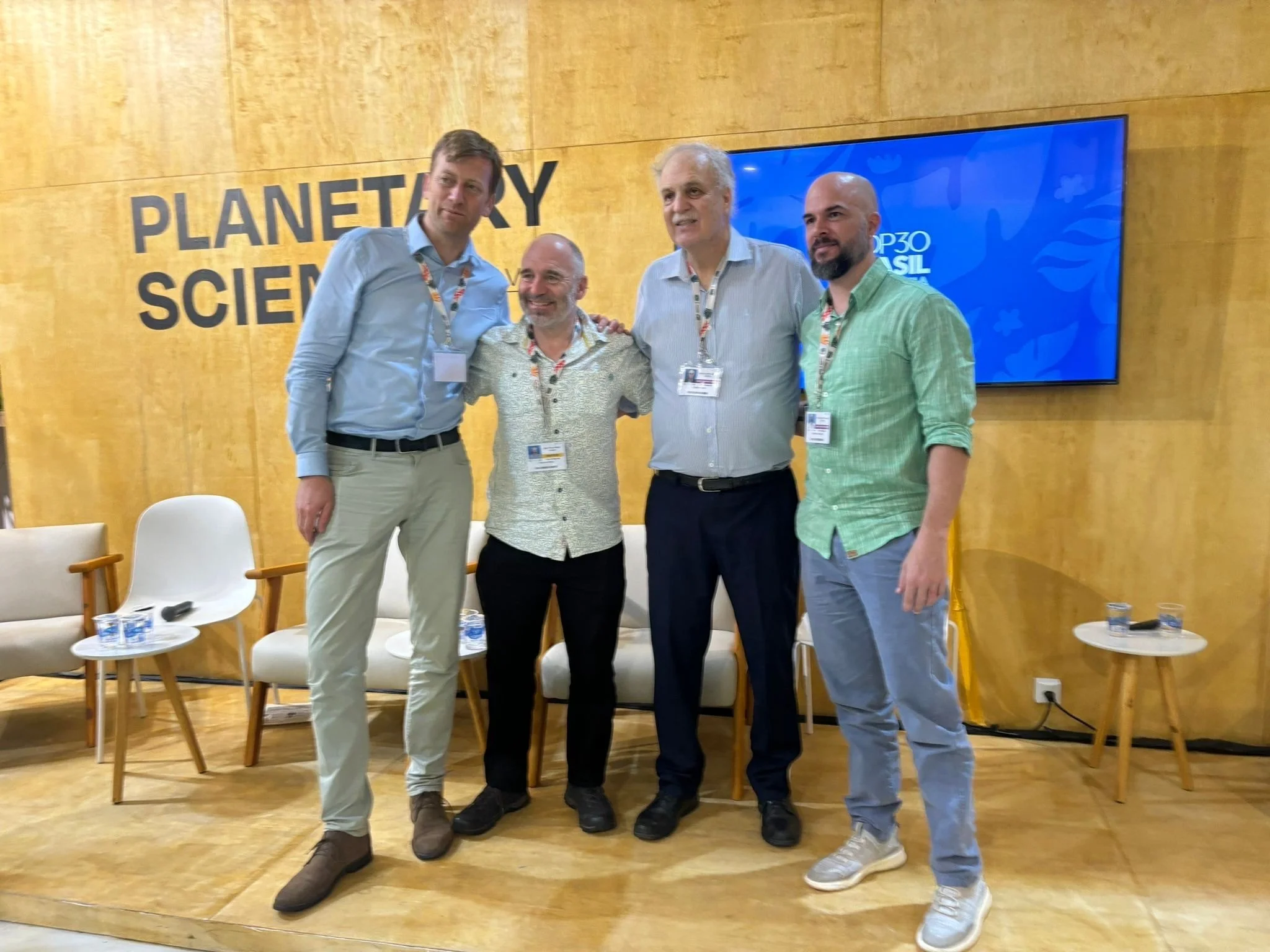
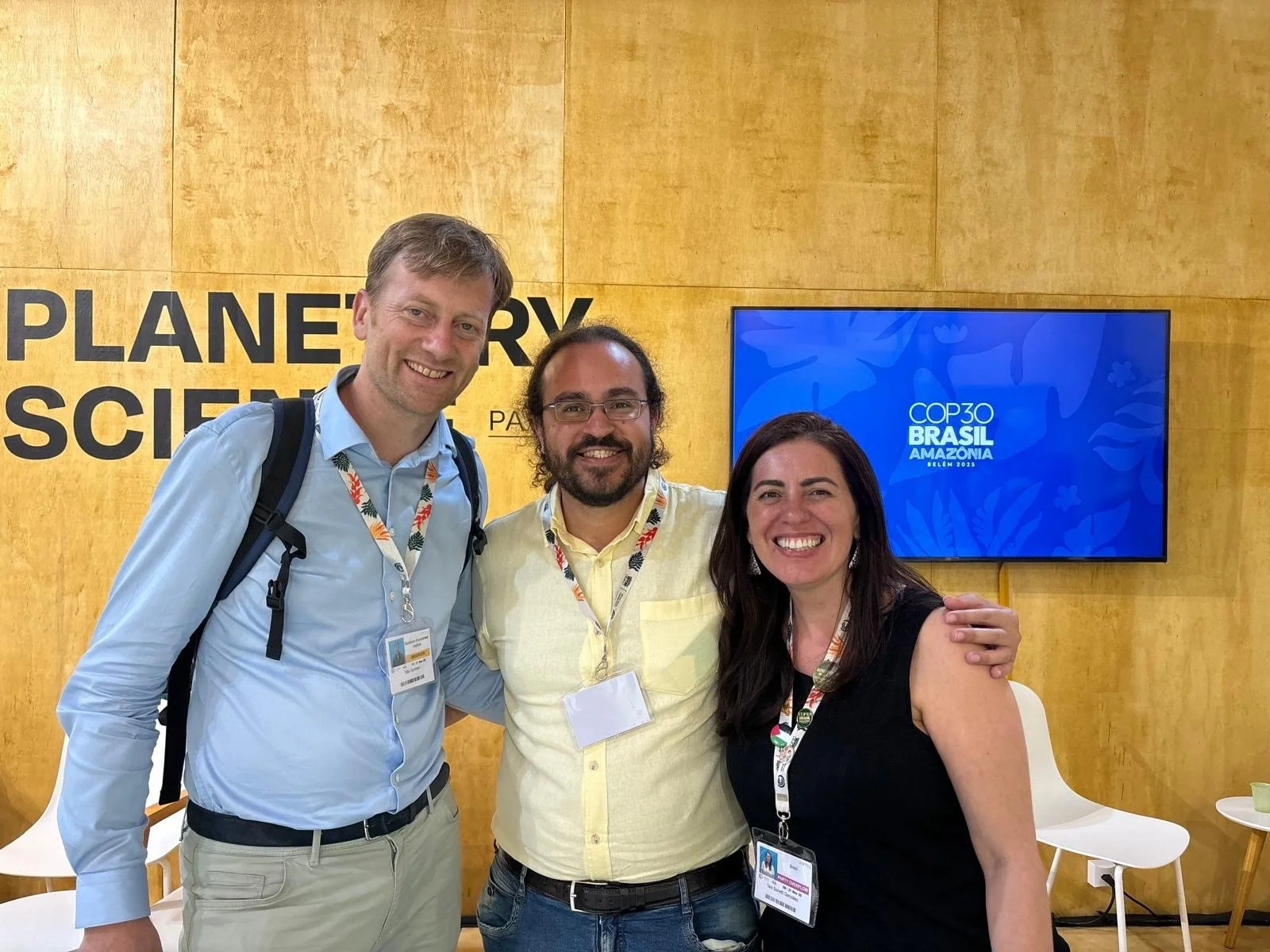
Closing plenary photo by: Rafa Neddermeyer/COP30 Brasil Amazônia, Focali members in the science pavilion Toby Gardner, Mairon Bastos Lima and Taís Sonetti González. Listen to them, other members in the Focali research network and experts in forest and livelihood issues attending COP30 in our joint webinar held 16 December, 13.00-14.00 CET. Read more below.
Listen to more post-COP30 reflections in our webinar 16 December: Beyond Belém – Hope and Action for Forests, Climate and Livelihoods
Join us for a stock take on what happened in Belém the first Climate COP30 in the Amazon and discuss what implications the outcomes may have for forests, climate and livelihoods moving forward. This post-COP30 webinar will focus on COP30 outcomes and side-initatives related to safeguarding of tropical forests and the role and inclusion of forest communities and Indigenous Peoples as allies to steward, restore and protect forests for local and global benefits.
We will hear from members in the Focali research network who participated in Belém as well as key actors in these topics who participated in COP30 who will share their firsthand reflections and help us understand what happened and why? What were the hot topics discussed and the major wins for forests and livelihoods? Based on what happened and not - what should stay on our radar beyond Belém? What has the potential to reshape our agendas? And what actions are needed to seize this opportunity?
With high ambitions and hopes for this COP30, comparing the outcomes to the scale of the challenges and the urgency for action it is easy to dismiss it as inadequate. But if we are not careful this opens the door to fatalism. The nature of hope, and the need to treat hope as conditional, and as a deliberate practice has been discussed in a past Focali led seminar. This webinar will follow up these discussions as we move forward from COP30 and ask:
- Where can we draw hope from the COP process and what happened in Belém more broadly and why?
Stay tuned for the agenda and sign-up via the Focali event page.
Sign up here to get the Zoom link to attend this webinar in Zoom.
This webinar is co-arranged by the Focali research network in collaboration with SIANI, SEI, Trase and RWI
November 22: Reflection by Focali member Alexandre Antonelli on the outcomes of COP30
“Once again, world leaders have fallen short of delivering an agreement that reflects what the science unequivocally demands. This is no longer about defending narrow national interests – it is about compromising the future of generations to come.
Yet COP30 did deliver some meaningful progress. Brazil’s Presidency has introduced a clear and ambitious financing mechanism (the TFFF) to safeguard the world’s tropical forests, and it has strengthened collaboration across the Global South to advance a fair and resilient bio-economy.
The path ahead is unmistakable: we must cut emissions, protect and restore nature, and follow the science. If we act together, we can still secure a liveable future.”
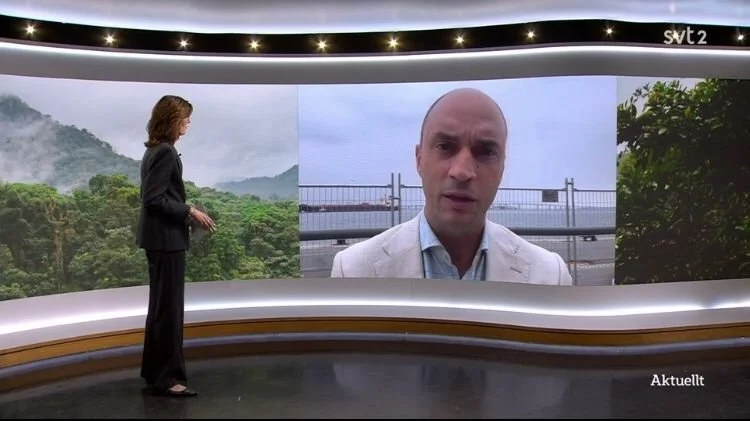
Alexandre was sharing daily updates from his week at COP30 on his Linked In page and a longer main take-away post when he left COP30 before the end of the negotiations. The above reflection was shared with media and Focali at the end of COP30 Nov 22 with his concerns about the outcomes and urgency to work together to cut emissions, protect and restore nature”
Professor Alexandre Antonelli is the Director of Science at the Royal Botanic Gardens, Kew. He is also Professor in Biodiversity and Systematics at the University of Gothenburg in Sweden and was the founder and first Director of the Gothenburg Global Biodiversity Centre. In addition he is the founder of Hidden Universe: Biodiversity (HUB) and a member in the Focali research network.
The above screenshot is from the Swedish Television news program Agenda at the start of COP30 when Alexandre was interviewed read more and watch the interview here.
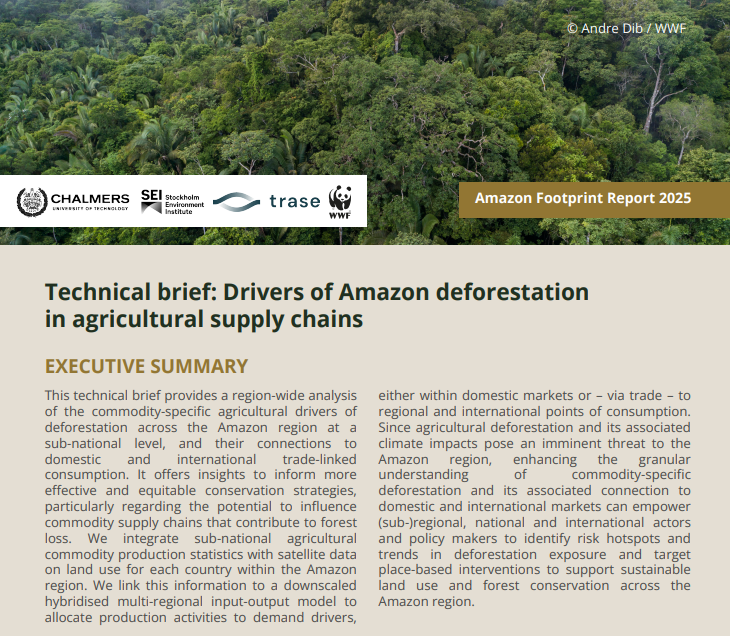
Launch of the Amazon Deforestation Footprint report at COP30 - Co-authored by Chandrakant Singh and Martin Persson presented by Toby Gardner at launch event
Focalimember s Chandrakant Singh and Martin Persson at Chalmers University of Technology and Trase are co-authors of the report together with Pablo Pacheco WWF Global Science and Chris West, Simon Croft and Jo Cook at SEI – Stockholm Environment Institute - University of York and Trase - Intelligence for sustainable trade.
From the summary: "Since agricultural deforestation and its associated climate impacts pose an imminent threat to the Amazon region, enhancing the granular understanding of commodity-specific deforestation and its associated connection to domestic and international markets can empower (sub-)regional, national and international actors and policy makers to identify risk hotspots and trends in deforestation exposure and target place-based interventions to support sustainable land use and forest conservation across the Amazon region"
The report was presented in a seminar at COP30 together with the Global Tipping Points Report 2025 and Rapid Increase of Climate Extremes across Northern Amazonia. Together these reports reveal the growing risks of crossing irreversible ecological thresholds. The session, held at the WWF Pavillion at COP30, highlighted alarming trends in Amazon climate extremes and deforestation drivers, followed by a discussion on collaboration needed to prevent tipping points and protect people and nature.
Read more about the Amazon Footprint report and re-watch the launch event:
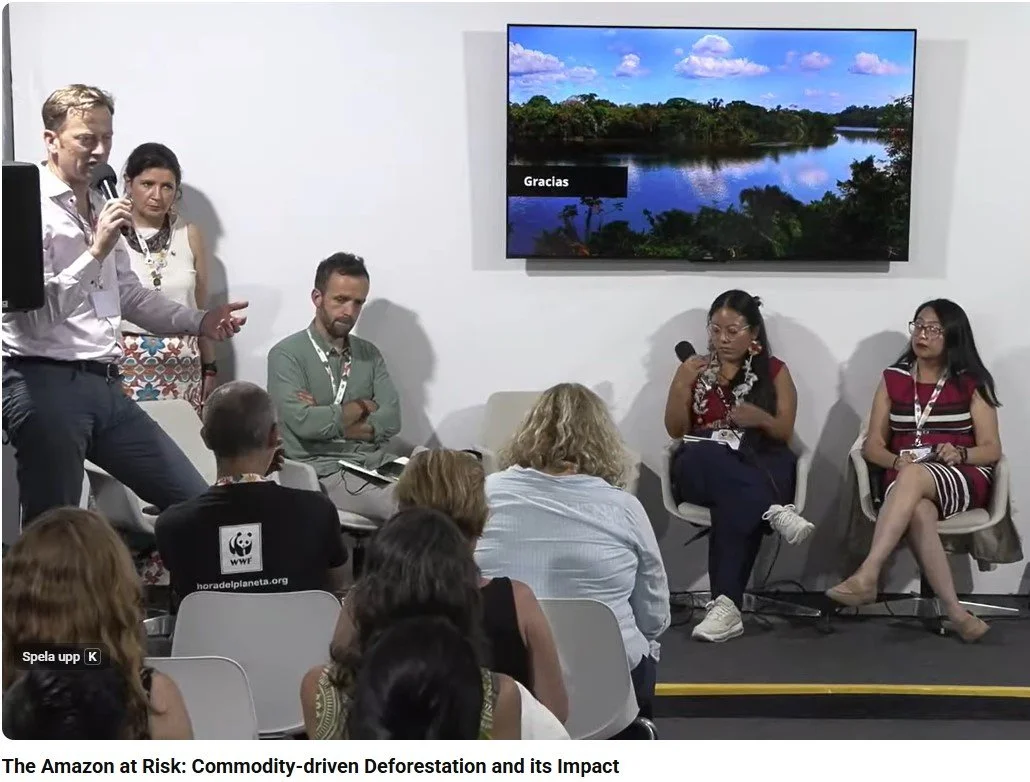
Watch the launch event where Toby Gardner presented the report followed by a very insightful panel discussion on the impacts of commodity-driven deforestation in the Amazon:
Read press release from Chalmers here Amazon rainforest is being deforested – and Swedes’ coffee-drinking plays a bigger role than our meat-eating
Read news from WWF about the report here
Read and watch news about the report in Swedish media with co-author Martin Persson, some of the media links compiled by Focali here.
Read key-highlights from the report by Chandrakant Singh in his Linked In post here
Below screenshots of the front page of the report and the recording of the launch event (with Focali member Toby Gardner speaking in the image) available via WWF you tube
Reflection shared by Focali member Claudia Ituarte-Lima “When Crisis Strikes: A COP30 Fire and the Call for Solidarity”
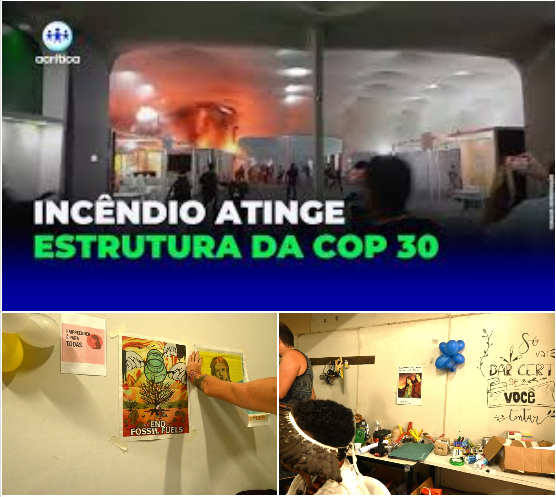
“Before our COP30 side-event on advancing climate justice, someone suddenly shouted “fire.” We evacuated quickly—the smell of smoke still in the air—and minutes later, heavy rain began to fall.
Outside, solidarity appeared in simple but meaningful ways. An artivist collective invited us into their space just outside the venue, offering water, sharing the few snacks they had, and checking on everyone as we waited for updates. Small gestures, but powerful ones.
The fire wasn’t linked to climate change, yet many of us felt its symbolic weight. It became an unexpected reminder of our shared vulnerability—and of the solidarity we urgently need as the climate crisis deepens.
As COP30 continues, let's act with urgency and with the intergenerational solidarity required for a Living Earth that can truly thrive. One of the quotes at the artivist collective space read ""So vai dar cert voce tontar"(It will only work if you try).” (Reflection and images shared by Claudia on Linked in)
November 19: Launch of the report ”Climate and Ecosystem Service Benefits of Forests and Trees for Agriculture” at COP30, Focali members involved as co-authors
The report, co-led by FAO , SEI – Stockholm Environment Institute , The Nature Conservancy and Conservation International, brings together the latest science from around the world to show how these ecosystem services can translate into benefits for agriculture, contributing to crop productivity, rural livelihoods, and climate resilience.
Many Focali member s have been involved as co-authors: Rafaela Flach, Selorm Kobla Kugbega (SEI), Malin Lundberg Ingemarsson (SIWI), Maganizo Kruger Nyasulu, Lan Wang-Erlandsson, Agnes Pranindita (SRC), Paul Egan and Aida Bargués Tobella (SLU). And many partners and friends to Focali like Sara Casallas Ramirez, Jigchen L. Norbu, Amy Duchelle (FAO), Amy Ickowitz (CIFOR-ICRAF) Terry Sunderland (UBC) and many more.
Read FAO news about the launch and download the report here
The launch event at COP30 was moderated by Focali member Toby Gardner co-director of Trase and included speakers in the promotion card in this Linked In post as Amy Duchelle Team leader forest and climate at FAO. Re-watch the report launch at COP30 here
You can in addition re-watch the joint World Water Week event "Cool forests: benefits of forests for water & agriculture" that Focali was part of co-organizing involving several of the chapter authors and cases and the Focali Project Manager Maria Ölund as the moderator
Read news by SLU Global on the involvement of Focali member Aida Bargués Tobella and Paul Egan in the report: “Despite solid evidence, the benefits that forests and trees provide to agriculture remain largely overlooked. Global policy still treats forest and tree-cover protection as competing with agriculture, rather than recognizing how essential trees and forests are for resilient food production. This report brings that evidence forward, going beyond carbon to highlight these crucial contributions.” - Aida Bargués Tobella
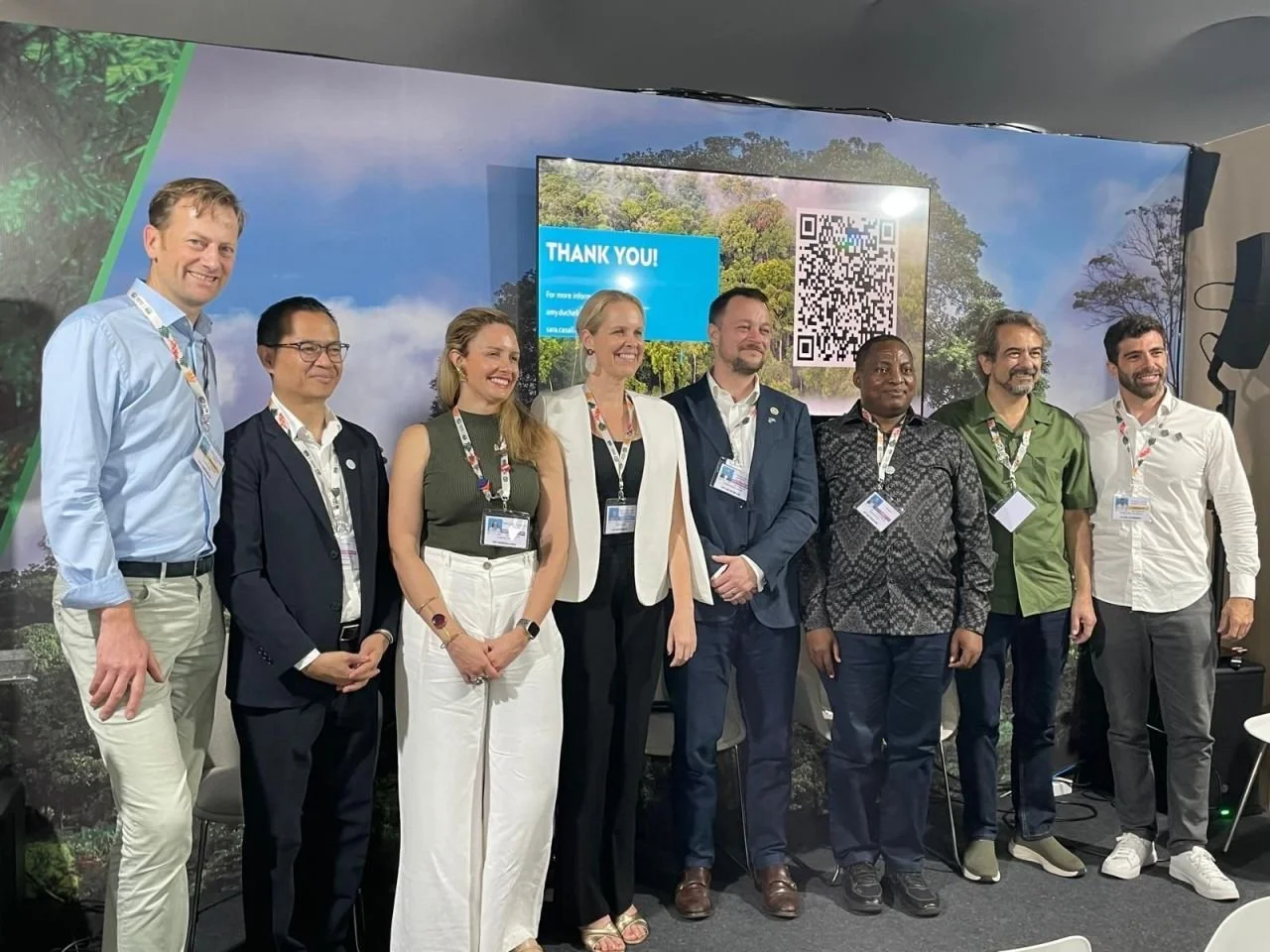
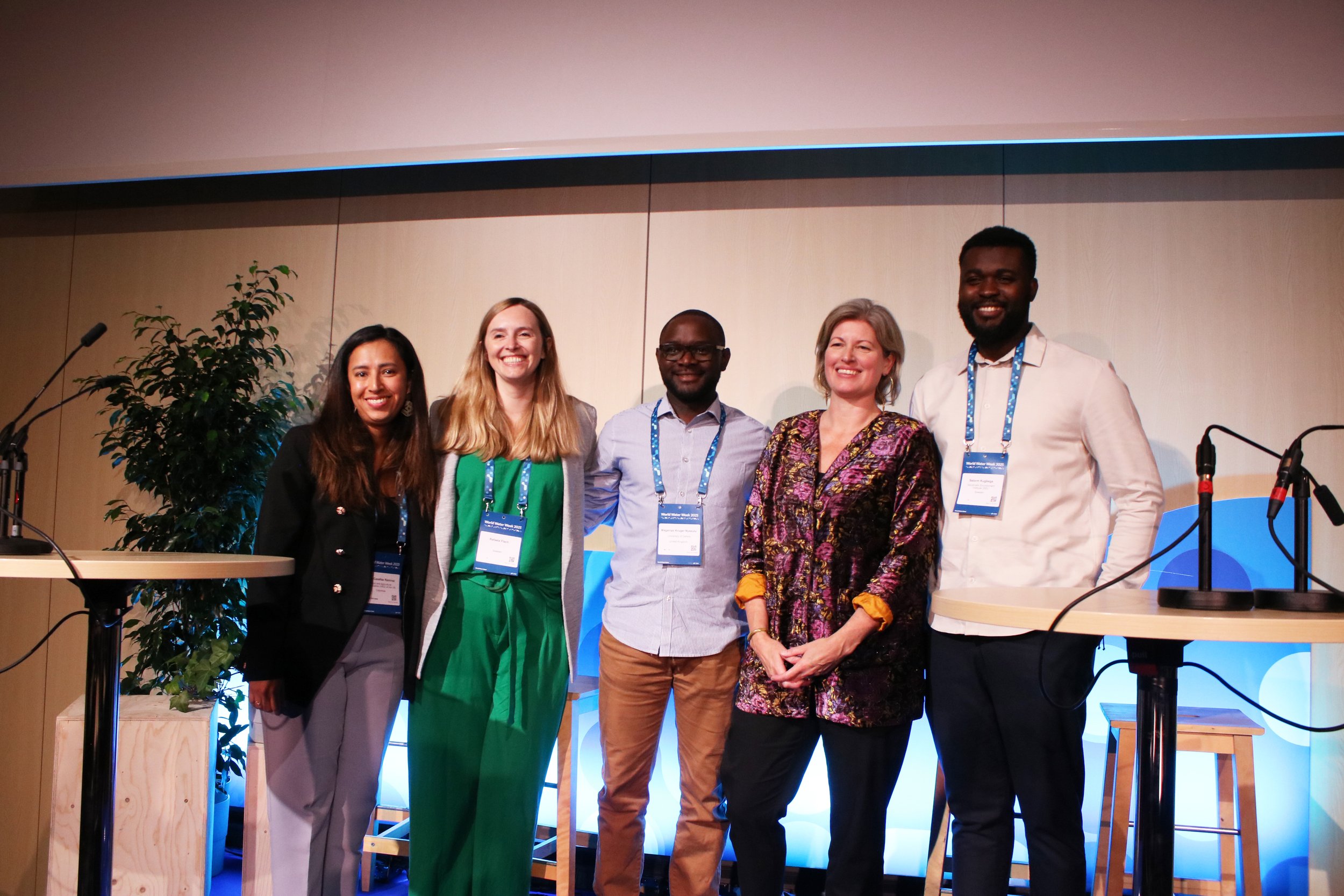
Image to the left from the report launch in the UN Forest Pavilion at COP30 and image to the right on-site chapter authors during the World Water Week event “Cool Forests”
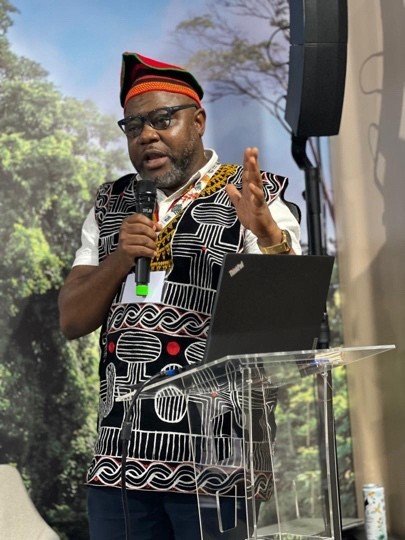
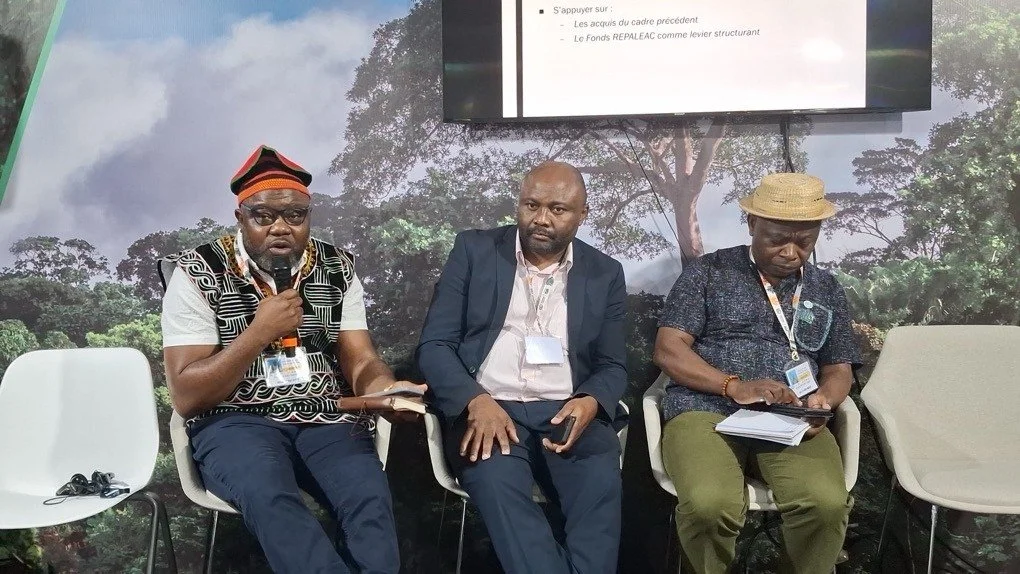
November 18: Focali member Raymond Achu Samndong at the Tenure Facility presented in session at the Congo Basin Day
Mobilizing national, regional and international financial resources for Indigenous Peoples and Local Communities (IPLCs) in the Congo Basin: A pathway to climate justice, biodiversity conservation and sustainable development – Making the “Belem Call to Action for the Congo Basin” and the “Pledge working for IPLC Congo Basin”
The session was held in the Forest Pavilion co-arranged by Tenure Facility and REPALEAC and can be rewatched here.
This event examined the financing challenges faced by IPLCs and presents approaches to strengthen direct support for community-led climate resilience and sustainable forest management. Key message: Direct, predictable and equitable financing is essential to sustain the contributions of IPLCs to the conservation of the Congo Basin.
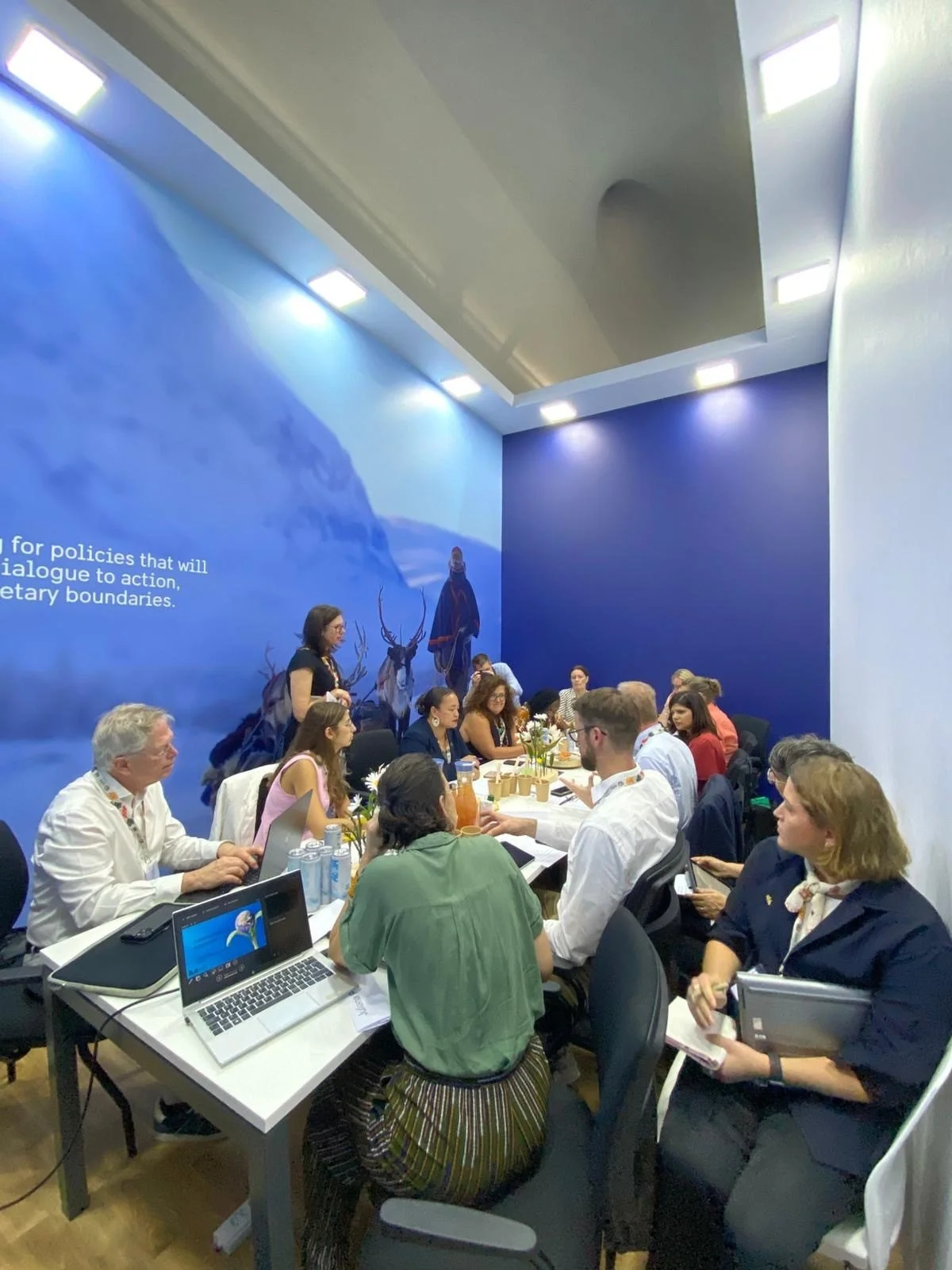
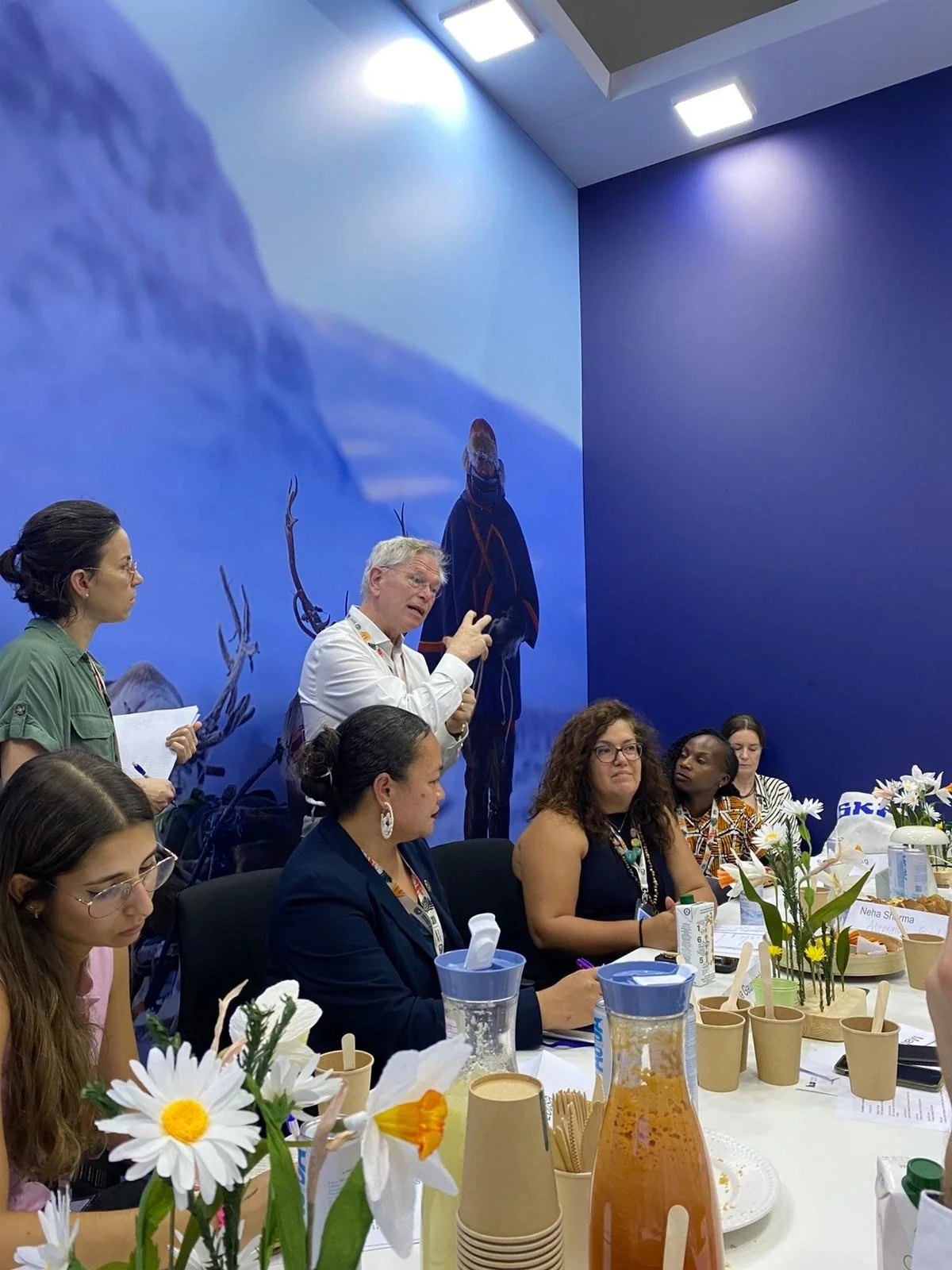
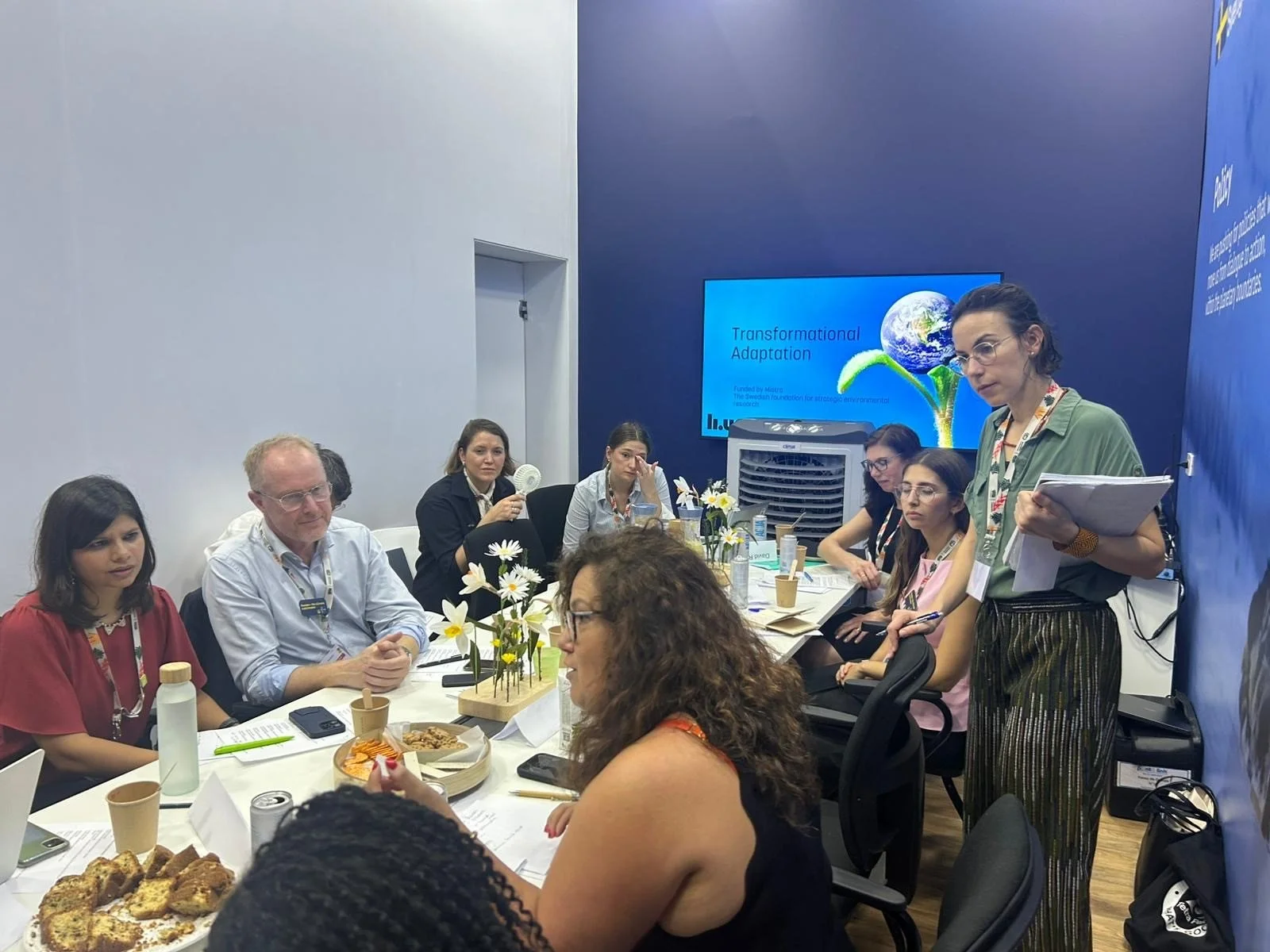
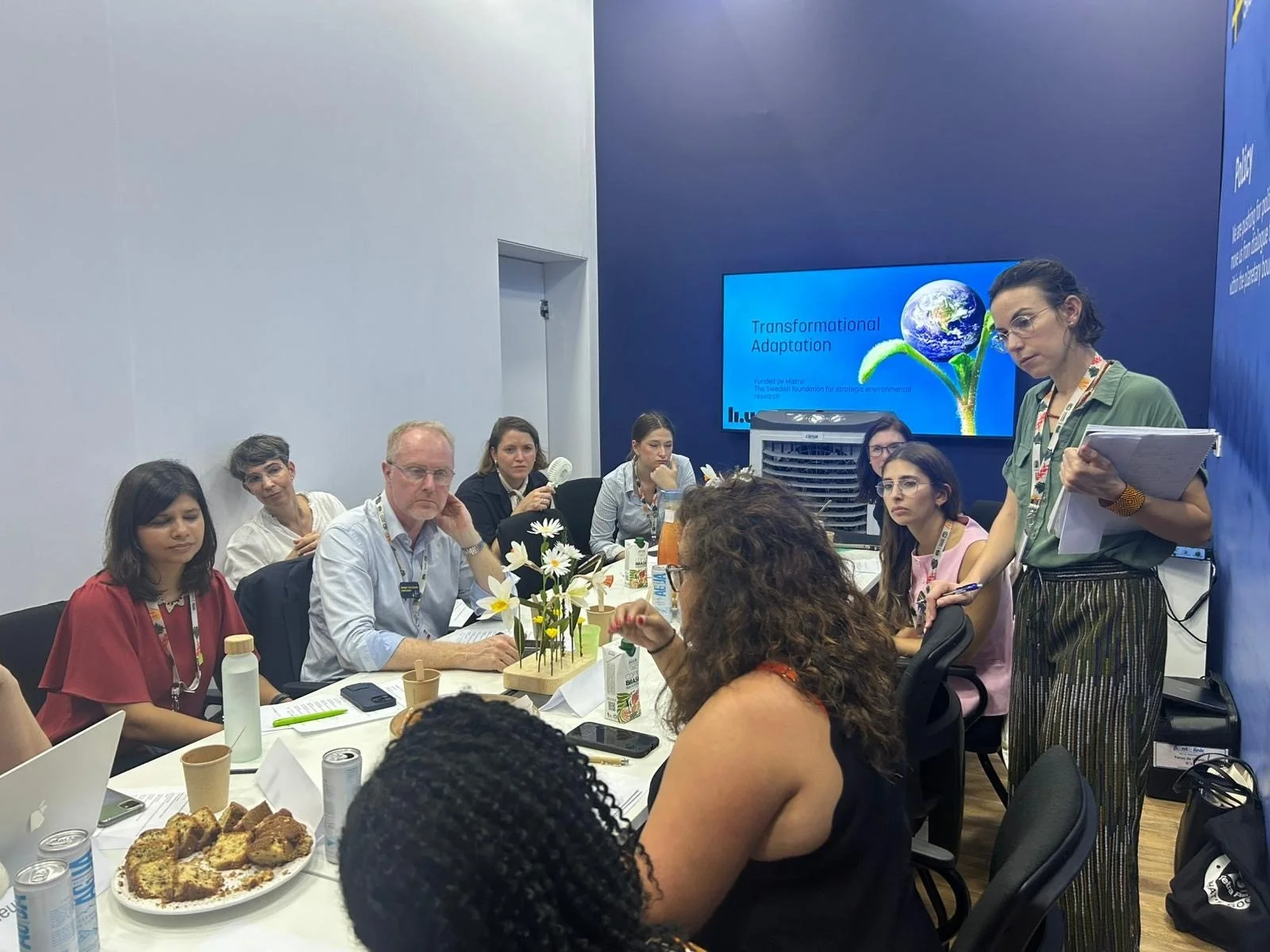
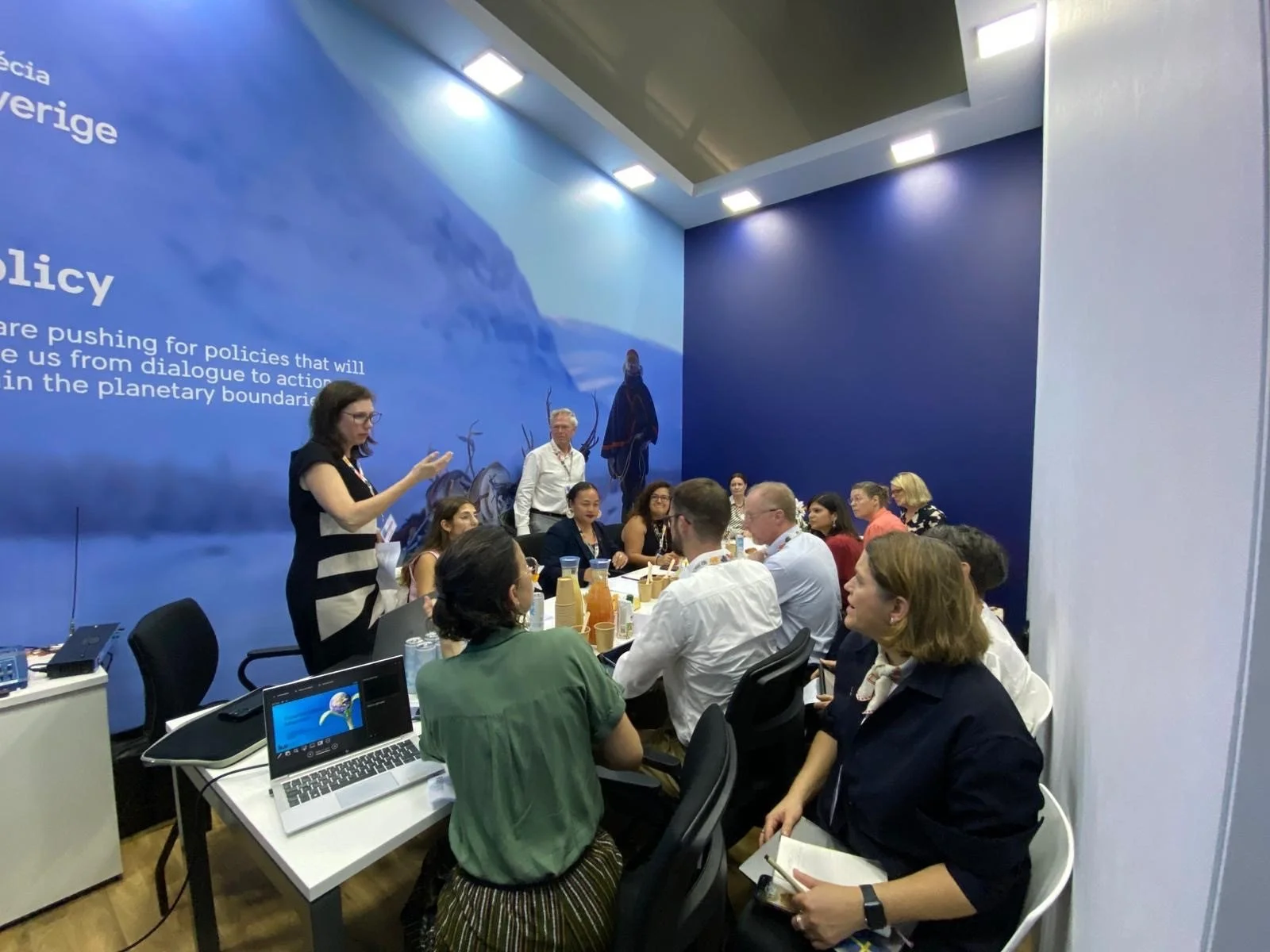
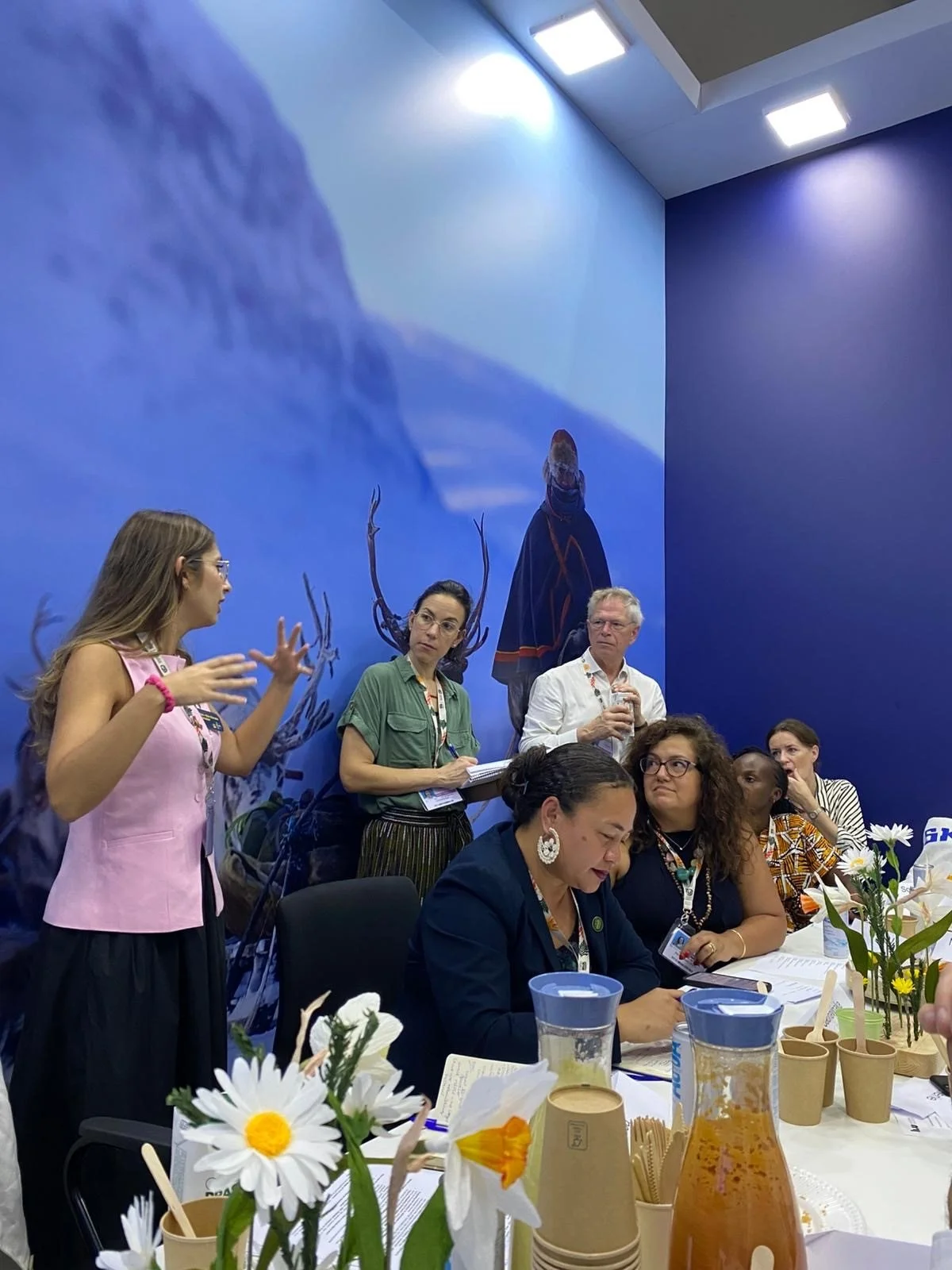
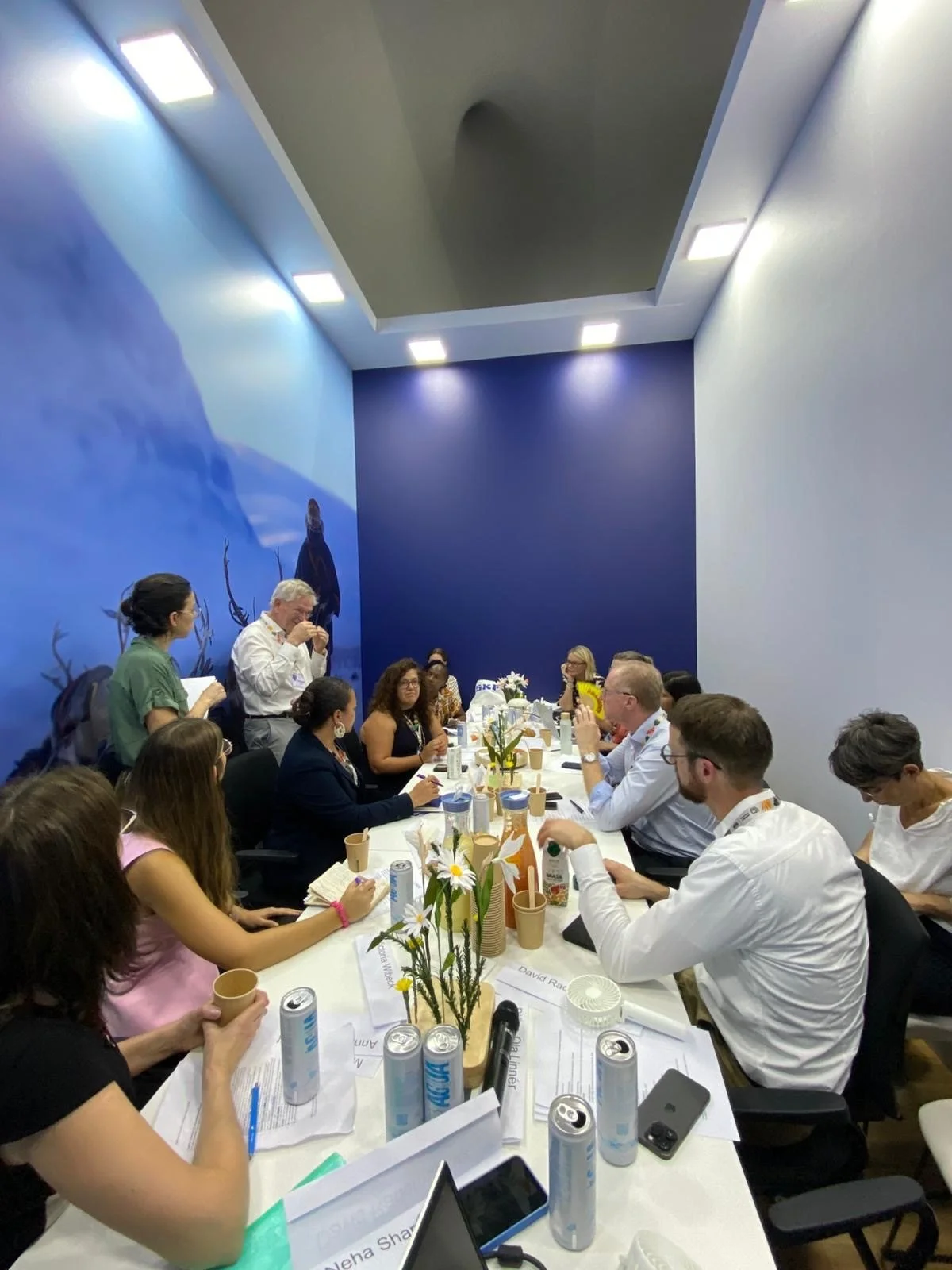
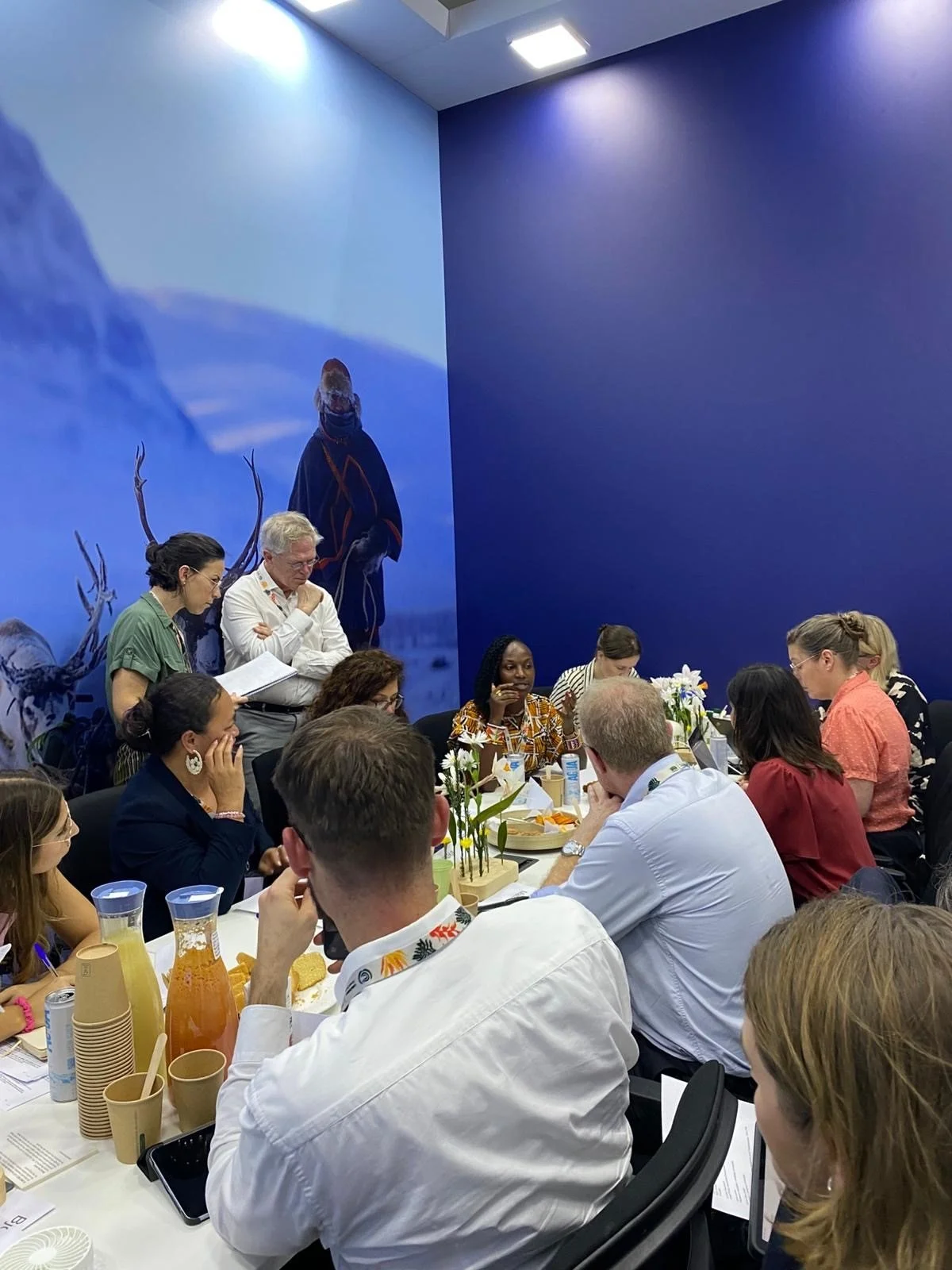
Update from Focali member Juliana Porsani and Björn-Ola Linnér from roundtable on transformational adaptation arranged in the Swedish Pavilion
“We are truly grateful to all participants in our Roundtable on Transformational Adaptation at the Swedish Pavilion during COP30. The session brought together negotiators, business actors, international organizations, funding bodies, and researchers to discuss one of the most emerging and dynamic topics in climate diplomacy: transformational adaptation. Transformational adaptation is increasingly recognized in international climate processes, not least in relation to the Global Goal on Adaptation (GGA) and its associated indicators. Yet it still lacks conceptual and operational clarity.
At the roundtable, we explored whether transformational adaptation can become a constructive avenue in the negotiations – linking mitigation and adaptation, supporting system transformations, and building common ground – or whether it risks becoming a new source of tension.
We also shared early insights from our survey at SB62, which sheds light on how negotiators and participants from around the world interpret and engage with this concept.
This discussion is part of the research project Transformational Adaptation – Prospects for a New Avenue in International Climate Diplomacy, carried out by: Linköping University, The University of Fiji, AEON Collective, ADAD in Cabo Verde. Thank you once again to the participants for your generous engagement and for sharing your insights at COP30. We look forward to continuing this important conversation. For those interested in the topics you can read more about the project here “
The project is led from Environmental Change, LiU, and involves colleagues from University of Fiji, Associação para a Defesa do Ambiente e Desenvolvimento (ADAD) in Cabo Verde, and AEON Collective in Saudi Arabia. It is funded by Mistra 2025-2028.
This reflection was first published by Björn-Ola Linnér on his Linked In page. Photos from the roundtable by Juliana Porsani and Björn-Ola Linnér.
Reflections by Focali member Claudia Ituarte-Lima on disproportionate access by actors with major emissions footprints
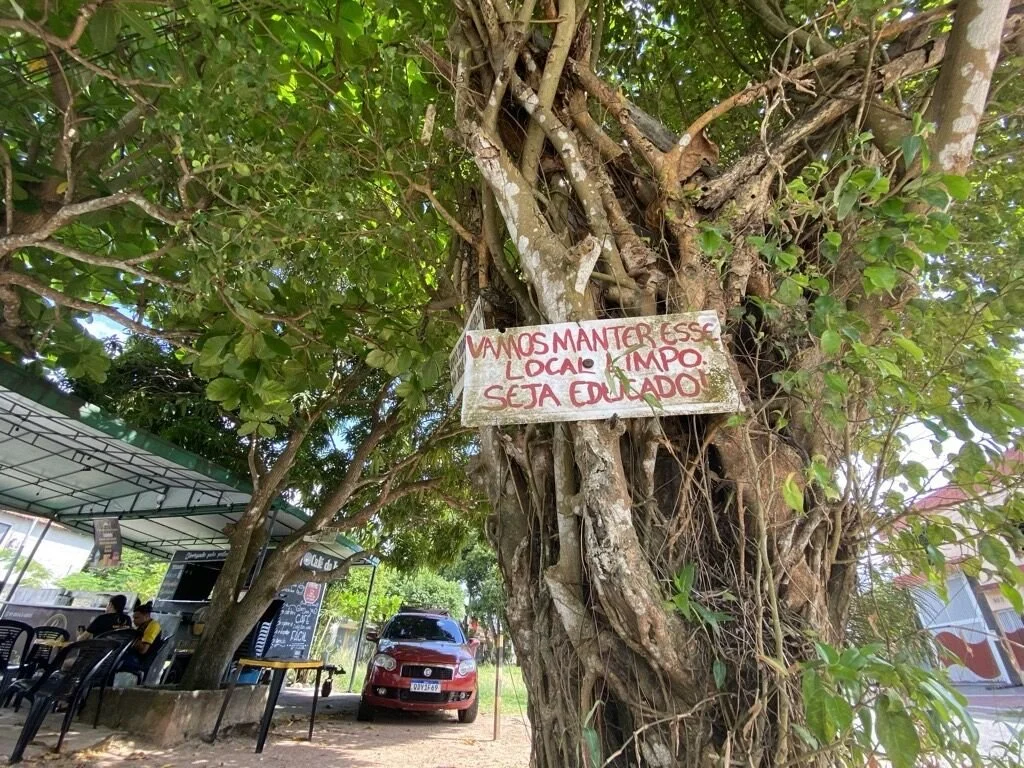
“In Belém, a handmade sign reads: “Keep this place clean, be educated!" That message echoed across the climate march, the Peoples’ Summit, and inside the COP venue — as my photos show. People are demanding responsible action from businesses.
But inside the negotiations, there is a worrying reality: more than 1600 fossil fuel corporate lobbyists outnumber every country delegation except Brazil according to an anlysis by the KBPO coalition. When industries with major emissions footprints have disproportionate access, it becomes harder for States to take the strong and urgent regulatory measures the planetary crisis demands.
This imbalance stands is clearly divergence with the International Court of Justice (ICJ)’s recent advisory opinion on climate change. The Court stated that a State may be internationally responsible where it “has failed to exercise due diligence by not taking the necessary regulatory and legislative measures to limit the quantity of emissions caused by private actors under its jurisdiction” (parr 428). In other words: States must regulate private actors — not allow them to dominate the very spaces where global climate rules are shaped.
The vibrant civil society message in Belem and the ICJ’s legal clarity point to the same conclusion: Real climate action demands real accountability — especially when private interests are at the table.” (This reflection was first published on Claudia Ituarte-Lima Linked In page.)
Reflection on the first week of COP30 by Focali member Taís Sonetti González
“This first week at COP30 in Belém has been intense, beautiful, and politically sharp. I have moved between negotiation rooms, university corridors, and the People’s Summit, and in all these spaces, I reencountered friends, colleagues, and compañerxs from different moments of my journey. Researchers, activists, Indigenous leaders, students, policymakers, artists… people who have been weaving this fabric of resistance and care for much longer than the COPs have existed.
It has been a week also of long-overdue hugs, quick conversations in crowded and extremely hot pavilions, shared panels, and unexpected meetings in the streets filled with songs, chants and banners. These reencounters reminded me that democracy is a practice supported by actions and relationships, by those who persist in showing up, organising, and imagining other futures together. As one Indigenous youth says in one of the close rooms, “a future that we do not know what it looks like, but we know how it will feel, it will feel like joy”.
Here in Belém, climate politics does not live only in the Blue Zone. It also lives in the People’s Summit, in Aldeia COP30 and in the Casa da Reza (Pray House), in the collective kitchens, collective houses, and in the bodies of those who march and protest under the sun and rain so that the Amazon and its peoples are not treated as scenery, but as subjects of rights. Participation takes many forms: some write texts and negotiate commas; others defend territories, hold memory, cook for hundreds, or translate between worlds. All of this is climate action.
As a mestiza researcher and practitioner, walking between streets and plenaries, I am reminded that any future will depend almost entirely on these actions and networks of resistance, care, affection, and struggle, and the real “negotiations” of climate justice are made of people in (the) movement(s), no mutirão.”
This reflection was first published on Taís Linked In page here
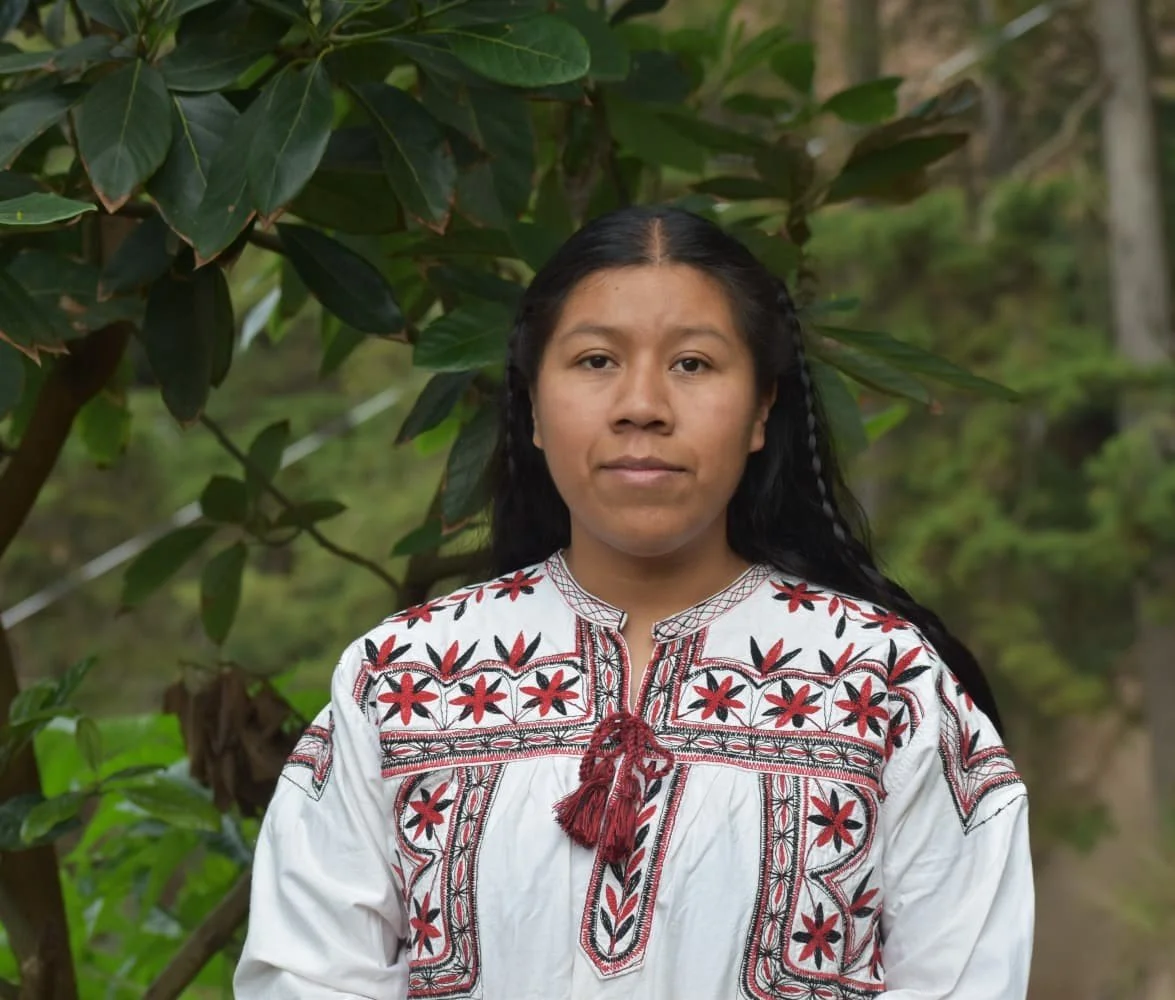
Read a separate longer article co-written by Taís and two women she met at COP30 here:
Balance of the first week of COP30 / Balanço da primeira semana da COP30. (Both English and Portuguese versions of the article)
The co-authors who Taís met at COP30 sharing their view on COP30 are: Wilses Tapajós, Indigenous doctor, Cobra Grande territory, within the territory called Brazil and Esther Martínez Ayuujk, Young Ayuujk, a member of the Ayuujk Poj Kaa Women's Organization, a territory called Oaxaca, Mexico. (Photo of Ester in the image to the left).
Reflection by Focali member Claudia Ituarte-Lima from a morning and side-event on her first day at COP30
“My first morning at COP30 in Belém began in a small local café wagon, where a quote painted on the side read: “Every long journey always starts with a first step.” Finding those words already there felt unexpectedly grounding—especially after a 2 a.m. departure and hours spent in enclosed spaces. Breakfast outdoors, with the open sky and my first warm coffee, offered a brief moment of calm before stepping into the intensity of COP30.
The need to recognize environmental humanrights defenders within the processes of the UN Framework Convention on Climate Change (UN Climate Change) was the central focus of the side event that took place later that day at COP30 in Belém, Brazil. This recognition is urgent and critical, especially considering that the UNFCCC is still lagging behind developments in international and regional human rights law, as well as progress made under the Kunming–Montreal Global Biodiversity Framework under the Convention on Biological Diversity (UN Biodiversity).
My presentation, “Legal Advances, Rising Threats: Why protecting the rights of defenders matter for a Living Earth,” drew on insights from two ongoing projects: Biosphere Defenders – Leveraging Legal and Governance Tools for Just Sustainability Transformation (DEFEND-BIO), funded by Biodiversa+, Formas, a Swedish Research Council for Sustainable Development, and other national funders; and Environmental Human Rights Defenders – Change Agents at the Crossroads of Climate Change, Biodiversity and Cultural Conservation, funded by Formas.”
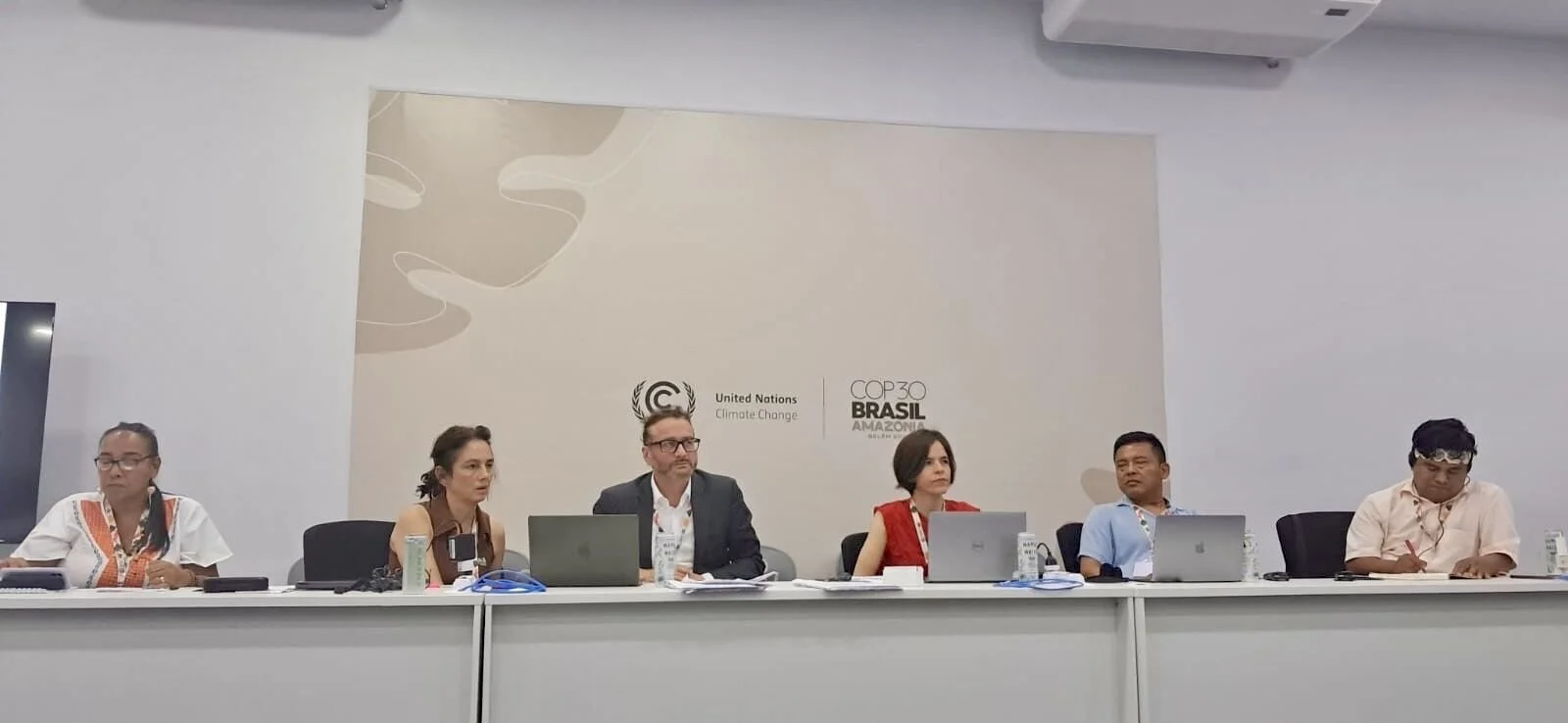
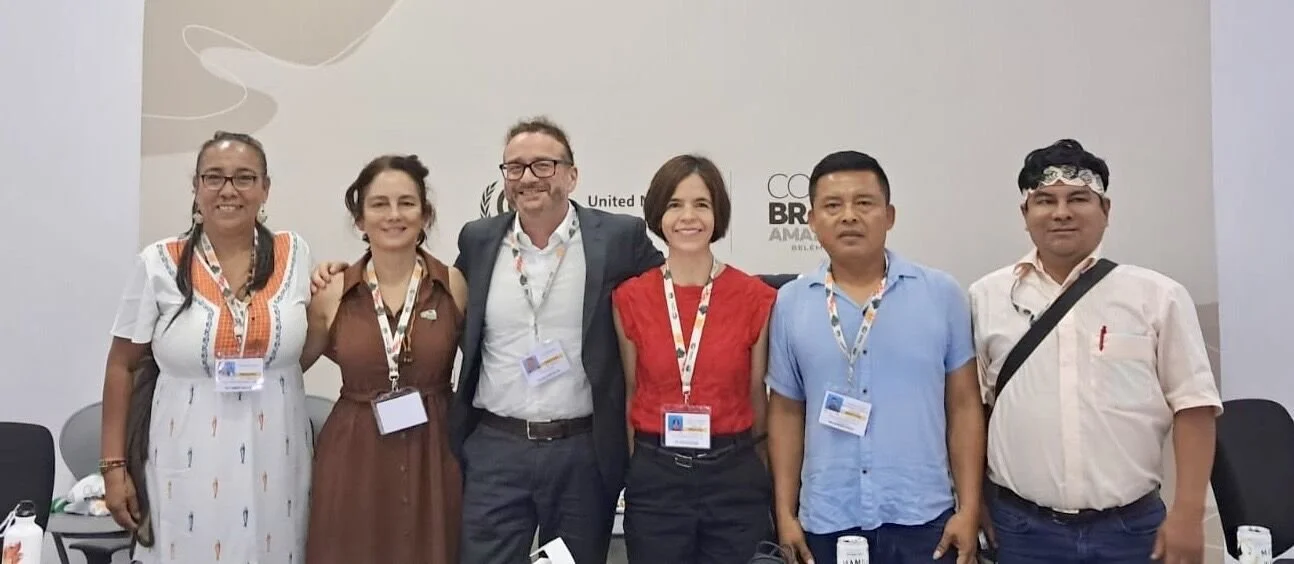
Read the original and full post by Claudia on her Linked In Claudia in photo below together with the panelists in the session including Focali member Fariborz Zelli.
Reflection by Focali member Claudia Ituarte-Lima on stories on human rights in practice from Belém
“We need a narrative that nurtures rights—one that strengthens empathy, not fear, and connection, not distance.
Much of the COP30 coverage has focused on the groups who chose to blockade the conference entrance as a form of protest. But that is only one part of the story.
Across Belém, other stories unfolded: youth expressing their demands through art, dance, and music; a person on crutches keeping pace under the heat; indigenous parents giving interviews while caring for young children; communities honoring those who could not speak—the disappeared, and the living world itself.
In the photos I took, these moments revealed human rights in practice: the freedom of expression and opinion, the freedom of peaceful assembly and association, and the right to participate in public life. These rights are not abstract concepts—they are lived, embodied, and essential to protecting another fundamental right: a clean, healthy, and sustainable environment.
These are not side stories.
They are at the core of climate justice—reminding us that fair and effective climate governance begins with empathy, recognizes people as rights-holders, and understands that those rights are inseparable from the wellbeing of the Earth we belong.”
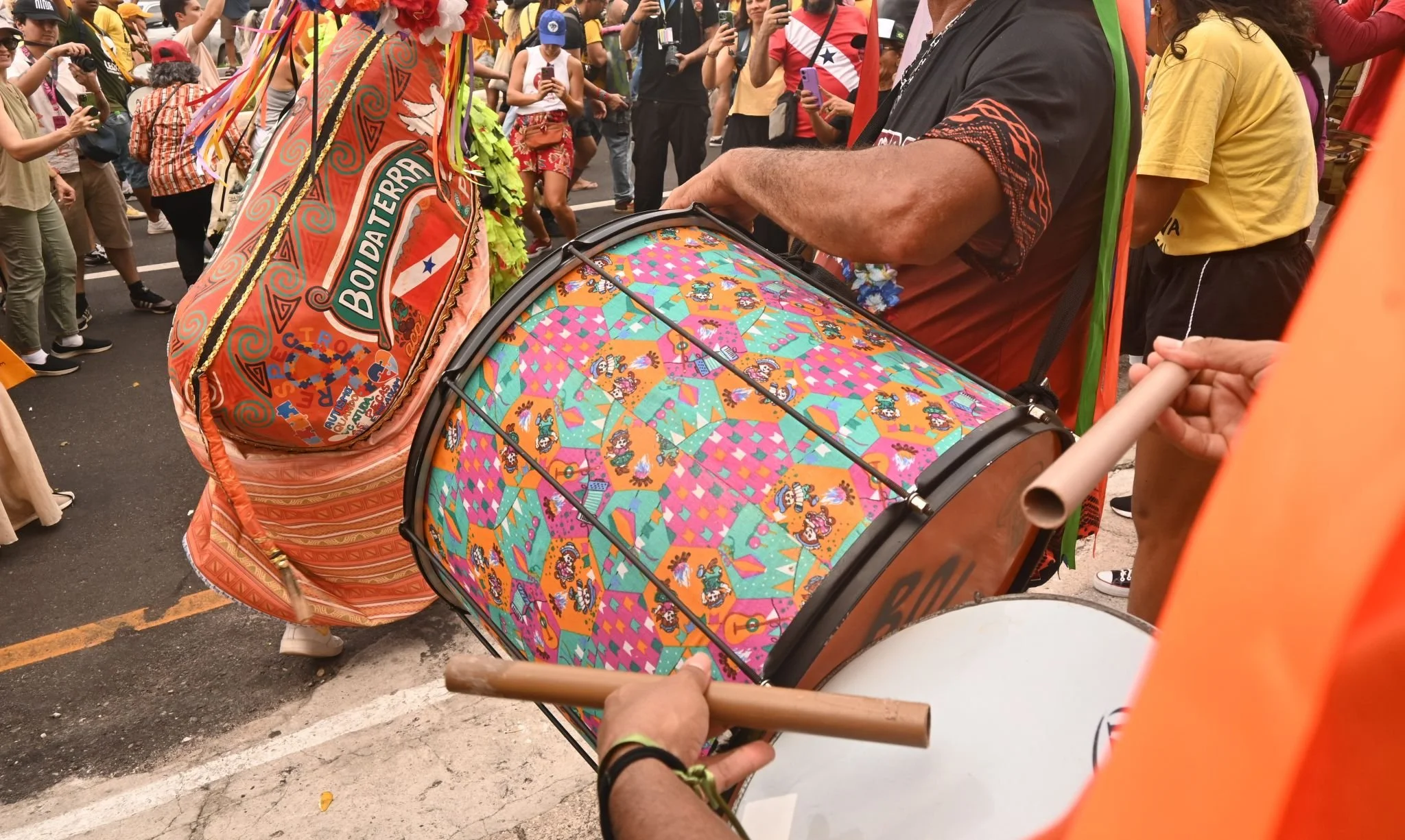
This reflection and photos was first shared on
Focali member Mairon Bastos Lima contributed to roundtable on sustainable value chains in the Amazon arranged by Sida in Swedish Pavillion
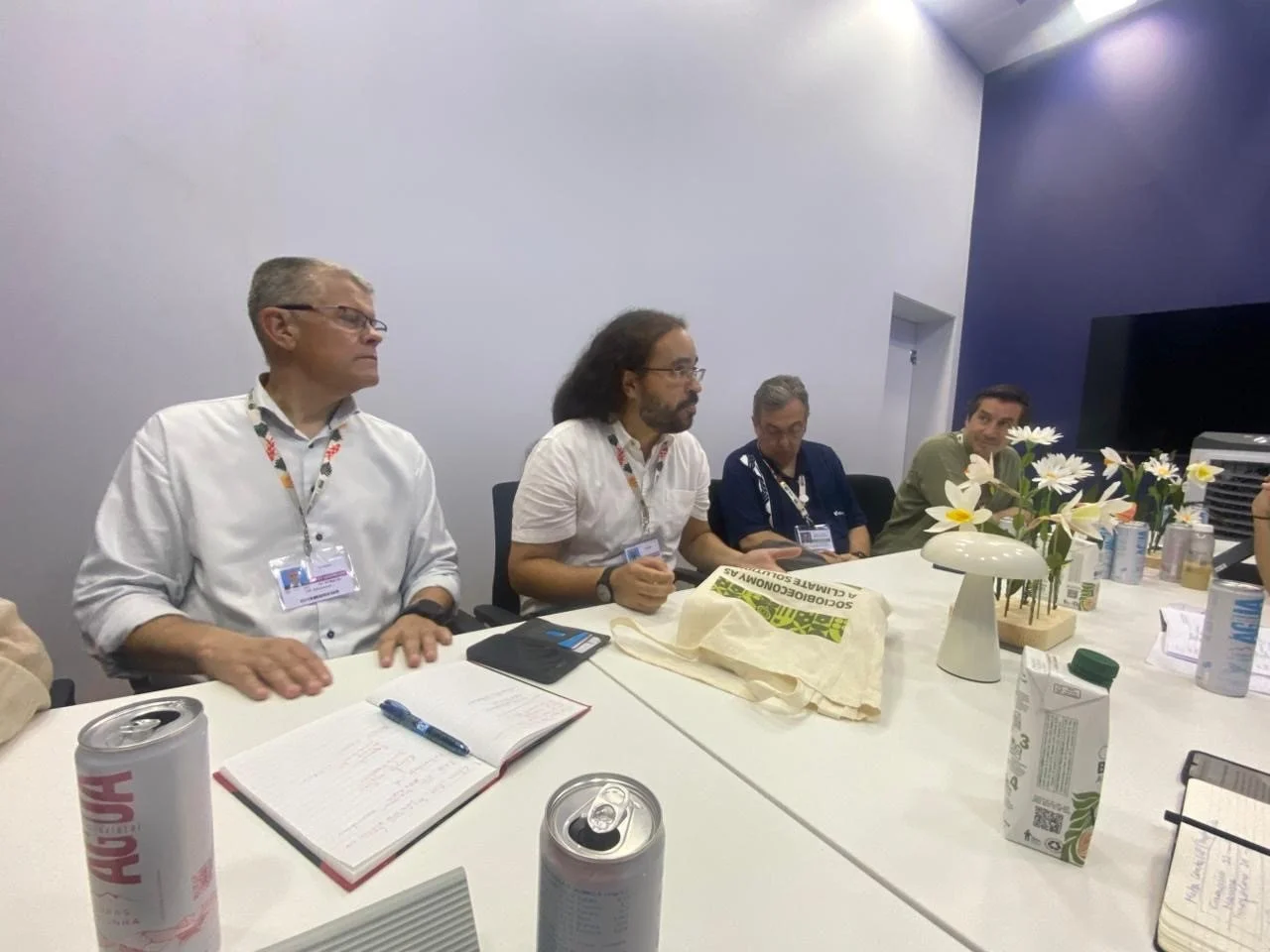
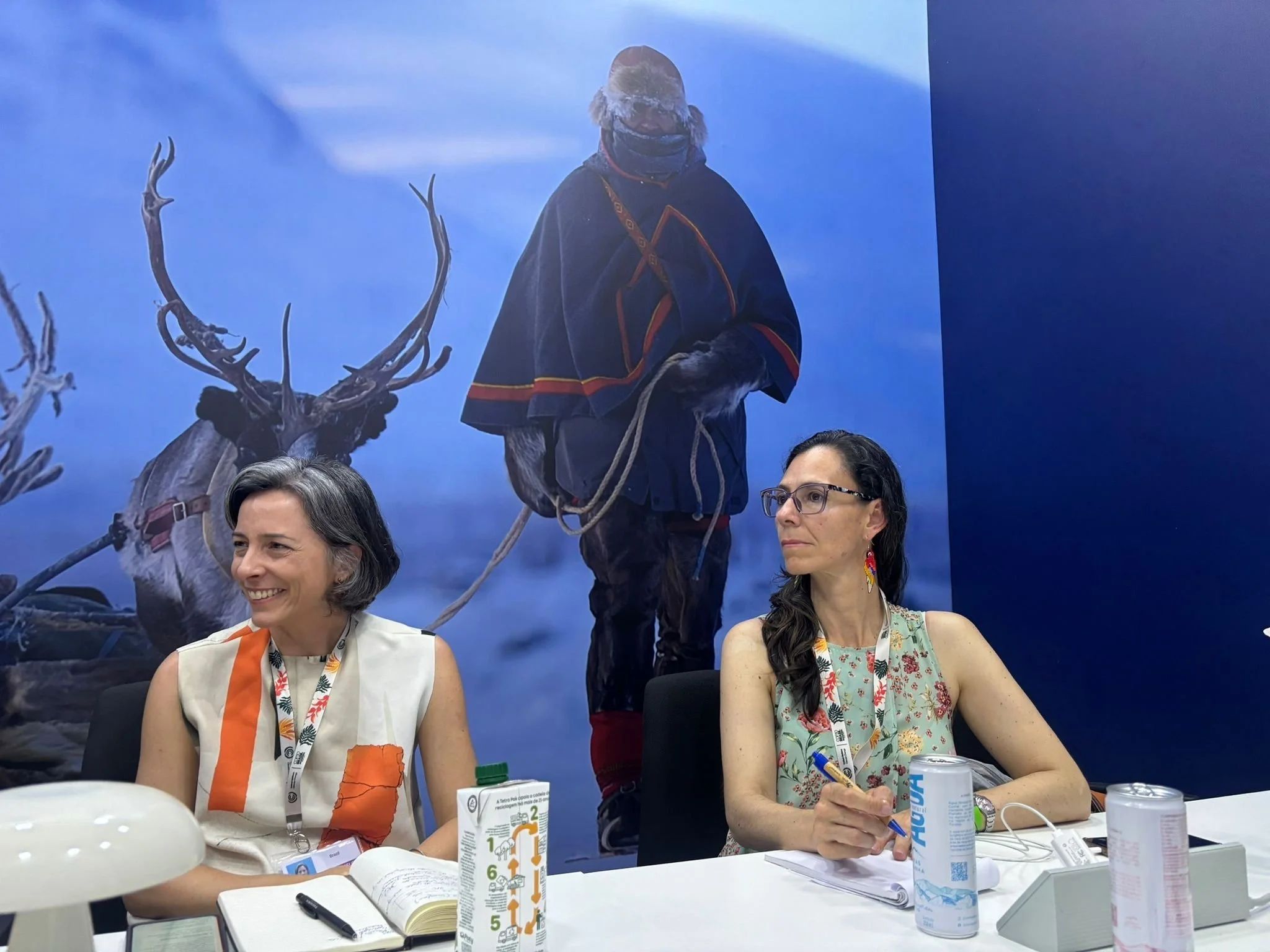
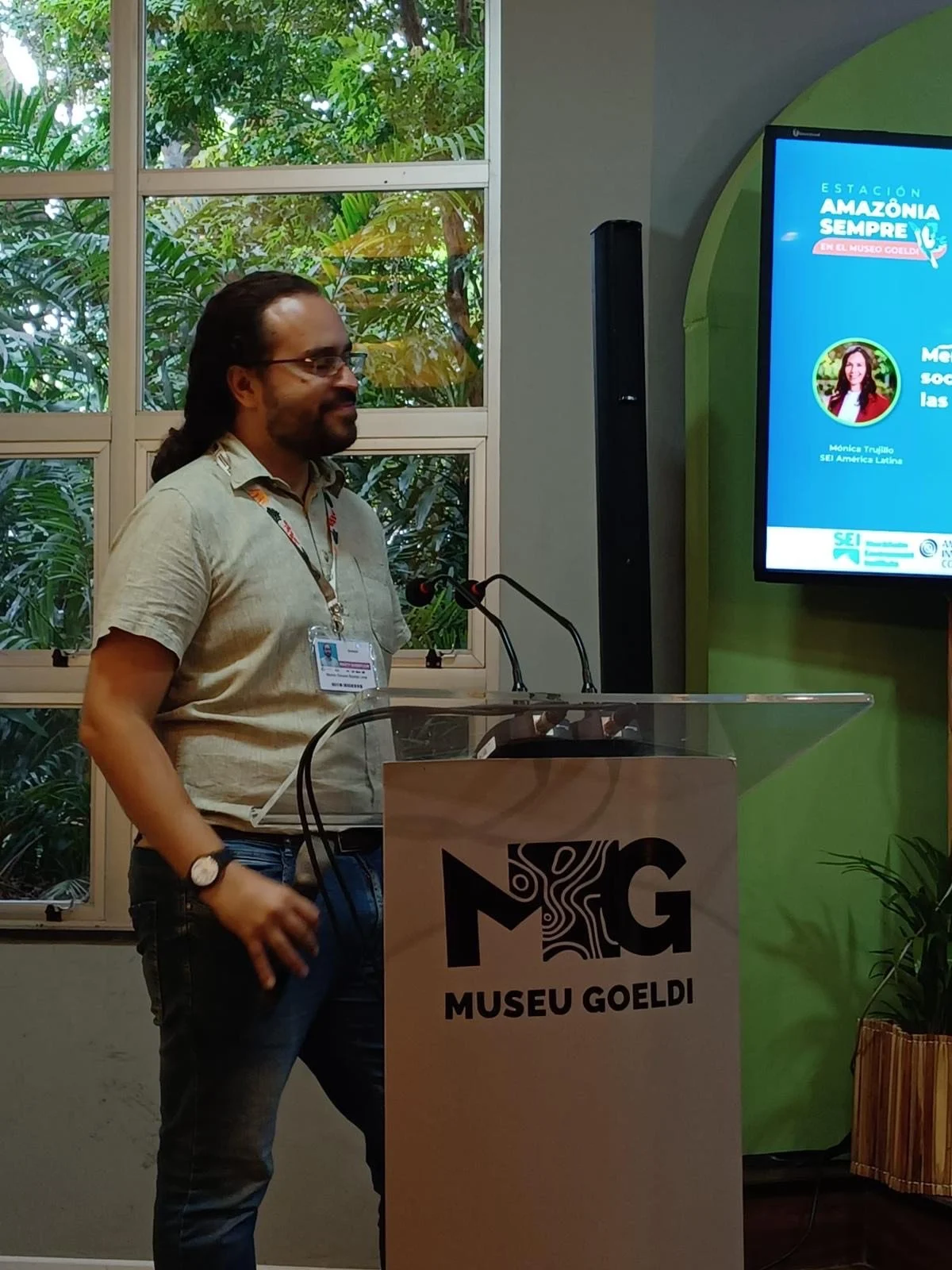
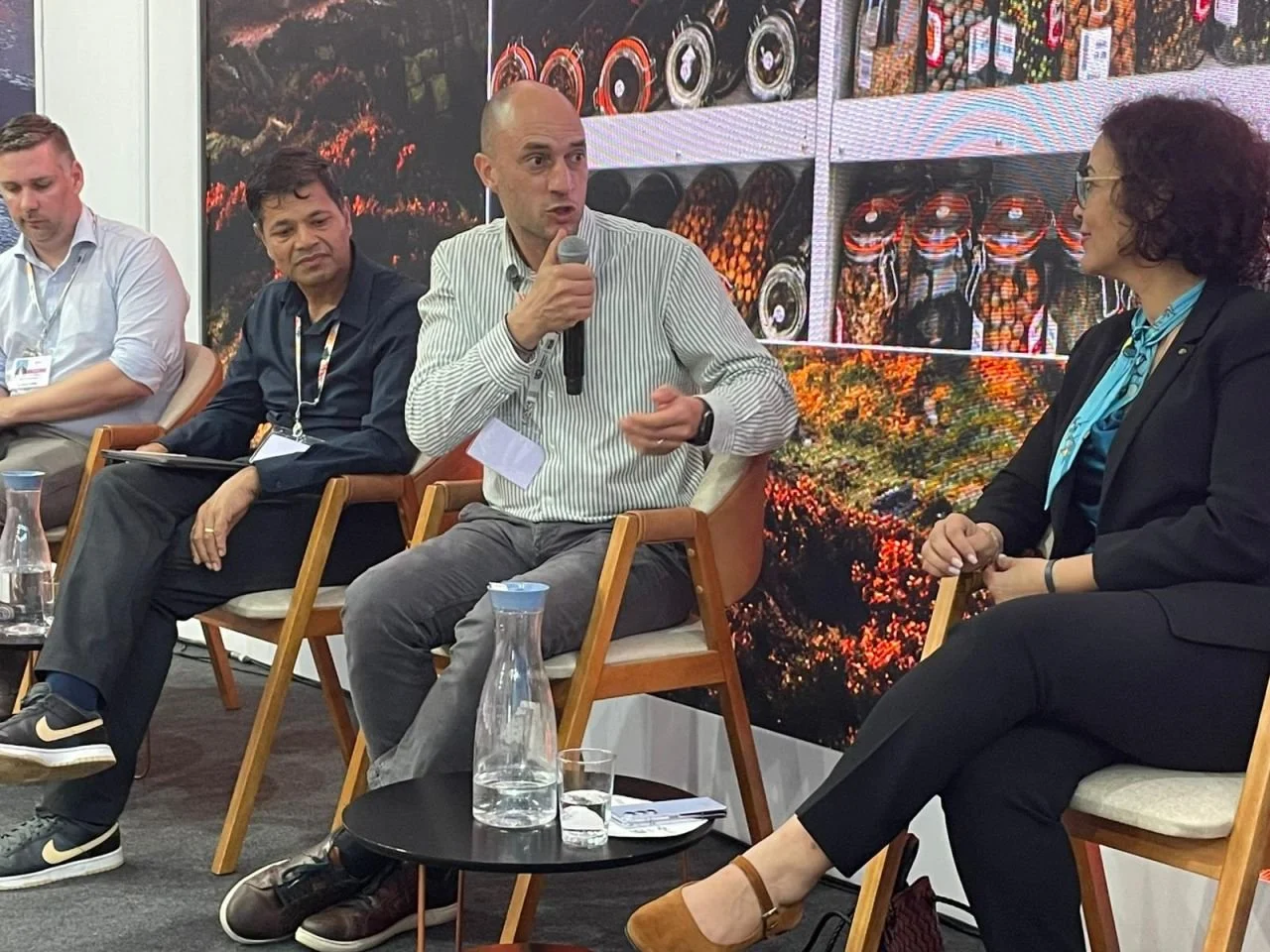
Mairon Bastos Lima was invited to participate in a closed roundtable with Swedish actors and stakeholders in Amazonian landscapes by Sida held in the Swedish Pavillion on November 14 titled “From Forest to Market: Unlocking Amazonian Valus Chains through Innovation and Impact Entrepreneurship” The roundtable was moderated by Annika Otterstedt Assistant Director General Sida. See photos from a few of the 10 roundtable particpants below. Mairon Bastos Lima collaborates with Mónica Trujillo Research Fellow at SEI Latin America to the right below in a on ongoing project on how value chains that draw from specific geographical origin and biocultural diversity can help promote transformative sustainable development, reversing ecosystem loss. It examines the emergency of Amazonian biocosmetics in Brazil and specialty coffees in Colombia to draw lessons for similar value chains in the tropics, in line with the increased attention to tropical forests due to the now ongoing COP 30 in the Amazon. Read more about the SEI project and its team here: The Amazon beyond commodities | SEI
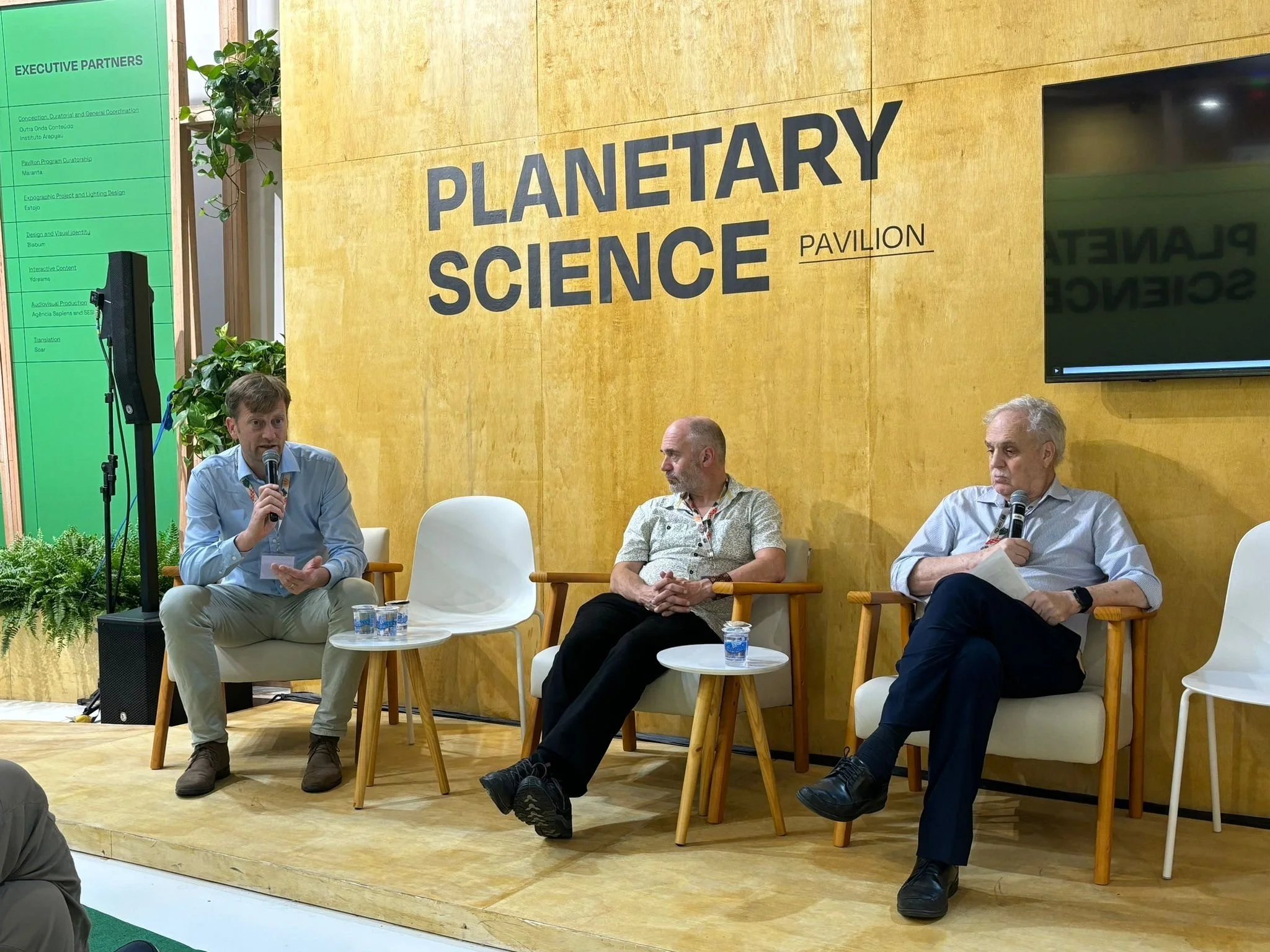
Focali member Toby Gardner participated as a speaker in the planetary science pavilion presenting the work by Trase
In photos below with panel moderated by science pavilion co-chair Carlos Nobre Earth system scientist from Brazil.
In lower image to the right Focali members Toby Gardner, Mairon Bastos Lima and Taís Sonetti González read more about them in posts below.

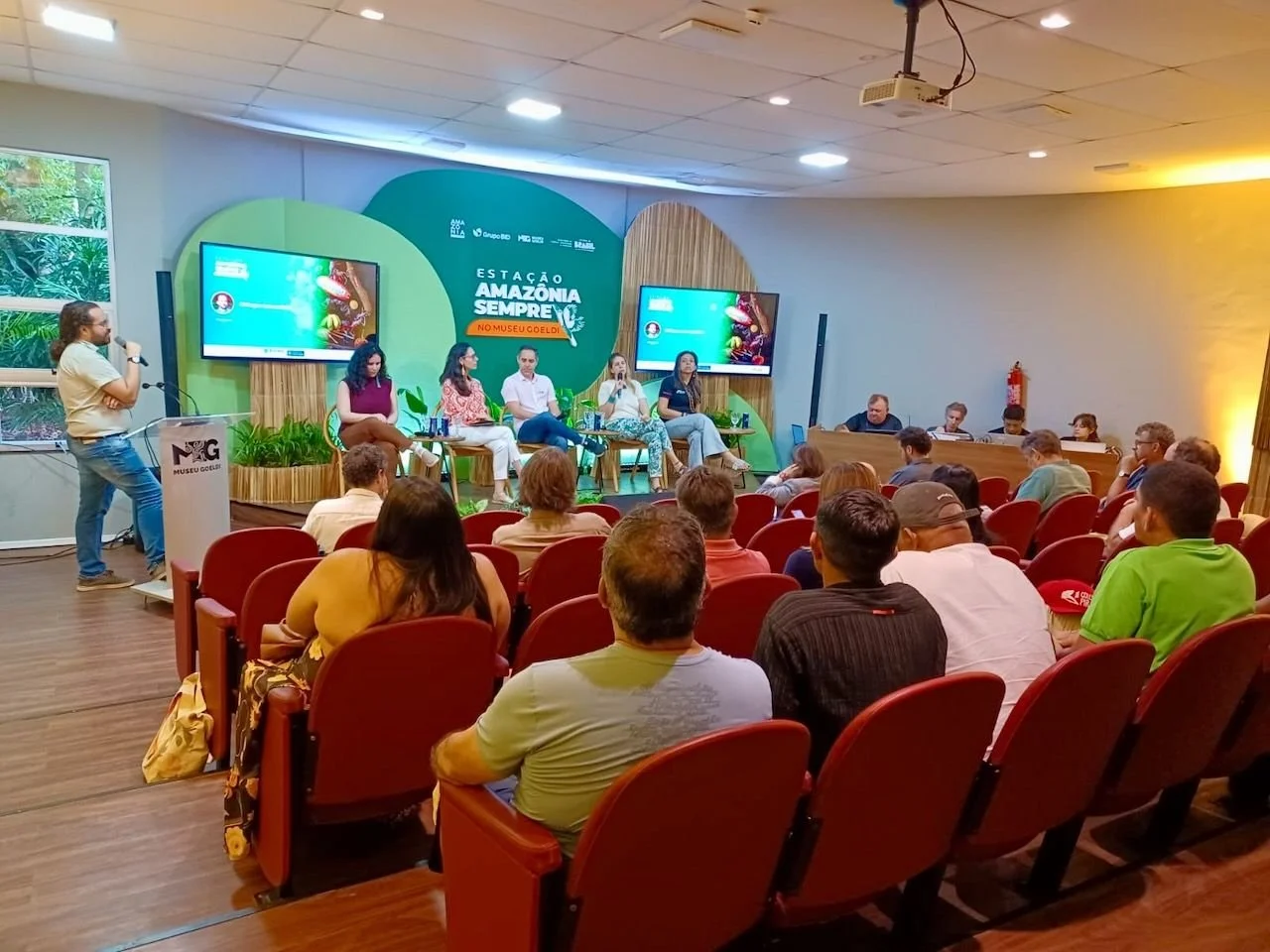
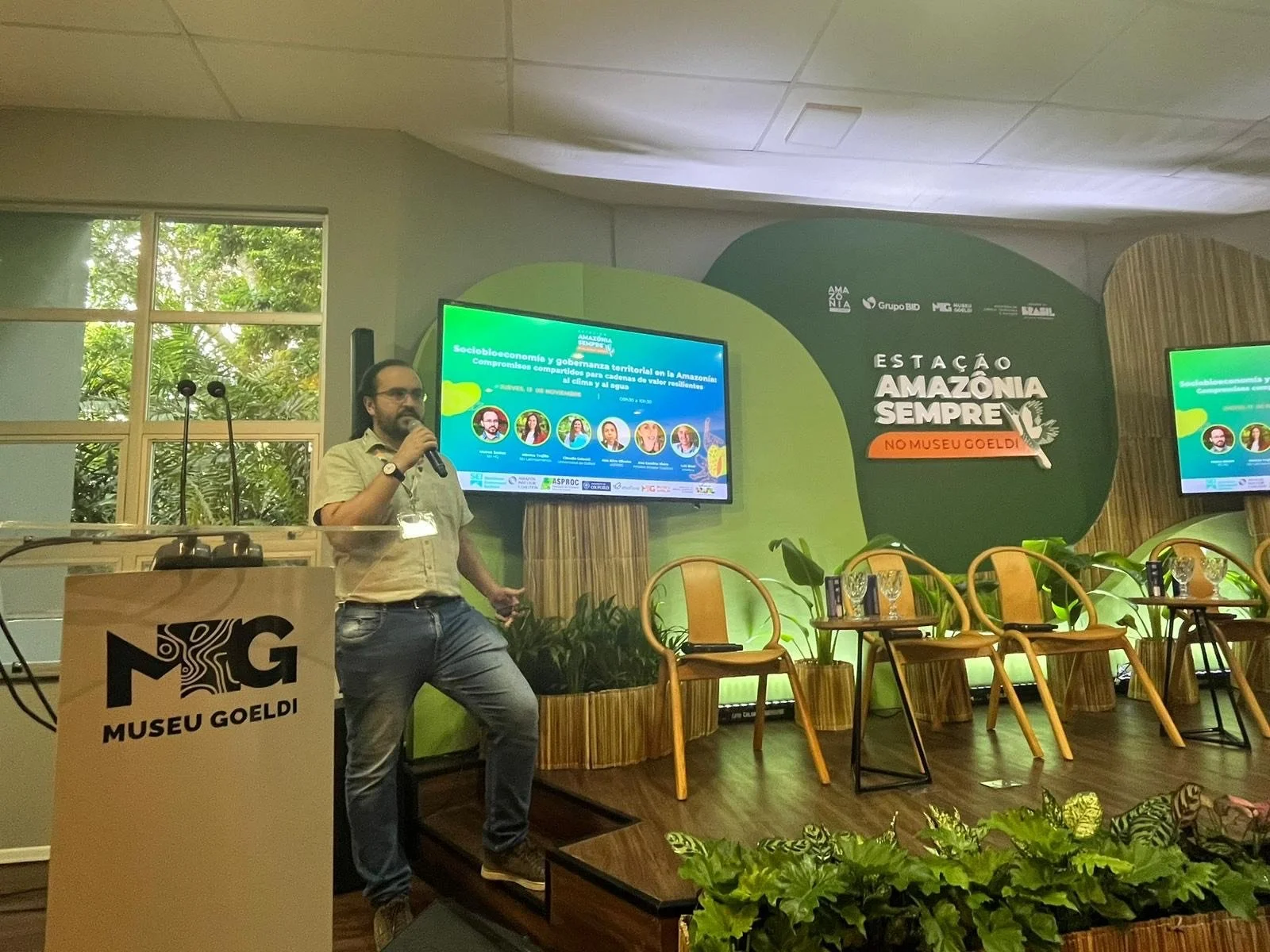
November 13: Focali member Mairon Bastos Lima chaired session on landscape and (socio)bioeconomy governance
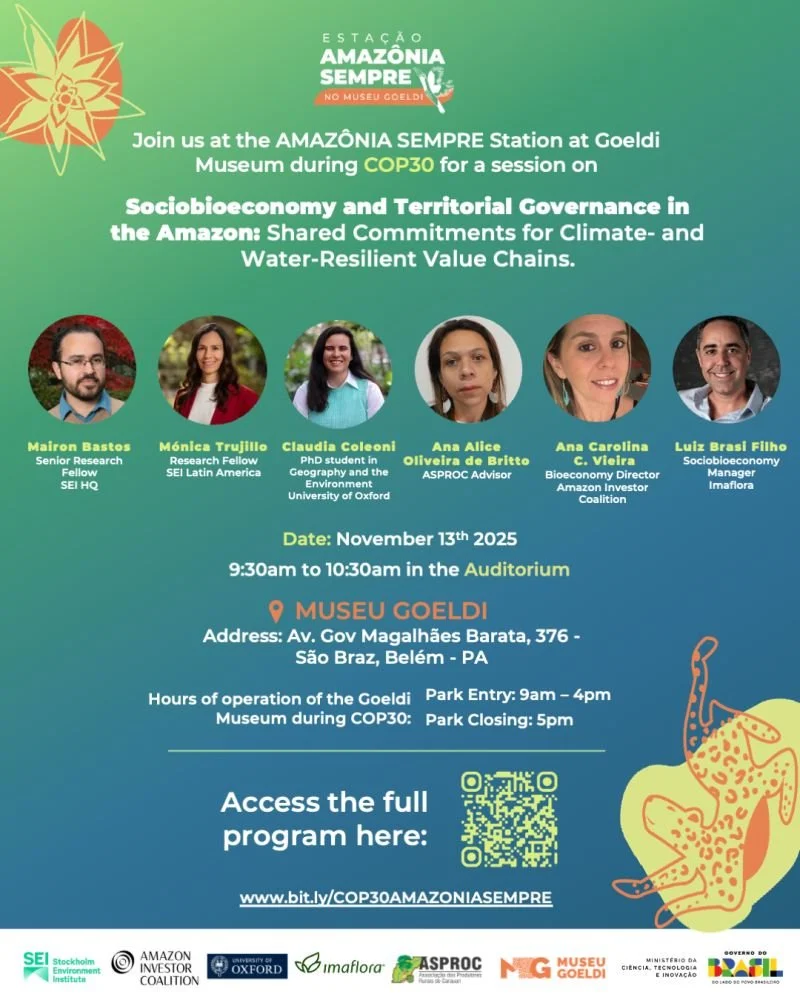
“What an honour to have chaired a session at the Amazonia Forever station at COP30 on landscape and (socio)bioeconomy governance drawing on experiences from Brazil and Colombia, at an event with such a strong Indigenous peoples and civil society presence. With my colleagues Monica Trujillo and Cláudia Coleoni from SEI Latinoamérica – Instituto de Ambiente de Estocolmo, on the project Amazon Beyond Commodities, as well as Luiz Antonio C.S Brasi Filho presenting on Origens Brasil®, Ana Carolina Vieira from the Amazon Investors Coalition, and Ana Alice Oliveira de Britto representing the Association of Small Producers from Carauari (AM), Last but not least, Museu Emílio Goeldi | MCTI is a serious candidate for most beautiful of all COP30 venues in Belém!” (See orignial post on his Linked In post here).
From the SEI Event page: Climate resilience in the Amazon requires more than protecting ecosystems – it demands an inclusive bioeconomy that benefits local communities, safeguards rights, and shares both the risks and rewards of sustainable production. The side event explored how integrated value chains and specialty markets rooted in sociobiodiversity can offer viable, climate-compatible development pathways. This event will focus on how governance strategies along value chains, when designed with a climate and water lens, can build more just and resilient territories. Rather than focusing solely on territorial or sectoral interventions, we propose a multi-actor approach along the value chain—bringing together communities, companies, investors, and public institutions through shared commitments.
The AMAZÔNIA SEMPRE Station at Goeldi Museum is presented by the Inter-American Development Bank Group (IDB Group), through its Amazonia Forever Regional Program, in partnership with the Goeldi Museum, during COP30. From November 8 to 21, in Belém, the Station will feature a dynamic agenda focused on Amazonia, co-created and selected with a broad network of partners and organizations through an open call for proposals. The program aims to promote inclusive and transformative dialogues about the future of Amazonia throughout COP30. Read more about the full program here.
Day 3 at COP30: Reflection by Focali member Alexandre Antonelli from visit at the Zoobotanical garden and their animal recuperation unit
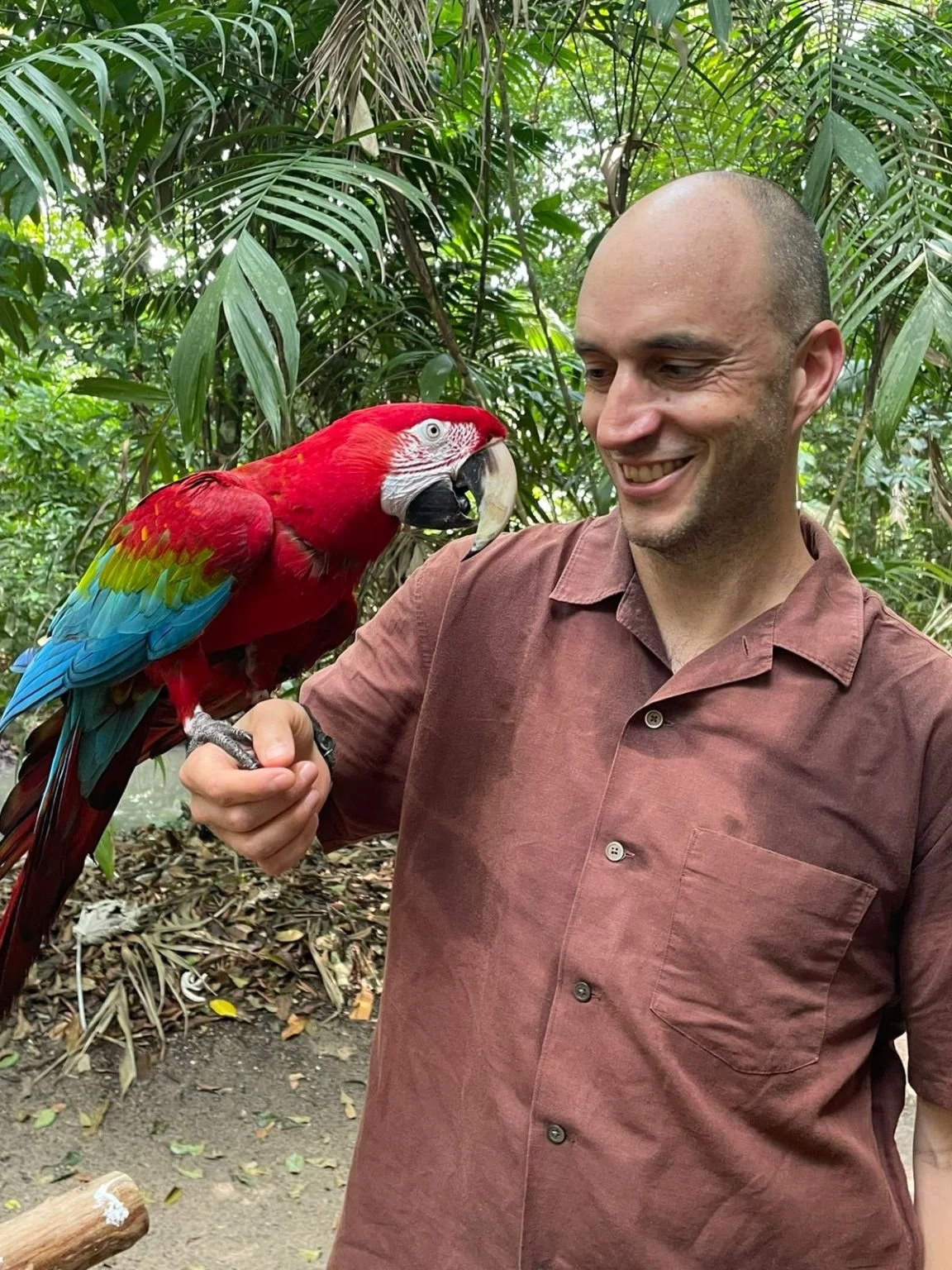
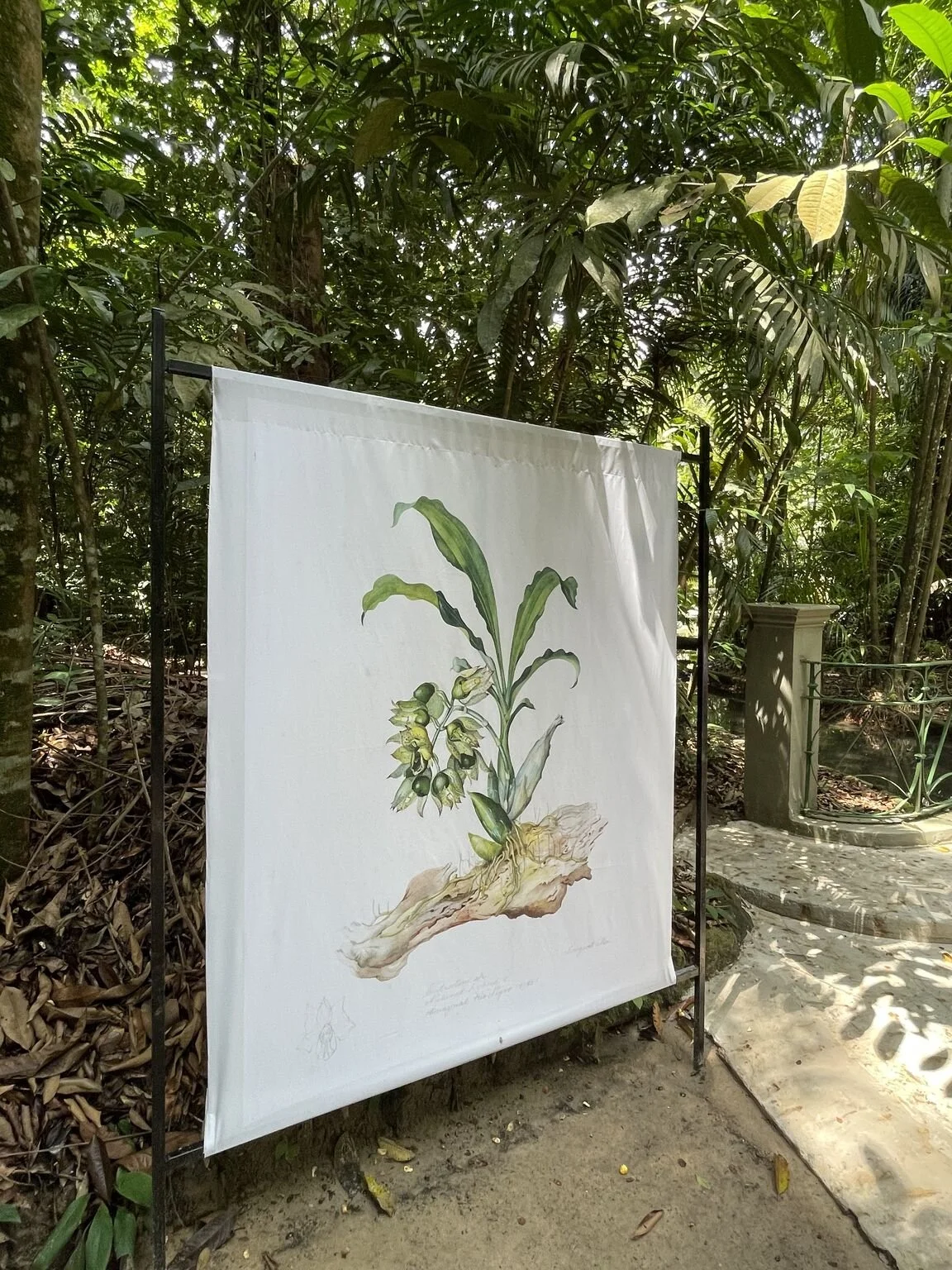
“Early morning run along the Guamá River. Hot and humid. Went to see the Zoobotanical garden Mangal das Garças, a rarely well-protected, tiny fragment of coastal rainforest in central Belém. After a fruit-based breakfast, I went to Bosque Rodrigues Alves – another hidden gem of Belém. We at Kew provided our Brazilian colleague, architect Jeanitto Gentilini, with images of the work of English botanical artist Margaret Mee – who spent much time in Brazil – which he used to create a nice outdoor exhibit discussing the importance of art to touch people’s minds and hearts about nature. We also visited their animal recuperation unit, where volunteers and staff care for the many animals seized by the Police in the illegal wildlife trade – a huge problem in the Amazon. It was amazing to see some of my most beloved animals – like macaws – recover from life-threatening conditions, but heartbreaking to see the poor conditions of their facilities, despite the enormous investments made for COP throughout the city.
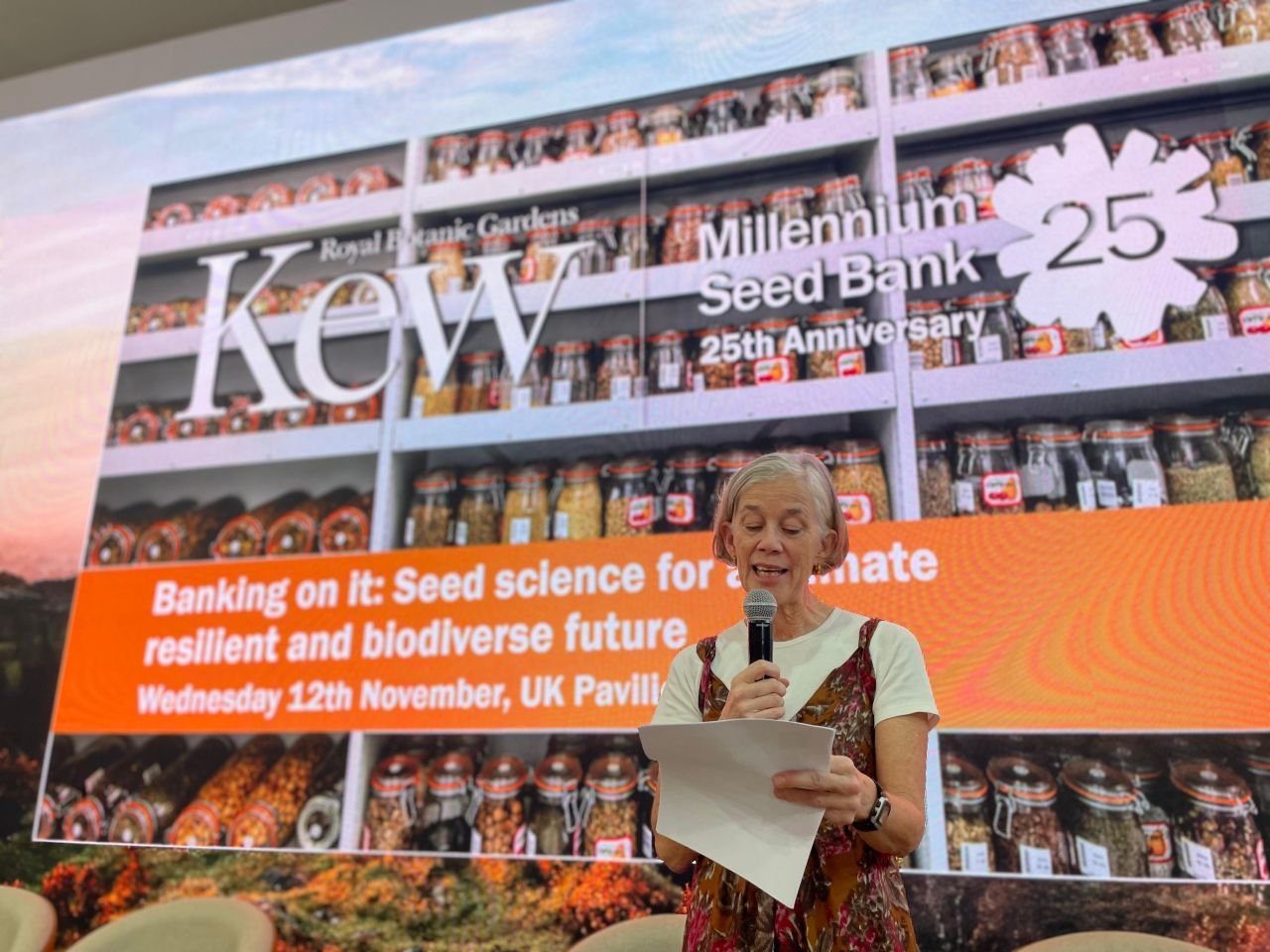
I then headed to the COP venue to co-host the main Kew event during these weeks: a celebration of the 25th anniversary of the Millennium Seed Bank and a discussion on the role of seeds and seed banks in helping to tackle the grand challenges of biodiversity loss, climate change, and food insecurity. Dame Angela McLean chaired the panel, which included several other interesting people and organisations. As we look forward to the next 25 years, I discussed Kew’s plans to utilise seeds to better harness the power of plants.….” (read the full update on Alex Linked In page here where photos below and full original post is available).
November 11: “This is not Frankfurt, it’s the Amazon” Reflections by Focali member Alexandre Antonelli and panel with Johan Rockström
Read an honest and tropical forest warm reflection from Alexandre Antonelli shared on his Linked In page. It starts with the cliffhanger that he spent the night in a hammock and had to run the last hundred meters to the venue in the humid and hot climate. After a long day with many meetings and panels he decided that he will not bring his jacket the next day and despite challenges he urges other participants to stop complaining “This is not Frankfurt, it’s the Amazon” and made “a shout-out for the hundreds of amazing volunteers and staff working incredibly hard to make this event run smoothly.” Stay tuned via Alexandre´s own Linked In account to take part of more reflections from his time at COP30 and many panels and meetings he will be part in. One of the many meetings held this hectic second COP day was a meeting inline with Focalis mission to bridge interconnected themes:
“A few more meetings and I finally headed for today’s final event, a panel discussion between Johan Rockström and me about the synergies and trade-offs in pursuing political agendas that focus on climate or biodiversity separately, rather than jointly. I highlighted the dangers of trying to solve one crisis by making another worse (e.g., through the planting of exotic monocultures that capture carbon but destroy biodiversity). Johan made interesting connections between solving the COVID pandemic and addressing the climate crisis (e.g., if we hear bad news every day, we may all start taking things more seriously).” (Read full reflection in original post on Alexandre Antonelli´s Linked In page)
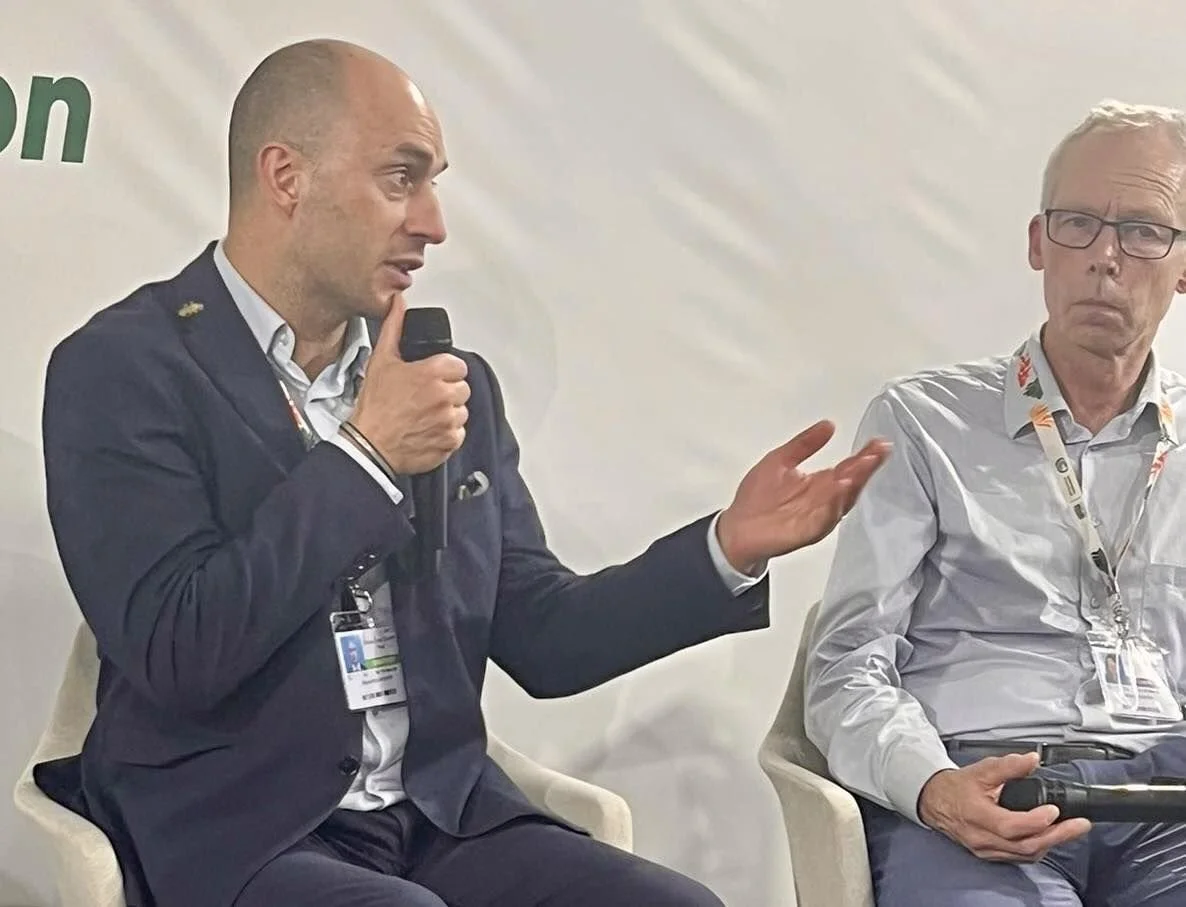
Photo of Alexandre Antonelli and Johan Rockström in panel on synergies and trade-offs between addressing climate change and biodiversity. Photo shared by Alexandre in Linked In post about the second day at COP30.
November 10: Focali member Taís Sonetti-González part of the Brazilian delegation at COP30 and reporting back for the Focali - SIANI collaboration
“I am part of the Brazilian delegation at COP30 Brazil, with the aim of observing, listening, and bridging worlds through knowledge, territories, and emotions. From a science–policy interface perspective, I hope this gathering in Belém creates space for authentic connections that can foster dialogues that transcend rhetoric and contribute to more inclusive, sciences-informed, and justice-centred climate governance, inspiring pathways of climate justice grounded in solidarity, care, hope, and ancestral science. Although not yet official, as I have been waiting for approval of my postdoctoral fellowship, which has already been accepted within the AmazonFACE project under the supervision of the incredible Professor Marko Monteiro, I intend to participate in the project’s activities and discussions during COP30.
Last but not least, and equally important, I am also participating as a representative of the Focali - Forests, Climate & Livelihoods network, for which I am deeply grateful for the support. My focus will be on discussions and reflections about the cosmopersceptions of forests and the pluriversality of Indigenous Peoples, Afrodescendant, and Traditional Communities, aiming to understand how and whether these worlds and relational understandings of life can inform and transform the science–policy dialogues and decision-making processes unfolding at COP30. Taís is one of the Focali members that will report from COP30 during and after and contribute to a Focali - SIANI post-match webinar arranged after COP30.”

Focali member Taís Sonetti-González part of the Brazilian COP30 delegation and reporting back from COP30 for Focali - SIANI. Follow her on Linked In to stay tuned for more updates from COP30 and her new role with the AmazonFACE project. Read the full Linked In post by Taís where the above reflection was first published.
November 09: Pre-COP Reflection by Focali member Toby Gardner:
“Just arrived in Belem and COP 30, the first time back to a place I know and lived in 8 years. The warmth of the people and their evident pride in hosting what could be the most consequential climate summit since Paris is hugely energizing. As is the drive that so many civil society and indigenous organizations are bringing to this iconic city at the mouth of the Amazon. (…) Trust and the synergies needed to drive collective action are perhaps two of the most important ingredients for the COP process and the international "mutirao" that the Brazilian presidency of COP 30 has championed - the need for collective action to accelerate implementation of the solutions that we know exist. And trust and the spirit of collective action are at the heart of the Call of Belem for Climate that was published at the end of the Leaders Summit on Friday.
And I take the spirit of mutirao to heart personally. Collective wisdom, collective responsibility and collective ambition and action are the things we need most of all right now. In the blizzard of events and side meetings that are to come in the next two weeks we need to go beyond the ritualized procession of pre-canned individual speeches that bring little in the way of novelty and honesty. Instead we need to use these precious and costly moments to try and leave with more connection - between individuals, between ideas, between organizations so we can make the whole greater than the sum of the parts.” (Read full reflection in original post by Toby Gardner on his Linked In where this reflection was first published)