
Focali member Agnes Pranindita has successfully defended her PhD thesis “Moisture recycling in forest-agricultural systems: An interdisciplinary view within and across scales” at the Stockholm Resilience Centre March 6. The three-hour long defense included an excellent presentation by Pranindita of her research process and findings and a following intriguing discussion with the opponent, examinators and audience on her work and its implications. Her research aimed to advance the understanding of moisture recycling’s role in connecting aspects of human livelihoods at different scales as well as in different sectors, and how this role may influence future land use governance.
Her PhD journey and the outcome, as the research articles part of the defense, outlines a truly interdisciplinary effort bridging natural and social science aspects as well as research methods. Pranindita has e.g. combined biophysical modeling on moisture recycling with issues as livelihood strategies and governance options, this to better understand forest – water – agriculture interconnectedness across scales and countries. Since moisture recycling is not yet part of current land-use or water governance one article even used science fiction to imagine how atmospheric water flows and governance efforts might look in the future including speculative foresight on possible manipulation of moisture recycling and its implicatons.
The thesis shows how moisture flows intersects with trade of agricultural commodities when moisture dependency between two countries can affect crop supply to a third-party country (as crop exports from Ukraine dependent on moisture flow from forests in Russia). Compared to the well-known and more studied “flying rivers” from the Amazon to agriculture in South America Pranindita wanted to contribute to knowledge on moisture recycling related to the less studies Congo basin, which several articles in the PhD thesis relate to. During the defense it became clear that understanding complex forest – agriculture – livelihood interconnections require context specific and interdisciplinary social-ecological research. Moisture recycling differs between regions and depends on many factors; the moisture recycling impacts down-wind can e.g. differ between seasons.
Part of the defense was devoted to questions on implications of the research findings for land-use management as well as how to possibly include these aspects in existing or future land and water governance. Since some moisture recycling processes could be possible to manipulate the use of futuristic scenarios in one of the articles, to capture this complexity and uncertainty, was seen as a useful and brave approach. As the main opponent Patrick Meyfroidt stated the interdisciplinary research Agnes Pranindita has conducted “complexifies” existing research on land-use, how water is “embodied in trade” across scales and how to add these aspects to existing governance approaches.
Even if the research area is complex with many uncertainties, part of the research does give some clear statements and figures on this interdependence. One of the studies published in Nature Water 2025 reveals that overall, croplands in 155 countries depend on moisture from forests located in other countries for up to 40% of their annual precipitation. How to better reach out with such findings to policy makers and other stakeholders for enhanced protection of up-wind forests was discussed during the defense. To show how forests provide a vital support system for agriculture and societies was the aim with a new milestone report that Pranindita contributed to with her PhD research. The report “Climate and ecosystem service benefits of forests and trees for agriculture”, led by FAO, SEI, CI & TNC was launched at COP30 - in the heart of the Amazon rainforest – a massive but undervalued water pump which agriculture in south America as well as crop importing countries as Sweden depend on.
Summary of the PhD Thesis “Moisture recycling in forest-agricultural systems: An interdisciplinary view within and across scales”:
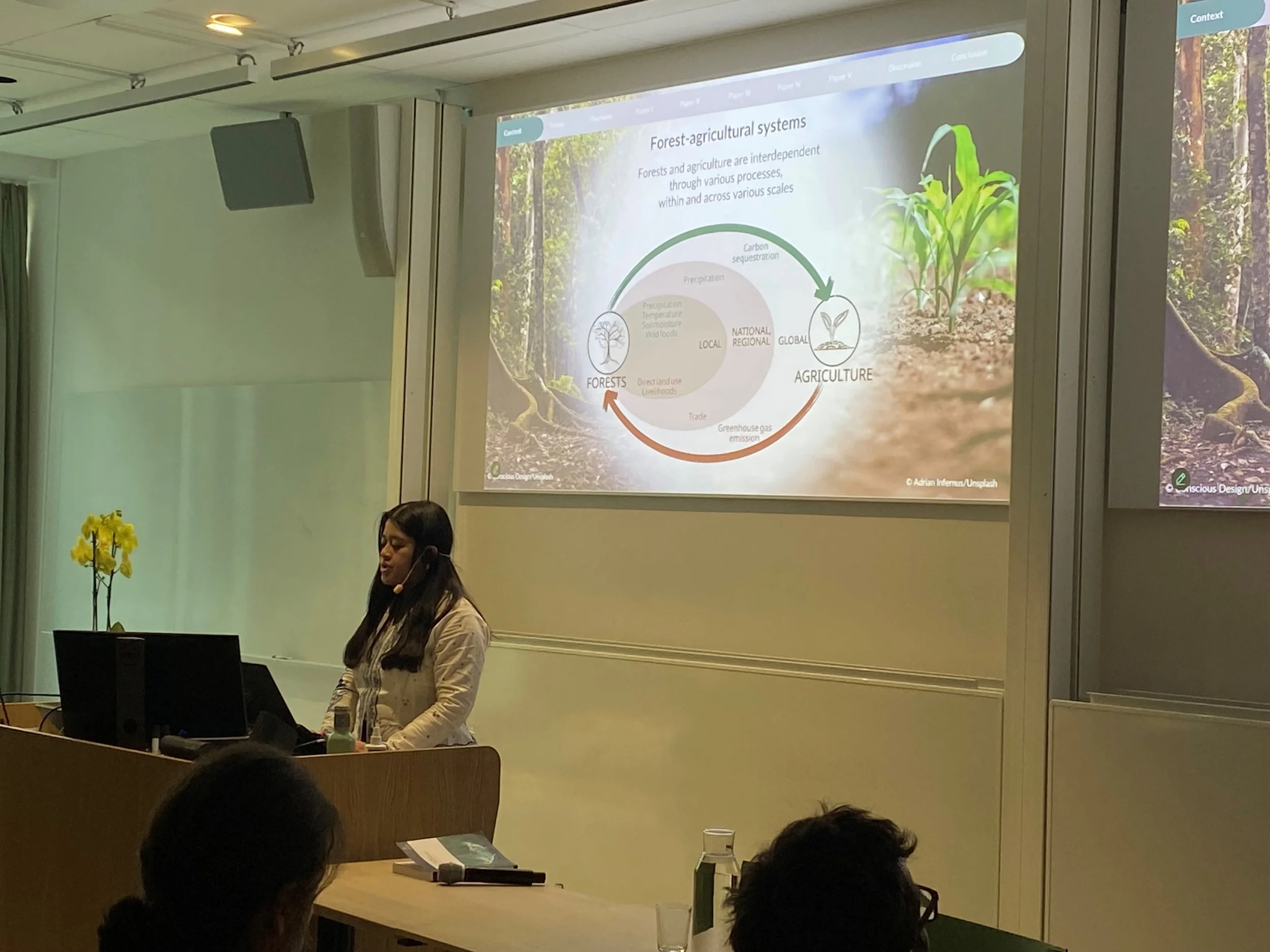
Moisture recycling is a hydrological process that captures the journey of water particles in the atmosphere - starting with terrestrial and oceanic evaporation, continuing with their windborne transport, and ending with precipitation back on land and ocean. Land cover affects the amount of recycled precipitation, and hence the ways we, as humans, use, manage, and govern land concern moisture recycling. Moisture recycling is scarcely managed and governed currently, despite being increasingly recognized as an important process in the biosphere, supporting our society. Moisture recycling is one of the many processes entangling forests and agriculture at various scales, as part of forest-agricultural social-ecological systems. Forests have the potential for securing precipitation for downwind agriculture, although the understanding of this process within the broader forest-agricultural systems remains limited and improving this understanding requires an interdisciplinary approach. As our biophysical understanding of moisture recycling progresses, a question arises: how can we use the knowledge of moisture recycling to guide our activities on land that safeguard forests and agriculture synergistically? The thesis attempts to answer this question by applying a social-ecological systems perspective and an interdisciplinary approach to investigate the interdependence between forests and agriculture through moisture recycling. By applying the forest-agricultural systems context and beyond, the thesis further assesses the need to govern moisture recycling as a mediating process in social-ecological systems. Five papers in this thesis cover different scales of social-ecological processes entangling forests and agriculture. Paper I analyzes moisture recycling at the national scale, to conceptualize its interconnection with forests, agricultural production, and crop trade across countries globally. Paper II focuses on the regional scale dynamics of moisture recycling and the role of forests as moisture sources during heatwaves in Europe. Paper III zooms in on the local scale to detect changes in local forests and shifting cultivation practices as a result of social-ecological pressures on land in the Democratic Republic of Congo. Paper IV complements Paper III with an investigation into the moisture recycling process connecting local forests with local agricultural practices. Finally, Paper V uses a futuring exercise to imagine the governance of moisture recycling as economic goods at diverse scales. Together, these papers suggest that forests support downwind agricultural production through the provision of precipitation within and across scales. This relationship is reciprocal, considering that forests are also influenced by the state of downwind agriculture through social dynamics. Accordingly, moisture recycling unravels a new way of interdependence between forests and agriculture. This thesis advances the moisture recycling knowledge beyond its biophysical aspects, and prompts us to reflect on what governing moisture recycling in the future would entail.
Supervisors:
Lan Wang-Erlandsson, Associate Professor (Docent), SRC, Sweden
Ingo Fetzer, Researcher, SRC, Sweden
Adriaan J. Teuling, Associate Professor in Hydrology, Wageningen University and Research, the Netherlands
Opponent:
Patrick Meyfroidt, Professor of Land Systems and Sustainability Science, UCLouvain & F.R.S.-FNRS, Belgium
Evaluation committee:
Torsten Krause, Senior Lecturer and Deputy Director of Lund University Centre for Sustainability Studies, Lund University, Sweden
Ellen Dyer, Senior Research Associate in African Climate Science, University of Oxford, United Kingdom
Jampel Dell’Angelo, Associate Professor in Water Governance and Politics, Vrije Universiteit Amsterdam, the Netherlands
Tim Daw, Associate Professor and Principal Researcher, SRC, Sweden (reserve)
Image gallery from the PhD Defense:
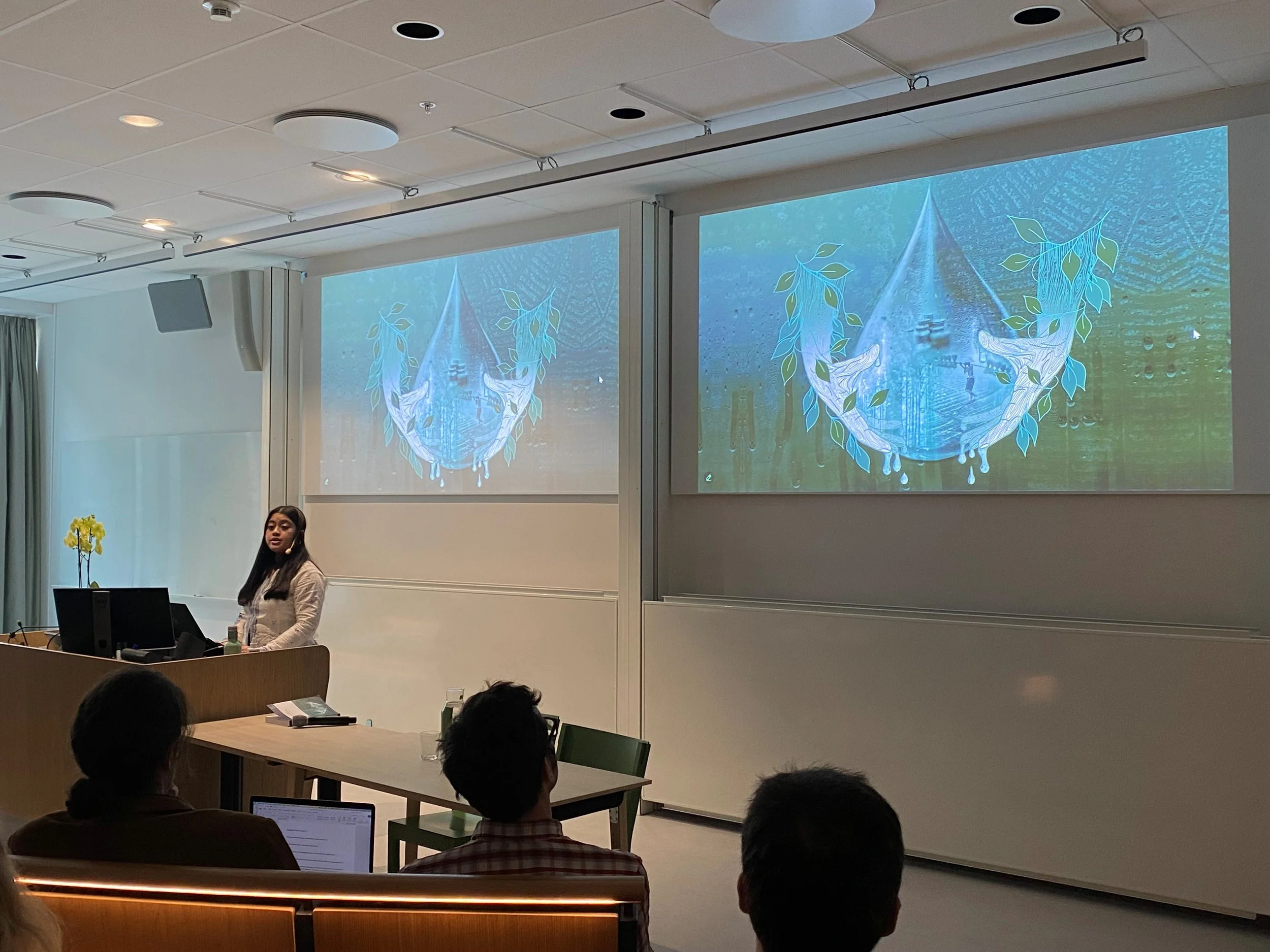
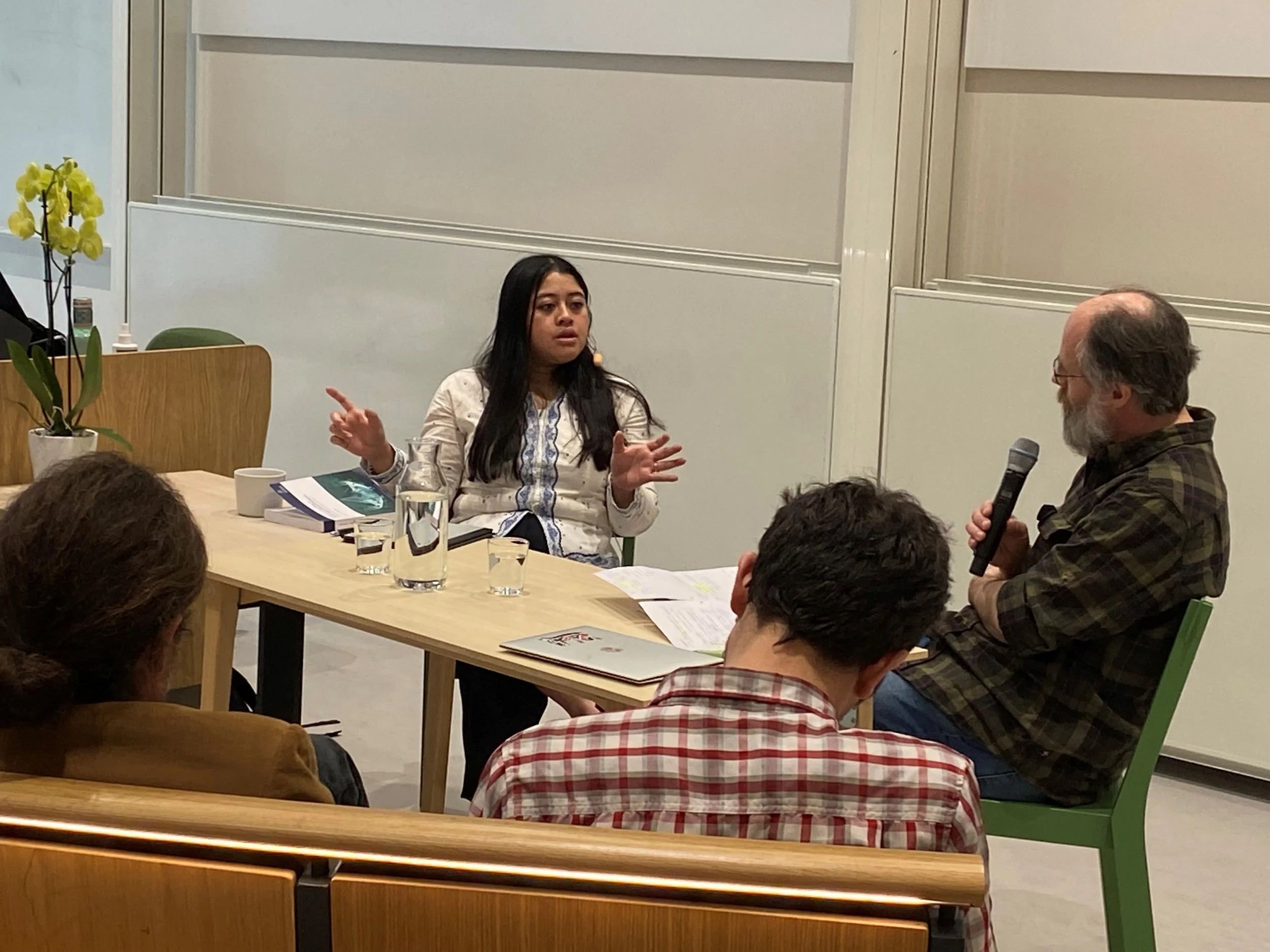
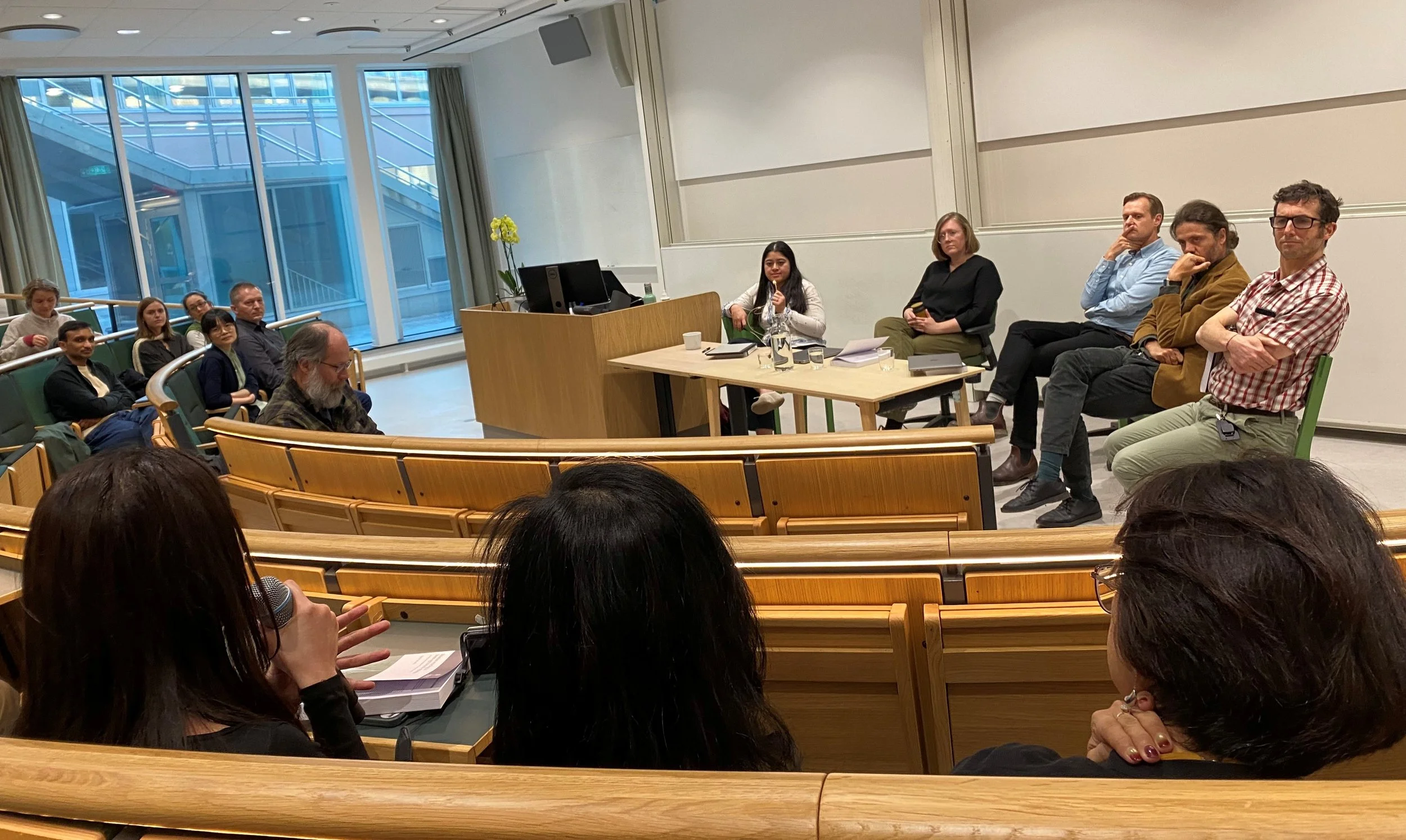
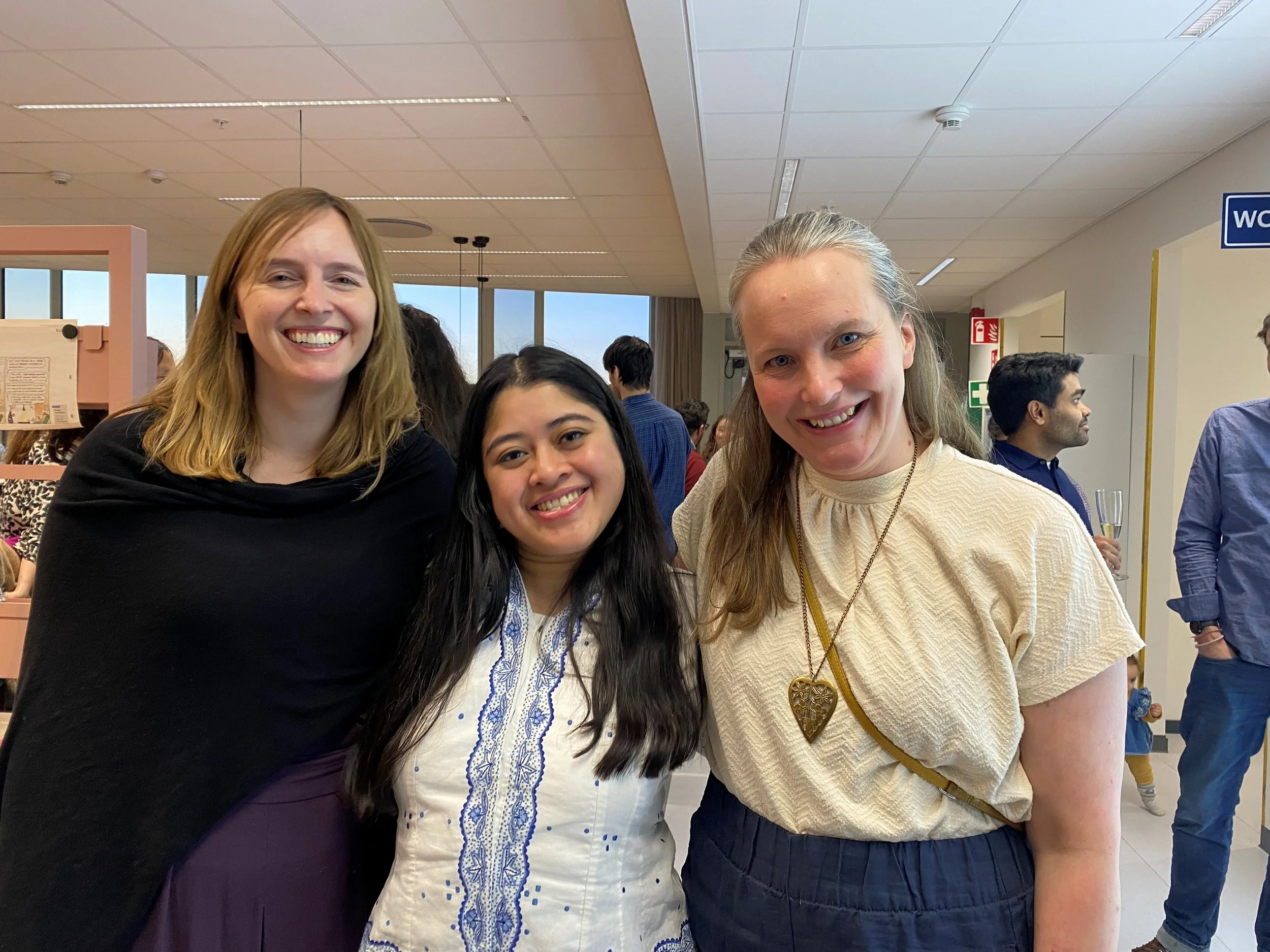
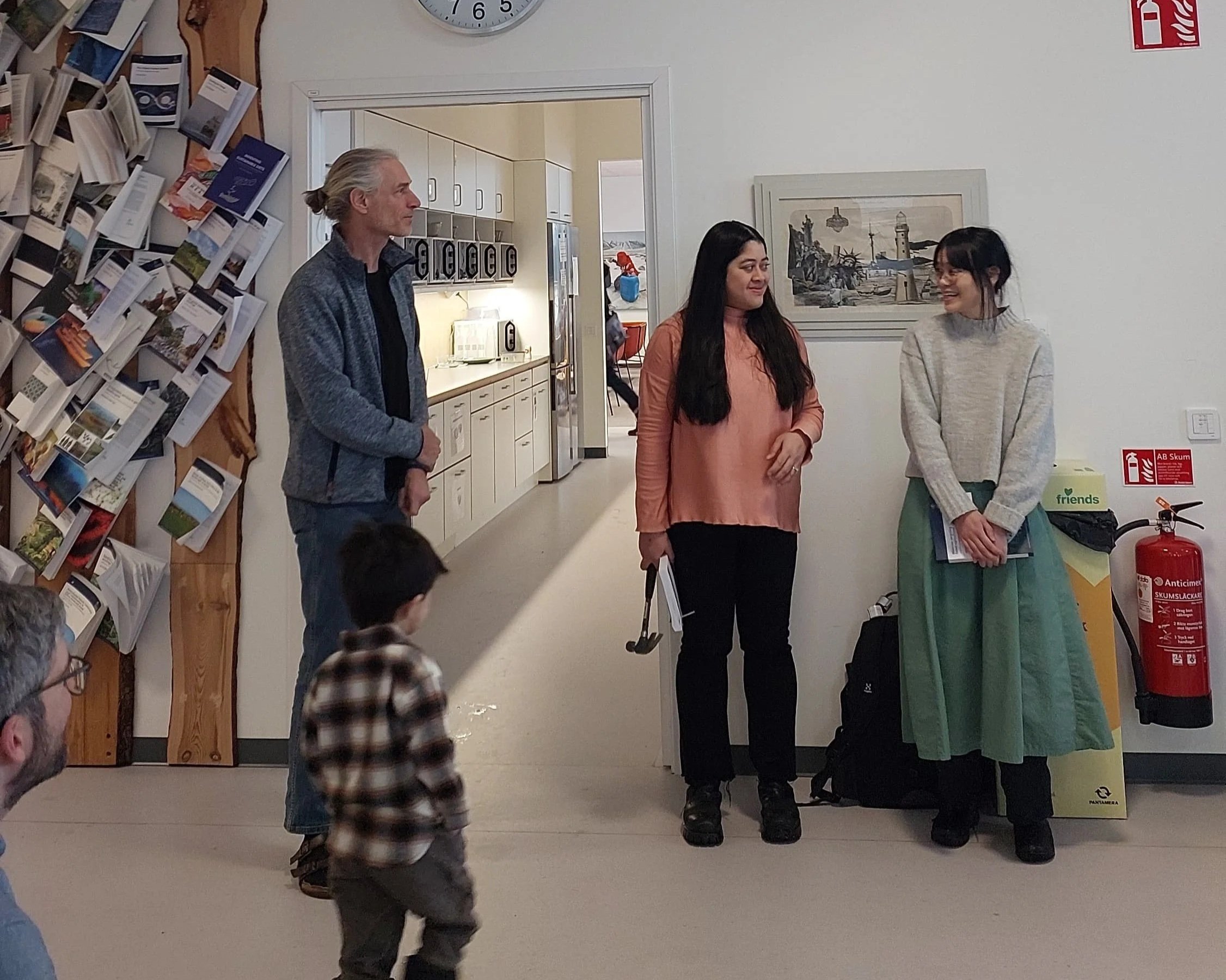
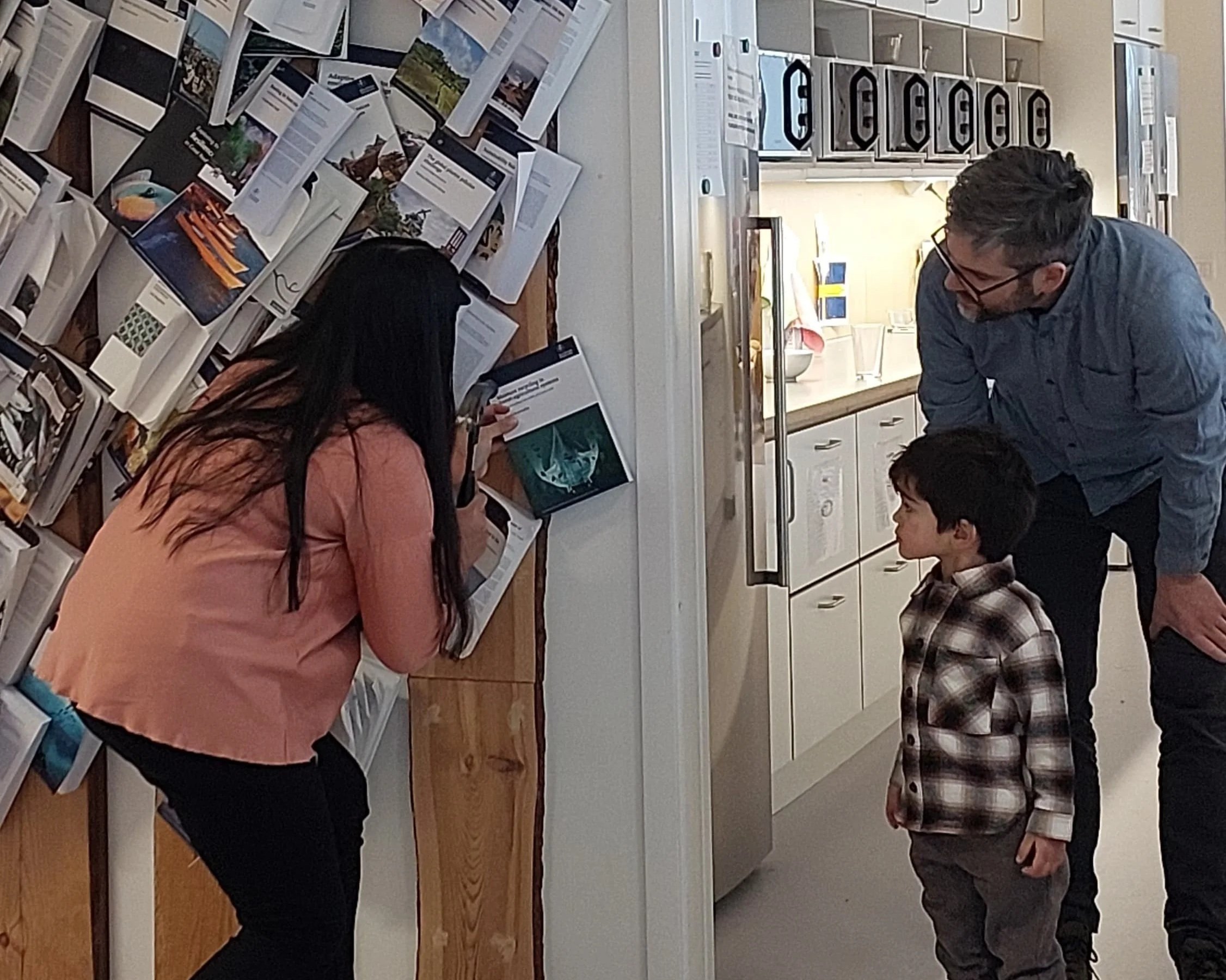
Images below includes images from Agnes presentation of her research, question session with the opponent, evaluation committee and audience (see all names above). In one image Dr. Agnes Pranindita stands between Rafaela Flach and Maria Ölund. Rafaela is a Research Fellow at SEI and initiator and co-author of the report “Climate and ecosystem service benefits of forests and trees for agriculture” that Agnes is one of the co-authors of. Rafaela met Agnes at the Focali annual meeting 2023 and after this involved her in the report. Maria Ölund is the Project Manager of the Focali reserch network where Dr. Agnes Pranindita is both a member, part of the advisory group and initiator of work streams e.g. for early career researchers. The last row of images includes two photos from the traditional “nailing” ceremony prior to the Defense where Agnes is together with her supervisors at SRC (see names above) and her family.

Further readings and reference list:
Full references of articles published in and outside of the PhD Thesis:
Paper I: Pranindita, A., Teuling, A.J., Fetzer, I., Wang-Erlandsson, L. Forests support global crop supply through atmospheric moisture transport. 2025. Nature Water 3, 1243–1255. https://doi.org/10.1038/s44221-025-00518-4
Paper II: Pranindita, A., Wang-Erlandsson, L., Fetzer, I., Teuling, A.J., 2022. Moisture recycling and the potential role of forests as moisture source during European heatwaves. Climate Dynamics 58, 609–624. https://doi.org/10.1007/s00382-021-05921-7
Paper III: Pranindita, A., Koh, N.S., Crépin, A-S., Tyukavina, A., Potapov, P., Bongwele, E., Amani, P.L., Worden, S.R., Keys, P., Zipper, S., Ordway, E., Wong, G., Teuling, A.J., Fetzer, I., Wang-Erlandsson, L. Shifting cultivation livelihoods under social-ecological pressures in the Democratic Republic of Congo. Manuscript.
Paper IV: Pranindita, A., Staal., A., Bakels, L., Worden, S.R., Fetzer, I., Koh, N.S., Crépin, A-S., Keys, P., Zipper, S., Ordway, E., Teuling, A.J., Wang-Erlandsson, L. Dependence of shifting cultivation practices on precipitation from changing forests in the Democratic Republic of Congo. Manuscript.
Paper V: Keys, P.W., Wang-Erlandsson, L., Moore, M.-L., Pranindita, A., Stenzel, F., Varis, O., Warrier, R., Wong, R.B., D’Odorico, P., Folke, C., 2024. The dry sky: Future scenarios for humanity’s modification of the atmospheric water cycle. Global Sustainability 7, e11. https://doi.org/10.1017/sus.2024.9
Publications outside the thesis:
Zhivkoplias, E., Jouffray, J.-B., Dunshirn, P., Pranindita, A., Blasiak, R., 2024. Growing prominence of deep-sea life in marine bioprospecting. Nature Sustainability 7, 1027– 1037. https://doi.org/10.1038/s41893-024-01392-w
Moore, M.-L., Wang-Erlandsson, L., Bodin, Ö., Enqvist, J., Jaramillo, F., Jónás, K., Folke, C., Keys, P., Lade, S.J., Mancilla Garcia, M., Martin, R., Matthews, N., Pranindita, A., Rocha, J.C., Vora, S., 2024. Moving from fit to fitness for governing water in the Anthropocene. Nature Water 2, 511–520. https://doi.org/10.1038/s44221-024-00257-y
Fahrländer, S.F., Wang-Erlandsson, L., Pranindita, A., Jaramillo, F., 2024. Hydroclimatic vulnerability of wetlands to upwind land use changes. Earth’s Future 12, e2023EF003837. https://doi.org/10.1029/2023EF003837
Wassénius, E., Bunge, A.C., Scheuermann, M.K., Resare Sahlin, K., Pranindita, A., Ohlsson, M., Blandon, A., Singh, C., Malmcrona Friberg, K., Villarrubia-Gómez, P., 2023. Creative destruction in academia: a time to reimagine practices in alignment with sustainability values. Sustainability Science 18, 2769–2775. https://doi.org/10.1007/s11625-023-01357-6
Blasiak, R., Jouffray, J.-B., Amon, D.J., Claudet, J., Dunshirn, P., Søgaard Jørgensen, P., Pranindita, A., Wabnitz, C.C.C., Zhivkoplias, E., Österblom, H., 2023. Making marine biotechnology work for people and nature. Nature Ecology and Evolution 7, 482–485. https://doi.org/10.1038/s41559-022-01976-9
Blasiak, R., Jouffray, J.-B., Amon, D.J., Moberg, F., Claudet, J., Søgaard Jørgensen, P., Pranindita, A., Wabnitz, C.C.C., Österblom, H., 2022. A forgotten element of the blue economy: marine biomimetics and inspiration from the deep sea. PNAS Nexus 1, pgac196. https://doi.org/10.1093/pnasnexus/pgac196
Hoek van Dijke, A.J., Herold, M., Mallick, K., Benedict, I., Machwitz, M., Schlerf, M., Pranindita, A., Theeuwen, J.J.E., Bastin, J.-F., Teuling, A.J., 2022. Shifts in regional water availability due to global tree restoration. Nature Geoscience 15, 363–368. https://doi.org/10.1038/s41561-022-00935-0
Ahlström, H., Hileman, J., Wang-Erlandsson, L., Mancilla García, M., Moore, M.-L., Jonas, K., Pranindita, A., Kuiper, J.J., Fetzer, I., Jaramillo, F., Svedin, U., 2021. An Earth system law perspective on governing social-hydrological systems in the Anthropocene. Earth System Governance 10, 100120. https://doi.org/10.1016/j.esg.2021.100120
Report:
FAO, SEI, CI & TNC. 2025. Climate and ecosystem service benefits of forests and trees for agriculture. Rome, Stockholm, and Arlington. https://doi.org/10.4060/cd7599en (contributing author of Chapter 3)
Research news stories published by Stockholm Resilience Centre about Agnes research:
From “precipitation-sheds” to “participation-sheds” - Stockholm Resilience Centre
Reserch profile page at SRC:
Pranindita - Stockholm Resilience Centre