
Session Description
Forest and Landscape Restoration (FLR) has enormous potential to enhance water security, climate resilience, and sustainable livelihoods – but only when water is deliberately integrated into restoration planning, management and governance. Forests regulate water flows, improve water quality and groundwater recharge, reduce flood and drought risks, and store carbon. At the same time, they are significant water users. In addition to conservation and sustainable management efforts, careful, science-based planning is essential for long-term successful FLR, especially in water-scarce and climate-vulnerable regions.
This hybrid seminar brings together leading international organizations to examine how water-smart approaches can strengthen management outcomes across landscapes and river basins. The session will present the latest science, innovative tools and practical experiences that integrate hydrology, ecosystem services, and climate action into restoration and management strategies. Participants will gain insights into how water considerations can be embedded from local landscapes to river basins, as well as at the continental scale through atmospheric moisture transport by considering evaporationsheds and precipitationsheds for green water.
Through concise expert inputs and interactive dialogue, the seminar will connect practitioners, policymakers, researchers, and development partners to explore how restoration can simultaneously safeguard water resources, enhance resilience, and support local development.
Programme
Welcome and interactive intro
The latest science – findings of the report “Climate and ecosystem service benefits of forests and trees for agriculture”, FAO
Tools/Innovations for the systematic integration of water considerations into FLR, featuring:
Reformit research project
EuroGeoSurveys Water Resources Expert Group / Geological Service for Europe
Water-smart Forest and Landscape Restoration Tool
Interactive exchange giving panelists and audience space to share relevant tools/ innovations/ new research.
Convenors
Deutsche Gesellschaft für Internationale Zusammenarbeit GmbH (GIZ)
EuroGeoSurveys Water Resources Expert Group / Geological Service for Europe
Food and Agriculture Organization of the United Nations (FAO)
Stockholm International Water Institute
Stockholm Resilience Centre
Speakers
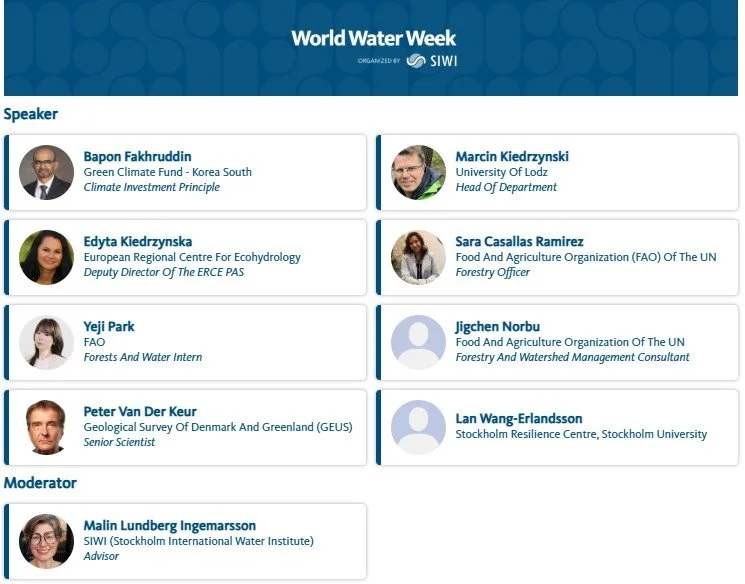
Screenshot from the SIWI World Water Week event page with speakers and affiliations. Malin Lundberg Ingemarsson SIWI and Lan Wang-Erlandsson SRC are both members in the Focali research network. See the full www event page here
Related report co-authored by Focali members:
Climate and ecosystem service benefits of forests and trees for agriculture
The new publication Climate and ecosystem service benefits of forests and trees for agriculture- developed by FAO, SEI, The Nature Conservancy and Conservation International—synthesizes the latest science on how forests and trees regulate climate, water and ecosystem functions that directly underpin agricultural performance. The report, that will be presented at the world water week event, draws on extensive research from around the world to demonstrate how forests moderate temperatures, sustain rainfall and regulate the water cycle, directly supporting crop productivity, stabilizing local climates and improving the health, safety and livelihoods of rural communities, while highlighting the consequences of deforestation on the world’s agrifood systems.
Unlocking these benefits requires integrated landscape approaches, cross-sector governance, and policies that recognize forest conservation, restoration and sustainable use as strategic investments in food security, public health and climate resilience. Promoting forest–agriculture synergies offers a pathway toward more productive, sustainable and equitable agrifood systems. Nine of the report co-authors are members of the Focali research network representing a broad range of disciplines and research environments. The report lead author Focali member Rafaela Flach, Research fellow at SEI, initiated this report and together with the involved partners gathered researchers from around the world in this collective effort to make sense of the diverse and growing evidence on the multiple ways forests and trees sustain agriculture worldwide and its implications for policy and practice.
Download the report here Climate and ecosystem service benefits of forests and trees for agriculture
Read reflections by some of the report co-authors, seven Focali members, on the important, but too often undervalued connections, between forest, water, food systems and livelihoods in this Focali article published on the international days of forest and water 2026.
Re-watch the report launch at COP30 2025 here Forest Pavilion at COP30 – 19 Nov – Forests & agriculture synergies
Re-watch a related event from the www 2025 involving many of the co-authors The role of forests and trees in future-proofing water and agriculture
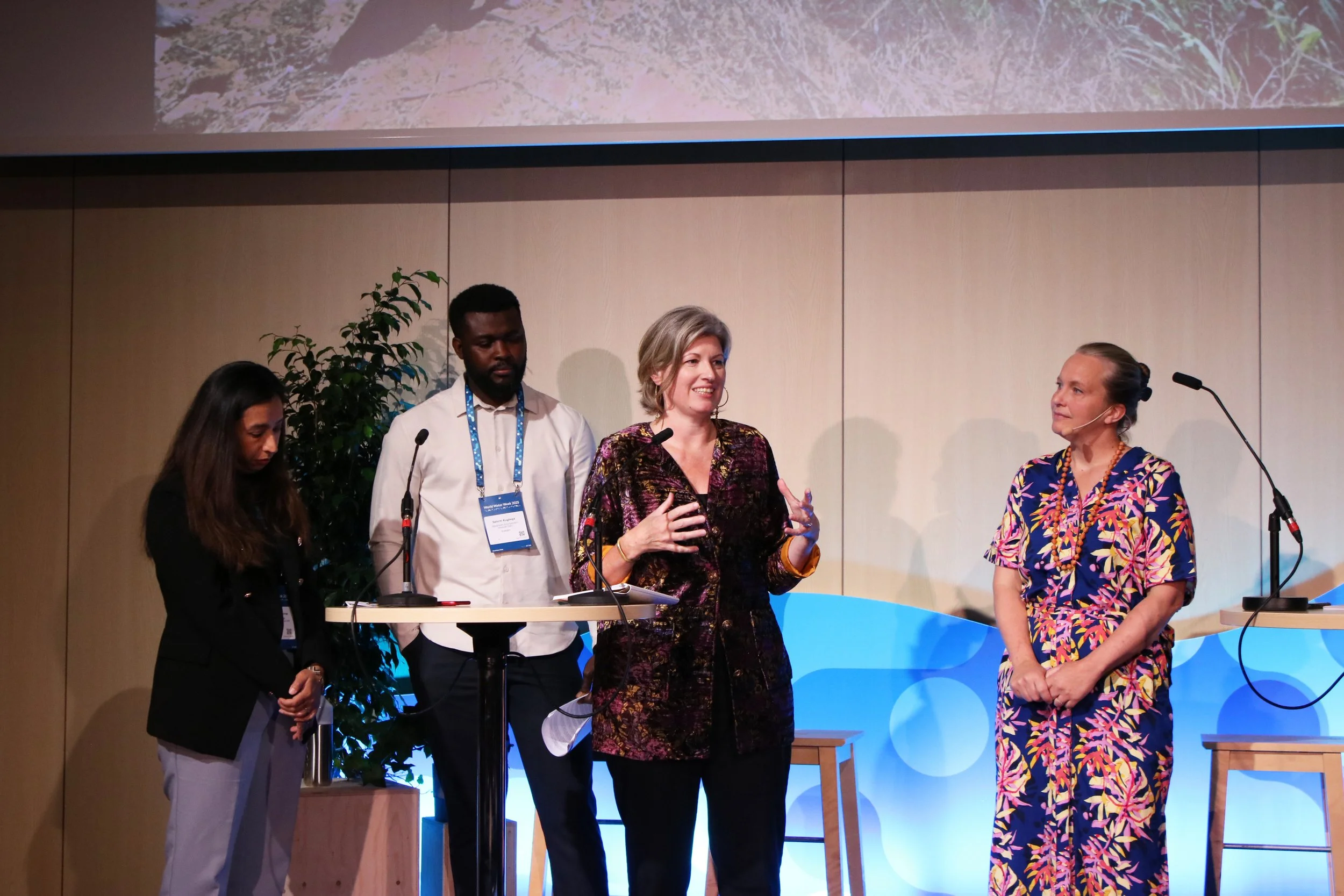
Photo from World Water Week 2026 where Focali was one of the co-organizers of the session The role of forests and trees in future-proofing water and agriculture together with FAO, SIWI, SLU Global, SIANI and SEI