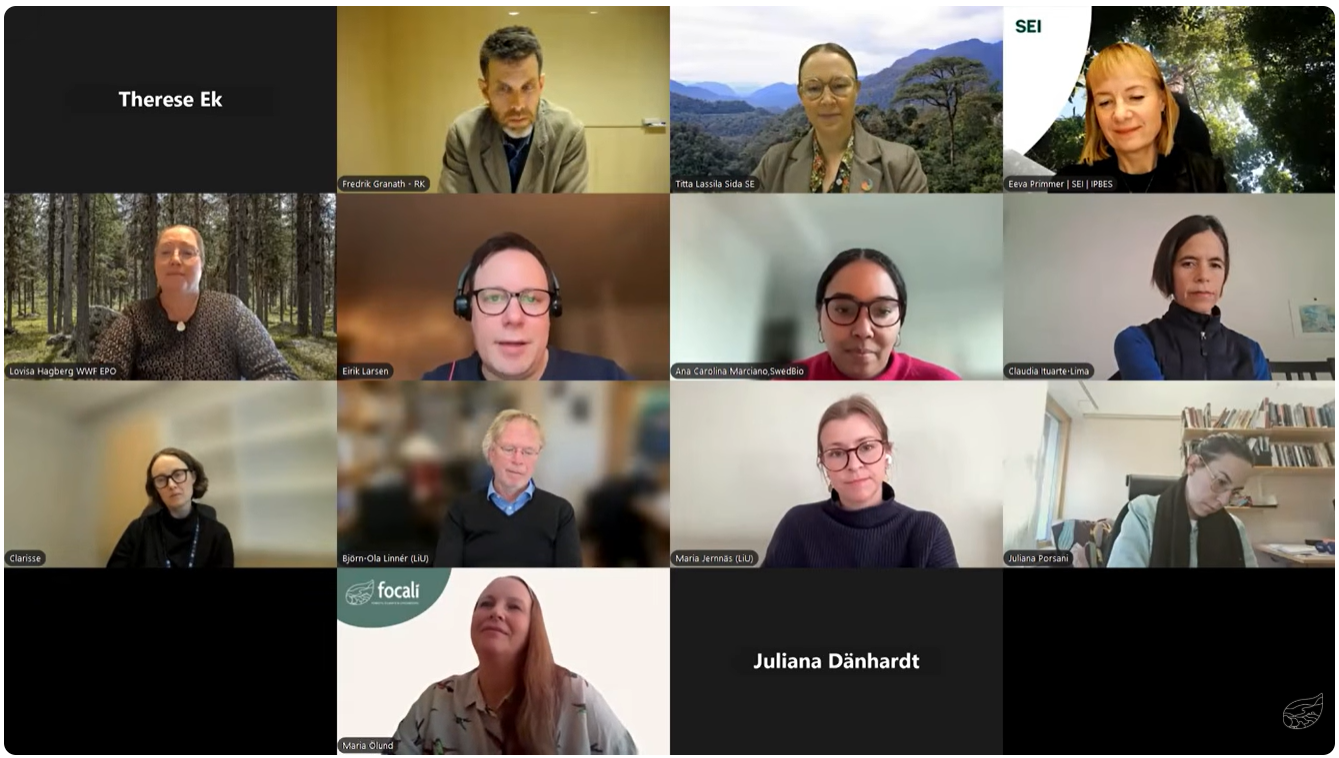
All panelists reflecting on main outcomes from COP17 and critical issues. In screenshot Eirik Larsen, Head of the Human Rights Unit at The Saami Council, shared his views.
What happened at the recent UN Biodiversity Conference COP17, what was the role of science and “elephants” in the room? On 5 November, a broad range of experts who were at COP17 Yerevan shared their reflections on those and more questions in our joint post-match webinar organized by Focali, SEI, LiU - CSPR and BECC – LU.
Over 230 people interested in the outcomes from COP17 that recently concluded in Yerevan Armenia had signed up for our event ”COP17 post-match analysis: is biodiversity action accelerating?” and over 120 joined us live November 5th last week. If you missed it, or want to rewatch the rich insights and discussions, you find the webinar recording below.
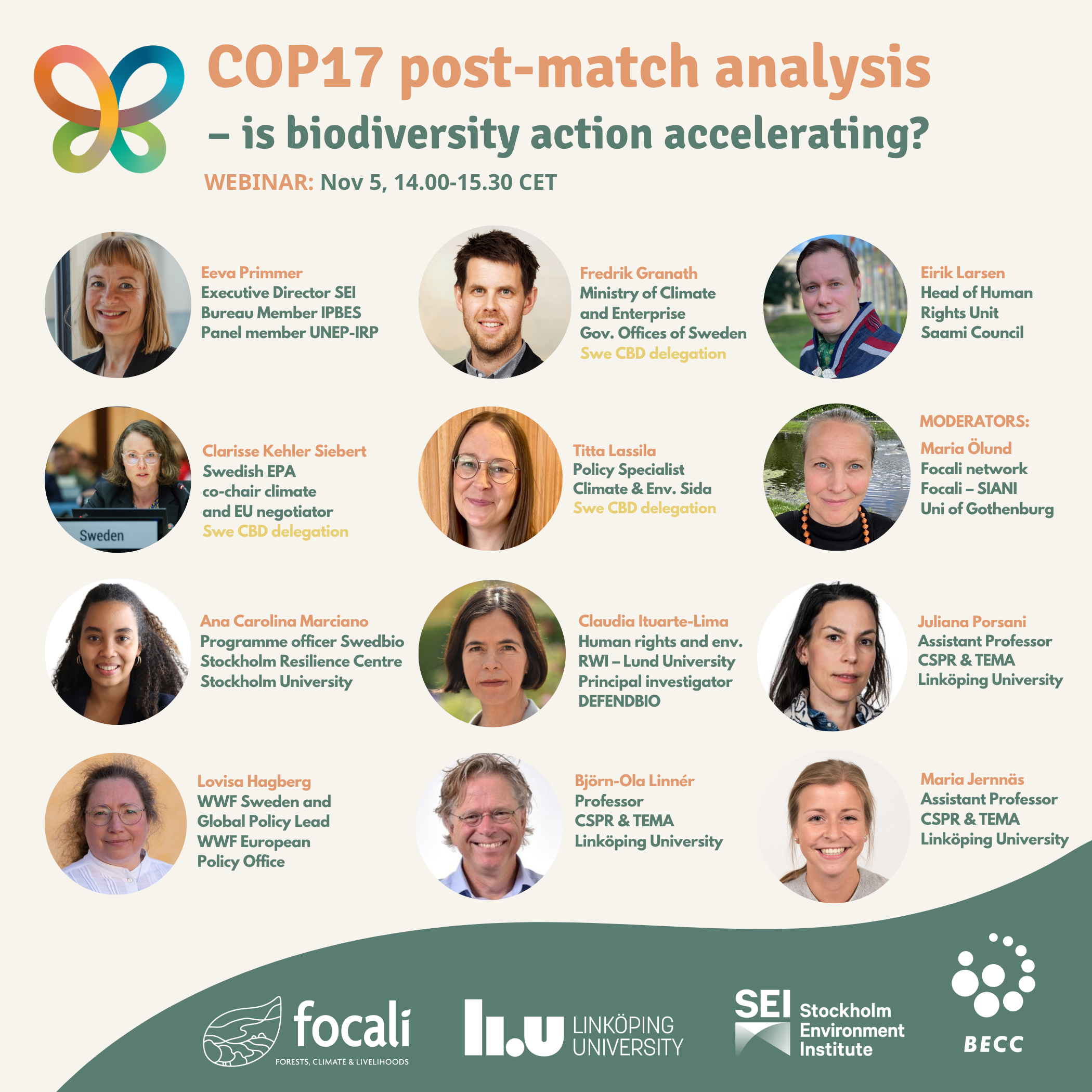
The knowledgeable panel included experts, negotiators, researchers, and representatives from civil society and Indigenous Peoples – scroll down to see the full list of panelists.
The event started with three scene setters: Björn-Ola Linnér, Professor in Environmental Change at Linköping University described the consequences of the current geopolitical context as a backdrop of COP17. Eeva Primmer, Executive Director of Stockholm Environment Institute and member of the IPBES Bureau talked about the evolving role of science for the UN Biodiversity negotiations. Finally, Claudia Ituarte-Lima, Thematic leader on human rights and environment at Raoul Wallenberg Institute at Lund University, took us to Yerevan and the atmosphere at COP17 where she among other roles together with colleagues at the RWI office in Yerevan provided support to the Armenian Presidency.
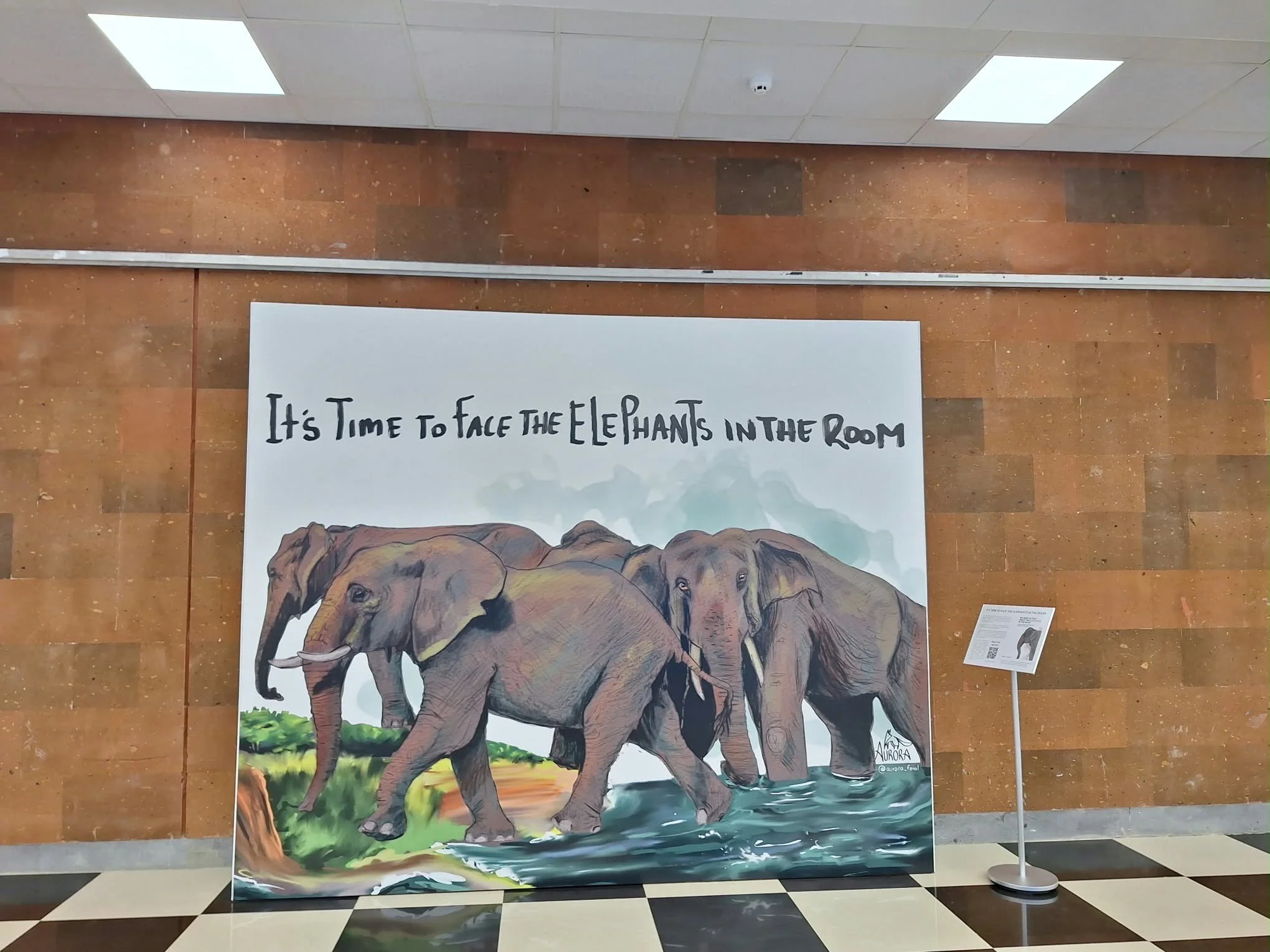
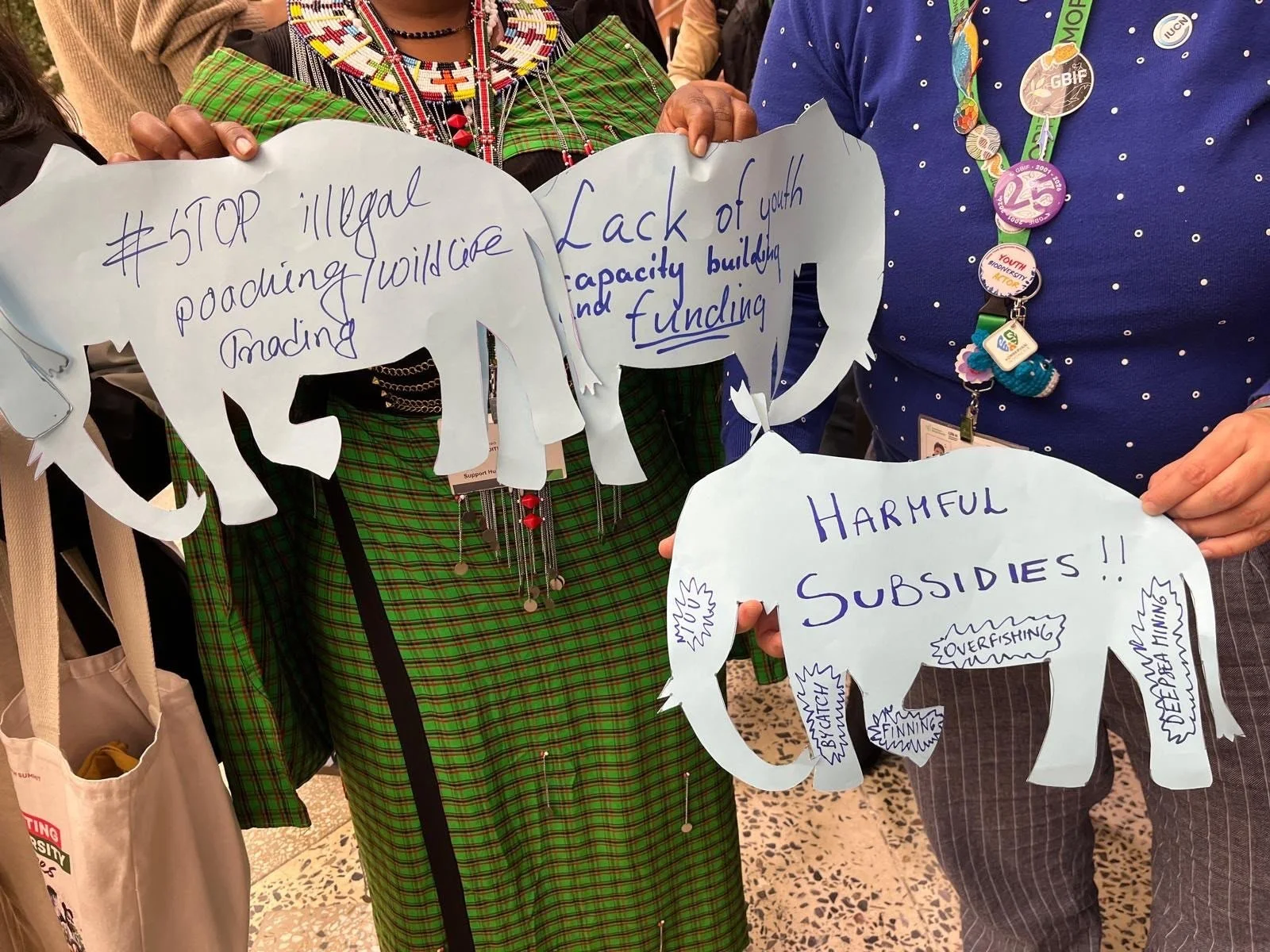
The panellists thereafter explored the outcomes of COP17 from their different perspectives and diverse formal and informal roles related to the negotiations and side-discussions. They also discussed “elephants in the negotiation room” that stood in the way of progress and critical implementation gaps that remain.
A spotlight on progress, tensions and implementation gaps in some of the focus areas at COP17 was facilitated in thematic sub-panels:
Land and marine
Funding for biodiversity action
Human rights, inclusion of IP&LCs and 8j
Beyond Biodiversity: Connecting Policies
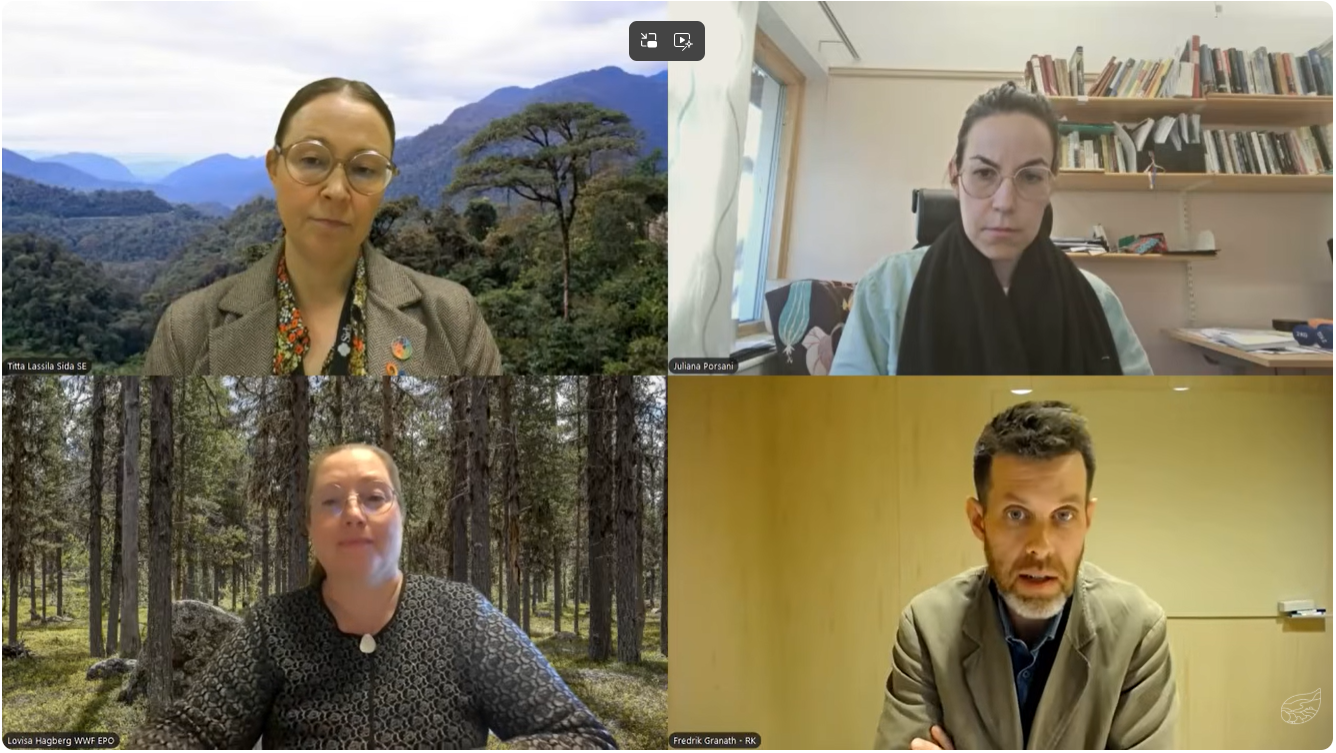
The sub-panel to the left focused on issues related to funding biodiversity action. In the screenshot Fredrik Granath, Ministry of Climate and Enterprise, Governmental Offices of Sweden, part of the Swedish delegation to COP17 is speaking and Focali member Juliana Porsani, CSPR - Linköping University moderating.
The event concluded with a series of interesting questions from the audience, some were answered verbally by panelists, other questions in the Q6A function got written responses from panelists and some of the questions and answers will be shared here when compiled.
In the concluding remarks from the panelists, they shared their views on the title of the webinar “Is biodiversity action accelerating?” and what´s critical when we navigate onwards, upwards, and faster? What issues (and elephants in the room) need more spotlight ahead?
Ana Carolina Program Officer Swedbio opened her final remarks with:
“The question is not only whether we are accelerating action, but what type of action we are accelerating?”
In her closing of the webinar Maria Ölund Network Manager of Focali thanked all for joining and emphasized that a swift post-match analysis only scratches the surface of what happened and needs to happen next as the world approaches the halfway point toward the Global Biodiversity Framework’s 2030 targets. She invited participants to collaborate with the co-organizers of the webinar ahead to deepen dialogues and strengthen joint action across intertwined challenges, disciplines, sectors and regions.
Webinar recording:
Watch the webinar via Focali you tube: WEBINAR Nov 5 2026: COP17 post-match analysis – is biodiversity action accelerating? - YouTube
Speakers:
Fredrik Granath, Ministry of Climate and Enterprise, Governmental Offices of Sweden, part of the Swedish delegation to COP17 with focus on DSI - Digital Sequence Data, the Nagoya Protocol and 8J (the Subsidiary Body for IP & LCs to facilitate greater participation in biodiversity decision making)
Clarisse Kehler Siebert, Swedish Environmental Protection Agency, co-chair agenda item on climate and biodiversity synergies, EU lead negotiator for COP17 agenda item on cooperation with other conventions and international organizations, part of the Swedish delegation to COP17
Titta Lassila, Senior Policy Specialist for Climate and Environment, Sida, part of the Swedish delegation to COP17
Eeva Primmer, Executive Director Stockholm Environment Institute, SEI, Bureau Member IPBES, Panel member UNEP-IRP and adjunct professor in environmental policy at the University of Helsinki
Eirik Larsen, Head of the Human Rights Unit, The Saami Council. The Saami Council is a voluntary Saami organization (NGO), with Saami member organizations in Finland, Russia, Norway and Sweden. Eirik is in addition a lawyer and lecturer at the Sámi University College.
Claudia Ituarte-Lima, International public lawyer, Senior Researcher and Thematic leader on human rights and environment at Raoul Wallenberg Institute at Lund University, principal investigator of DEFENDBIO and currently provide legal, policy and analytical support to the CBD COP17 Presidency.
Ana Carolina Marciano, Programme officer Swedbio, Stockholm Resilience Centre. SwedBio is a development programme for sustainable and equitable biodiversity management and governance. This includes supporting coordination of the Human Rights and Biodiversity Working Group, a collective initiative that seeks to advance a human rights-based approach to the CBD process.
Lovisa Hagberg, Director Environmental Governance, WWF Sweden and seconded part-time to the WWF European Policy Office as Senior Global Policy Lead
Björn-Ola Linnér Professor in Environmental Change and at CSPR Linköping University
Moderator and contact for the event:
Maria Ölund Network Manager Focali and the Focali - SIANI collaboration (in which this series of dialogues has been facilitated since COP15), University of Gothenburg
maria.olund@gu.se
Co-moderators:
Juliana Porsani Assistant Professor, Linköping University
Maria Jernnäs Assistant Professor, Linköping University
Event page and past post-match webinars: See the agenda and links to our past post-match webinars on the event page here
Below photos of “elephants in the rooms” at COP17. Left photo of by Juliana Porsani and to the right participants spotlight “elephants” photo by Claudia Ituarte-Lima.